
 Algeria
 Egypt
 Libya
 Morocco
 Sudan
 Tunisia
 Benin
 Burkina Faso
 Cabo Verde
 Côte d'Ivoire
 Ghana
 Guinea
 Guinea-Bissau
 Liberia
 Mali
 Mauritania
 Niger
 Nigeria
 Senegal
 Sierra Leone
 The Gambia
 Togo
 Cameroon
 Central African Republic
 Chad
 Equatorial Guinea
 Gabon
 Republic of the Congo
 São Tomé and Príncipe
 Burundi
 Comoros
 Djibouti
 Eritrea
 Ethiopia
 Kenya
 Madagascar
 Malawi
 Mauritius
 Mozambique
 Rwanda
 Seychelles
 Somalia
 South Sudan
 Tanzania
 Uganda
 Angola
 Botswana
 Eswatini
 Lesotho
 Namibia
 South Africa
 Zambia
 Zimbabwe
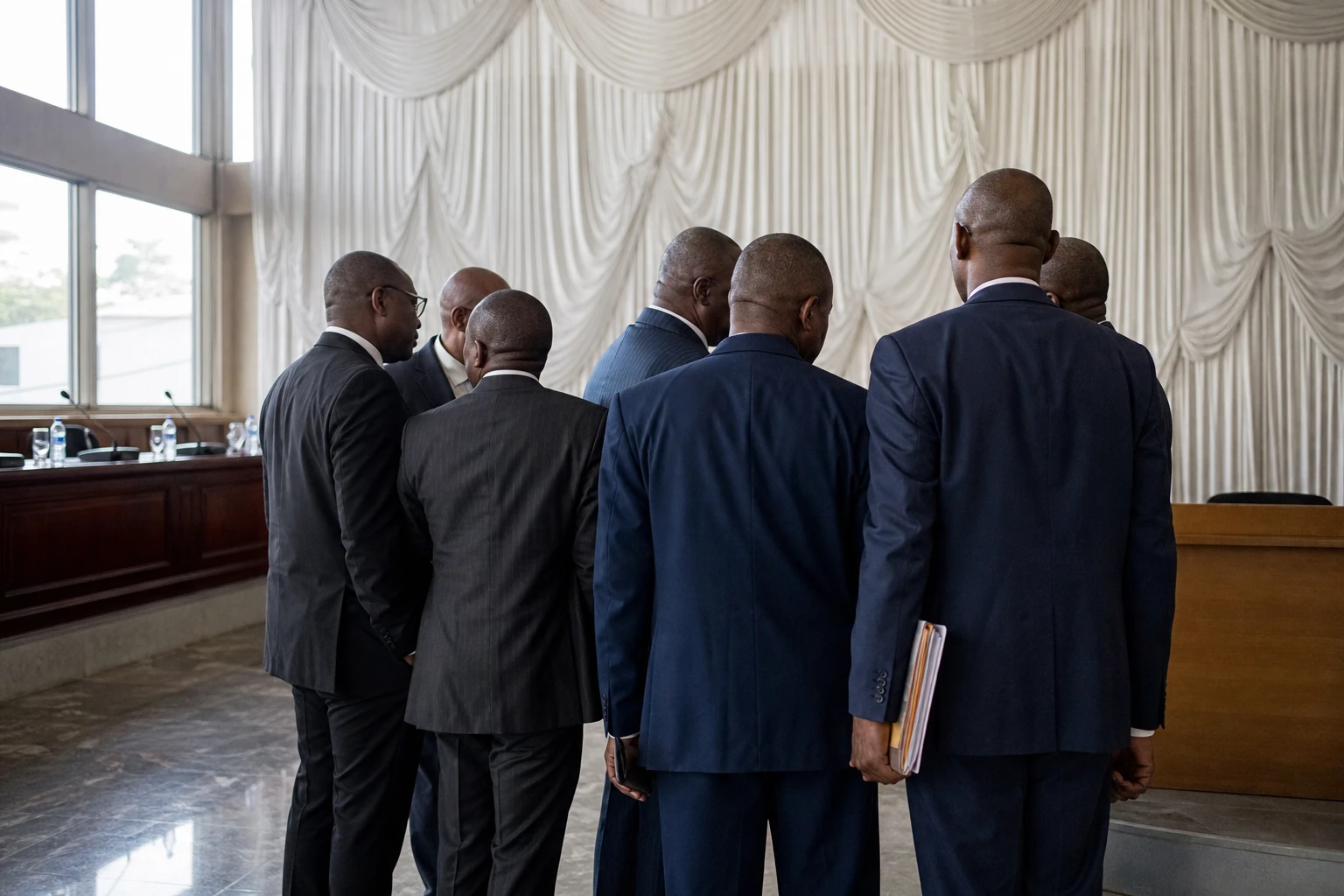
In Kinshasa, a session that goes beyond the budget
In Kinshasa, the parliamentary session is never a mere ritual. It says something about the country’s balance of power, pressure on public finances and the political climate surrounding every decision taken at the People’s Palace. This time, too, national MPs and senators are opening the session with one central issue: the state budget for the 2027 financial year.
The timetable is known. The 2027 finance bill has already been adopted by the government and submitted to parliament. The bill is presented as balanced, at 57,500 billion Congolese francs, or about US$24.8bn. Since August 2026, the Budget Ministry has published the framework documents for this finance bill, a sign that preparatory work was already well advanced before the session opened.
But in the Democratic Republic of the Congo, the budget debate is never limited to columns of revenue and spending. It touches on security, health, schools, roads and the state’s ability to deliver on its promises in a vast, diverse country still marked by deep regional inequalities. Parliament must therefore balance households’ immediate needs against sovereignty priorities, while the east continues to face a persistent security crisis.
The budget, national dialogue and the question of a referendum
In the Senate, Jean-Michel Sama Lukonde has set the bar at budgetary discipline. He has called for rigorous management of public resources, with the aim of stabilising the Congolese franc and curbing the rising cost of living. His message is as political as it is economic: in an economy where inflation and currency volatility quickly weigh on both urban and rural households, every budget line becomes a signal of how the state is protecting purchasing power—or not.
The Senate president has also linked the session to the announcement of the national dialogue sought by Félix Tshisekedi. On 28 August 2026, the presidency launched a national dialogue for peace, cohesion and the refoundation of the state, excluding from the process those who take up arms against the constitutional order or occupy part of the territory. This position, set out by the head of state, gives the dialogue a clear security dimension, even as its format continues to divide part of the political class.
At the National Assembly, the tone was different, but the same underlying line emerged: to seek a political way out without appearing to abandon principles. The lower house’s bureau set the opening ceremony for 1pm, while rejecting requests to postpone it because of tensions in Kinshasa. Meanwhile, the provincial government had to regulate traffic around the People’s Palace after a compromise with the opposition was reached over the route of a demonstration planned for the same day.
The coexistence of the parliamentary session and political mobilisation says much about the current atmosphere. The referendum bill, sent back to parliament after the Constitutional Court raised reservations, has become a focus of opposition suspicions, with opponents viewing it as a possible institutional detour towards overturning term limits. The government, for its part, presents the bill as a tool for legal clarification. Between the two, parliament is once again the arena where the real balance of power is visible.
What this session says about DR Congo, and beyond
At its core, this session highlights three urgent issues for the Congo. First, security, with resources expected for defence, reconstruction and assistance to affected areas. Second, economic governance, as the government seeks to finance more infrastructure, public services and macroeconomic stabilisation. Finally, political cohesion, in a context where national dialogue is presented as an opening but remains contested over its method and exclusions.
The 2027 budget is also a test of credibility. The Senate has called for strict accountability in the use of every franc collected. This is a strong expectation in a country where the gap between national announcements and implementation on the ground remains evident, especially outside Kinshasa. The capital’s working-class neighbourhoods, provincial cities and remote territories do not all expect the same things from the budget, but they all quickly feel its effects on prices, roads, wages and essential services.
The regional implications are clear. The DRC is not debating only its domestic budget; it is also dealing with the consequences of a crisis that reverberates across Central Africa and the wider Great Lakes region. The questions of peace, sovereignty and institutional reconstruction matter to the Southern African Development Community, the East African Community and, more broadly, the African Union. Kinshasa knows that any constitutional, budgetary or security-related development is being watched as a continental political signal.
What now needs to be watched is the outcome of parliament’s budget review, what happens next with the national dialogue and the course of the referendum bill. In a country where institutions often operate under pressure, each decision will show whether the parliamentary session has served to manage day-to-day affairs or to shape a broader way out of crisis.



