
 Algeria
 Egypt
 Libya
 Morocco
 Sudan
 Tunisia
 Benin
 Burkina Faso
 Cabo Verde
 Côte d'Ivoire
 Ghana
 Guinea
 Guinea-Bissau
 Liberia
 Mali
 Mauritania
 Niger
 Nigeria
 Senegal
 Sierra Leone
 The Gambia
 Togo
 Cameroon
 Central African Republic
 Chad
 Equatorial Guinea
 Gabon
 Republic of the Congo
 São Tomé and Príncipe
 Burundi
 Comoros
 Djibouti
 Eritrea
 Ethiopia
 Kenya
 Madagascar
 Malawi
 Mauritius
 Mozambique
 Rwanda
 Seychelles
 Somalia
 South Sudan
 Tanzania
 Uganda
 Angola
 Botswana
 Eswatini
 Lesotho
 Namibia
 South Africa
 Zambia
 Zimbabwe
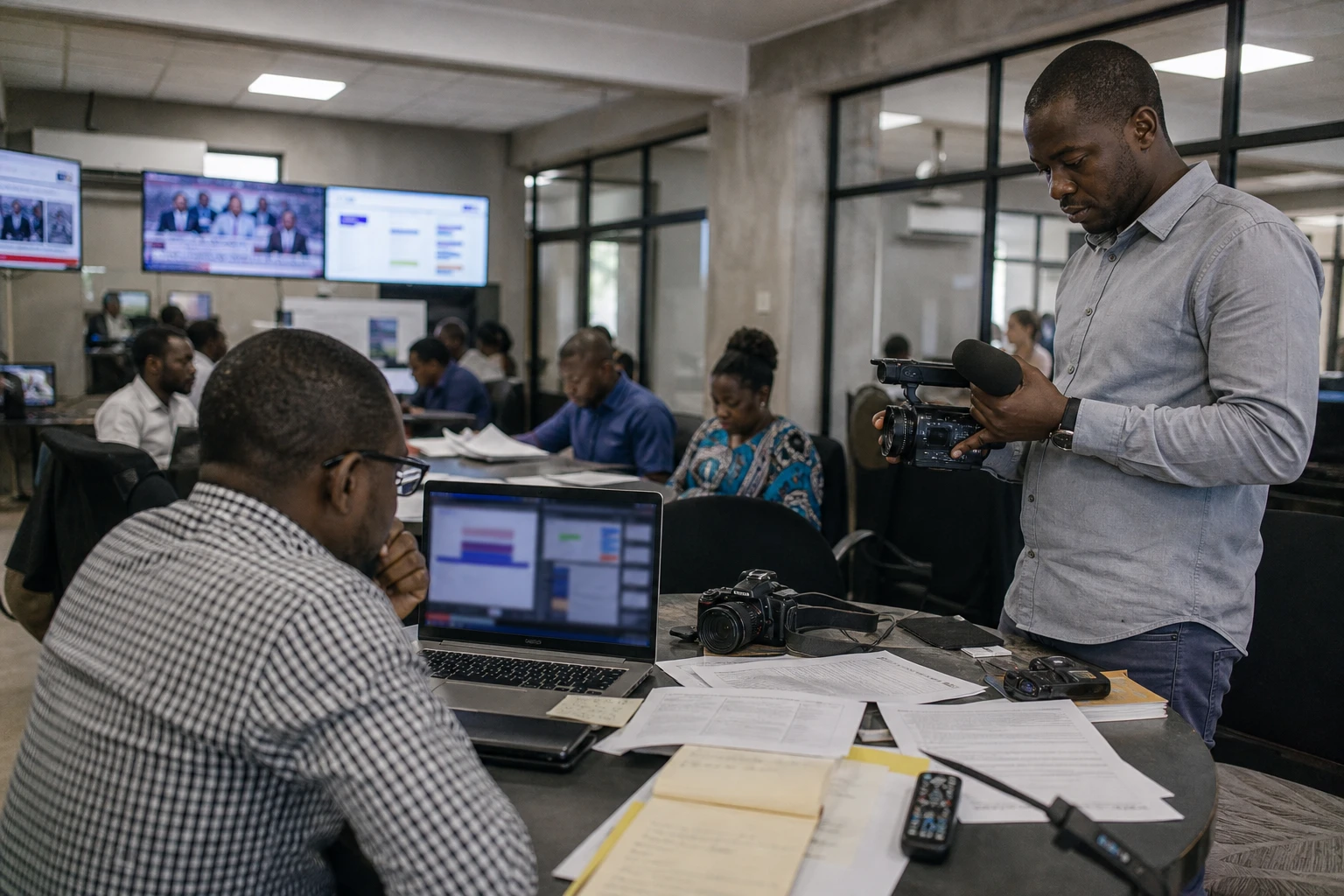
A long-awaited dialogue, but its format remains contested
In Kinshasa, debate is no longer just about the idea of a national dialogue. It is about its method, its invitees and who will oversee it. In the Democratic Republic of the Congo, these details matter as much as the principle itself, because they determine how much trust the process will inspire among Congolese people, in the capital as well as in provinces affected by insecurity.
The context is fraught. Since late August 2026, head of state Félix-Antoine Tshisekedi Tshilombo has officially announced a National Dialogue for Peace, Cohesion and the Refoundation of the State. The presidency said the initiative would begin with consultations in all 26 provinces, before a more formal framework was established. Meanwhile, the eastern crisis continues to poison political life, while the Doha and Washington processes remain focused on security and diplomatic issues related to the AFC/M23 and tensions with Kigali.
Inclusion, the process’s dividing line
On 16 September, at the Interdiocesan Centre in Kinshasa, several political and religious voices brought the question of inclusion back to centre stage. The National Episcopal Conference of Congo, supported in this initiative by the Church of Christ in Congo, advocates an approach in which all concerned groups can take part, with no prior exclusions. Opposition figures, meanwhile, fear a process too tightly controlled by the executive. Some political players are therefore calling for mediation they consider neutral, with the churches playing a central role and international support.
This controversy is not theoretical. On 13 September, President Tshisekedi signed an order establishing a committee to prepare the dialogue. According to the presidency and the APA news agency, the committee is not yet launching the dialogue itself, but is setting its institutional foundations. It is precisely this structure that is fuelling criticism: in the opposition’s view, the government cannot be both a party to the political conflict and the guardian of the process meant to resolve it.
The government’s position is more selective. Kinshasa maintains that discussions with the AFC/M23 belong in other forums, notably Doha. The government has nevertheless suggested that demands related to easing political tensions could be channelled to the preparatory committees. In other words, the line between internal dialogue and security negotiations remains deliberately clear, even though the two spheres interact on the ground.
What the standoff reveals about the Congolese state
The real challenge is not simply to bring more participants together. It is to determine whether the dialogue can produce rules accepted by all. In the DRC, past experience shows that a process seen as too closed quickly loses its political value. Conversely, a more open format can broaden its legitimacy, but also becomes harder to manage. This is the classic Congolese dilemma: governability versus representation, speed versus credibility.
The calculations differ from one actor to another. For the government, a dialogue overseen by the presidency could consolidate the authority of the state and prevent the crisis from spreading beyond the east. For the opposition, especially those wary of centralisation, such a format risks turning a national consultation into political endorsement of the existing balance of power. For the churches, the challenge is to retain their role as a trusted third party in a country where they are often the only institutions seen as capable of speaking to several sides at once.
Congolese society, meanwhile, is waiting for tangible results: lower political tensions, clarity on responsibilities and, above all, progress on security in the east. Kinshasa’s residents experience the debate mainly as an institutional matter. People in North Kivu, South Kivu and other affected provinces want to see improvements first on roads, in schools and markets, and in freedom of movement. That is where the real impact of a national dialogue will be measured: in its ability to ease everyday life, not merely produce statements.
A Congolese process under regional scrutiny
This issue extends far beyond the Congolese context. The DRC remains at the crossroads of several regional dynamics: SADC, the Doha discussions, African Union mediation and the expectations of international partners. In this landscape, the Congolese national dialogue could either strengthen a top-down path out of the crisis or add another layer to an already fragmented agenda. Statements by African actors and Congolese authorities also show that no lasting solution can ignore the need for coherence between internal mediation and regional frameworks.
What happens next depends on two immediate milestones: the appointment of the organising committee’s members and how they consult the various political, social and religious groups. If this phase is seen as balanced, the dialogue could gain credibility. Otherwise, it risks immediately running up against the distrust of part of the opposition and the caution of civil society actors. In the DRC, major political initiatives are never judged by their announcement alone. They are judged by the quality of the compromises they manage, or fail, to build.



