
 Algeria
 Egypt
 Libya
 Morocco
 Sudan
 Tunisia
 Benin
 Burkina Faso
 Cabo Verde
 Côte d'Ivoire
 Ghana
 Guinea
 Guinea-Bissau
 Liberia
 Mali
 Mauritania
 Niger
 Nigeria
 Senegal
 Sierra Leone
 The Gambia
 Togo
 Cameroon
 Central African Republic
 Chad
 Equatorial Guinea
 Gabon
 Republic of the Congo
 São Tomé and Príncipe
 Burundi
 Comoros
 Djibouti
 Eritrea
 Ethiopia
 Kenya
 Madagascar
 Malawi
 Mauritius
 Mozambique
 Rwanda
 Seychelles
 Somalia
 South Sudan
 Tanzania
 Uganda
 Angola
 Botswana
 Eswatini
 Lesotho
 Namibia
 South Africa
 Zambia
 Zimbabwe
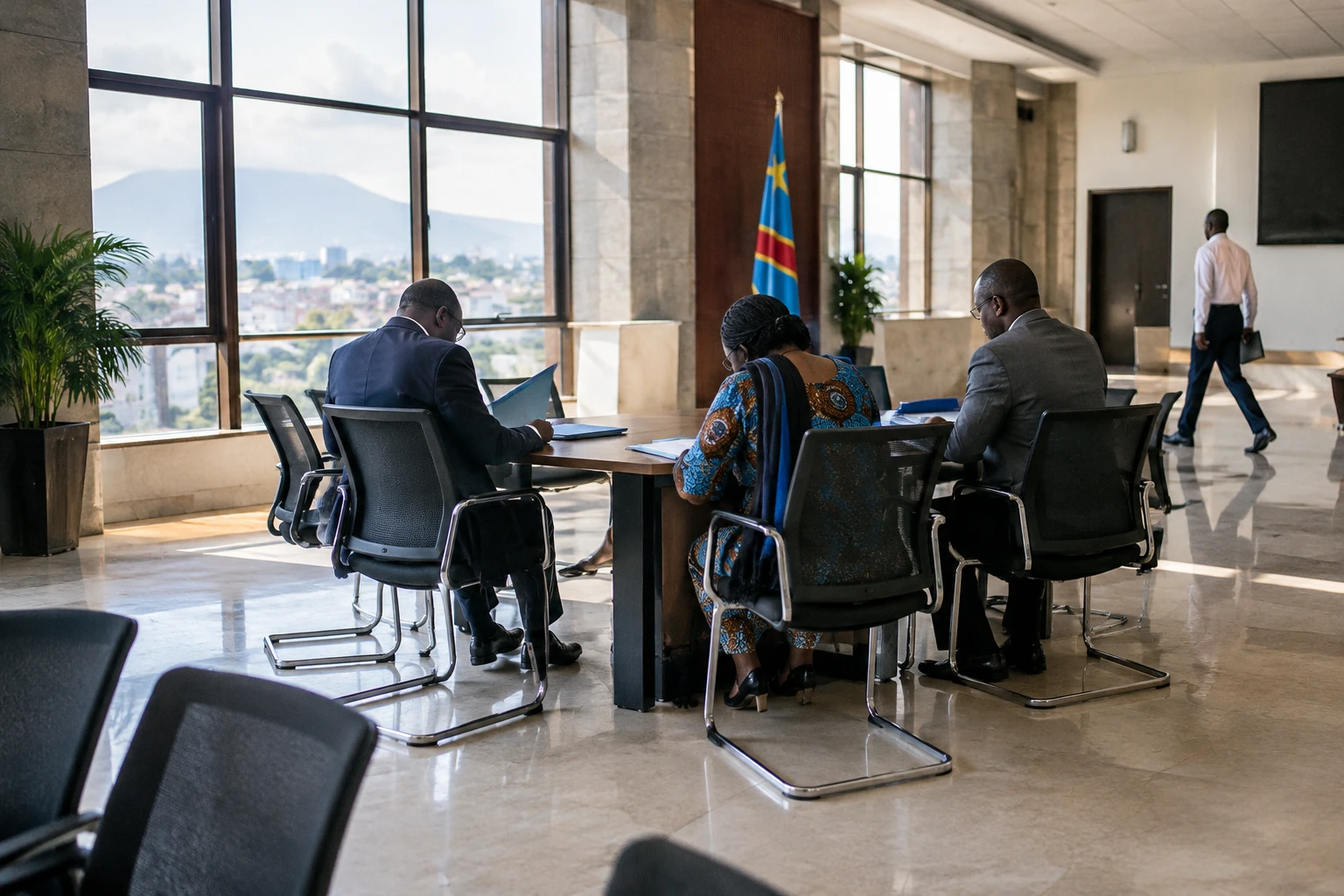
In Goma, a meeting with Joseph Kabila can be presented as a peace initiative or denounced as contact with the enemy. In the Democratic Republic of the Congo (DRC), this fault line is testing the opposition’s right to engage in dialogue, while the conflict in the east continues to complicate any mediation effort.
Goma at the heart of a political and security crisis
The city of Goma, the capital of North Kivu, is under the control of the Front for the Refoundation of the Nation (FRN), a politico-military movement led by former Congolese president Joseph Kabila. Launched on 12 October 2026, the FRN succeeded the Congo River Alliance (AFC), of which the M23 is an armed component. The movement says it wants to fight the Kinshasa government “by all means, including force”: a statement that sheds light on the stakes of the contacts under way there.
This crisis goes beyond relations between Félix Tshisekedi and his predecessor. The fighting and diplomatic processes also involve countries in the Great Lakes region, Qatar, the United Nations and the African Union. The DRC belongs to the Southern African Development Community (SADC) and the East African Community (EAC), two regional frameworks concerned with security and peace efforts. Several initiatives are under way in parallel, including the Doha process and ceasefire monitoring.
For people in the east, the stakes are not limited to national political competition: they also concern security, access to aid and the prospect of resuming everyday life in areas affected by clashes.
Government warning ahead of announced trip
On 4 November, Deputy Prime Minister for the Interior Jacquemin Shabani warned that officials from the opposition coalition Article 64 (C64) could face prosecution if they travelled to Goma to meet Kabila without government authorisation. The minister cited Article 192 of the Penal Code, which concerns unauthorised relations with agents of an enemy power in wartime, and said he would refer the matter to the presidents of both houses of parliament.
The one-to-five-year prison sentence cited in reports would depend on the application of this provision. At this stage, it does not amount to a conviction against coalition members. The classification of an “enemy power” and the scope of the article in this specific case are part of the government’s argument; any potential application would have to be considered by the competent judicial authorities.
The C64, which includes opponents of the government, presents the planned trip as an effort to promote inclusive dialogue. Moïse Katumbi has said its officials want to meet Kabila in Goma. The two sides therefore offer opposing interpretations of the same plan: a political initiative for its promoters, contact with an armed actor for the government.
This dispute raises a concrete institutional question: how far can the executive regulate political contacts in the name of security without closing off space for dialogue? Citing a criminal law does not, by itself, settle the debate over the legality of a meeting or the responsibility of its participants.
The UN channel: talking without recognising
On 3 November, James Swan, the UN secretary-general’s special representative and head of MONUSCO, met Joseph Kabila and FRN officials in Goma. According to an account provided by the movement, discussions focused on security in the east, the Doha peace process and the ceasefire monitoring mechanism. The latter aims to verify commitments and document alleged violations.
Some of the details of the discussions that are publicly available come from the FRN. Its accusations against government forces, like its statements about its own commitment to the peace process, should therefore remain attributed to the movement and do not amount to independent verification. The United Nations, for its part, has framed its consultations within its mandate to protect civilians, ensure humanitarian access and support ceasefire mechanisms.
Engaging with an armed actor does not automatically mean that the UN recognises its political claims. It does, however, establish a channel of communication, which can be useful for discussing humanitarian access or ceasefire monitoring. This distinction matters for Kinshasa, which disputes the FRN’s legitimacy, and for civilians whose protection depends on concrete measures on the ground.
Justice, another test of public trust
In Kinshasa, overcrowding at Makala Central Prison is a reminder of another weakness of the state: the day-to-day functioning of the justice system. On 5 November, Firmin Mvonde, prosecutor-general at the Court of Cassation, gave magistrates in his jurisdiction 30 days to review the cases of detained people and check whether detention orders were lawful.
Figures recently published by Radio Okapi and other Congolese media put the prison population at Makala at more than 16,000, against an initial capacity of about 1,500. These figures point to severe overcrowding, although counts can vary depending on the date and method used. Reviewing cases may identify unlawful detentions or people who could benefit from a measure provided for by law. It will not, however, replace hearings held within a reasonable time or the provision of sufficient resources for courts and prisons.
The two cases are not equivalent, but they converge on an issue of trust: how the authorities apply the law, whether in relation to political contacts during conflict or pre-trial detention. For opponents, threats of prosecution may restrict political space. For detainees and their families, judicial reviews will have an impact only if they lead to individual decisions that can be scrutinised.
What the region will be watching
What happens next will depend on several verifiable facts: will the C64 trip go ahead, and under what conditions? Will the Doha discussions produce commitments that are implemented and monitored on the ground? Will the ceasefire mechanism be able to document the violations alleged by the various parties? In Kinshasa, the outcome of the detention reviews will also show whether the announced deadline leads to concrete decisions.
For the DRC and its neighbours, the challenge is to keep channels of dialogue open without confusing consultation with political recognition, while ensuring that security is not used to rule out all mediation. In the east, the credibility of these processes will be judged less by statements than by civilians’ access to protection and aid, and by whether announced commitments are effectively respected.
For further reading, see reports by Actualite.cd on Jacquemin Shabani’s warning, the meeting between James Swan and the FRN in Goma and Radio Okapi on the measures announced for Makala.



