Algeria
 Egypt
 Libya
 Morocco
 Sudan
 Tunisia
 Benin
 Burkina Faso
 Cabo Verde
 Côte d'Ivoire
 Ghana
 Guinea
 Guinea-Bissau
 Liberia
 Mali
 Mauritania
 Niger
 Nigeria
 Senegal
 Sierra Leone
 The Gambia
 Togo
 Cameroon
 Central African Republic
 Chad
 Equatorial Guinea
 Gabon
 Republic of the Congo
 São Tomé and Príncipe
 Burundi
 Comoros
 Djibouti
 Eritrea
 Ethiopia
 Kenya
 Madagascar
 Malawi
 Mauritius
 Mozambique
 Rwanda
 Seychelles
 Somalia
 South Sudan
 Tanzania
 Uganda
 Angola
 Botswana
 Eswatini
 Lesotho
 Namibia
 South Africa
 Zambia
 Zimbabwe
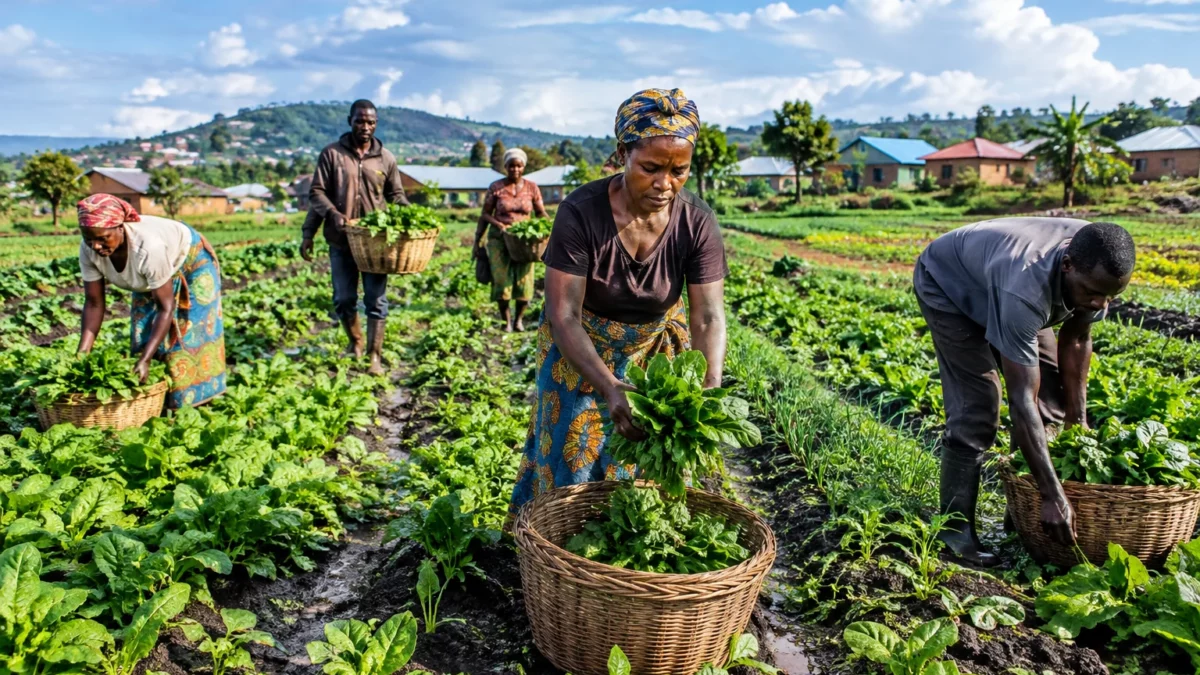
When a food crisis takes hold, distributing food is not always enough to prevent it from recurring. In the Democratic Republic of the Congo (DR Congo), the World Food Programme’s (WFP) next plan aims to maintain emergency assistance while strengthening livelihoods. But its ambition will first depend on securing funding that has yet to be raised.
An emergency weighing on households and markets
Between September and December 2026, about 28.8 million people in DR Congo face acute food insecurity at “crisis” level or worse, according to the Integrated Food Security Phase Classification (IPC) analysis. This tool classifies the severity of food insecurity in five phases. Phase 3 corresponds to a crisis situation; phase 4, to an emergency. The IPC estimates that 3.6 million people will be in phase 4 over the period studied. The IPC analysis for DR Congo, covering September 2026 to June 2027, projects that more than 30.3 million people could be in phase 3 or above between January and June 2027.
These estimates describe immediate needs, but also pressure on families’ resources. Conflict and displacement in the east reduce access to fields, jobs and markets. These factors are compounded by disease, climate shocks and rising food prices. For households relying on farming or small-scale trade, a failed harvest or an impassable road can quickly reduce incomes and access to food.
The situation is not the same everywhere. The IPC analysis identifies particularly hard-hit areas in the east, notably Ituri and South Kivu. However, food insecurity affects people far beyond the front lines. Its consequences are felt in rural areas, where production and movement directly affect incomes, as well as in cities, where families buy a larger share of their food.
A four-year plan, balancing relief and self-reliance
On 18 November 2026, the WFP Executive Board adopted a country strategic plan for DR Congo in Rome, covering the period from 1 January 2027 to 31 December 2030. The document provides for a budget of $2.618 billion, or about $2.62 billion. The WFP says this is the plan’s projected total cost, not funding already available. The official 2027-2030 plan summary confirms its timeline and budget.
The strategy combines food assistance, nutrition, social protection and support for the resilience of communities and food systems. The aim is to meet current needs without limiting action to one-off distributions. This could involve support for local production, the functioning of markets and activities that enable families to withstand future crises better. The WFP thus presents the plan as a way to “meet today’s needs while reducing tomorrow’s”, according to its country director in DR Congo, David Stevenson, quoted in statements linked to the plan.
This approach aligns with a demand from the Congolese authorities: linking relief and recovery. But the allocation of resources is already a matter of debate. In Rome, Prime Minister Judith Suminwa said that 75.3% of the planned resources would go to humanitarian emergencies, compared with 3.8% for support to social safety nets and community recovery. She called for a rebalancing without reducing life-saving aid. This national perspective highlights a concrete issue: budget choices will determine the balance between immediate interventions and the capacities that could reduce dependence on aid. The Congolese Prime Minister’s Office sets out this position and the government’s priorities.
Funding, the first test of credibility
An adopted plan is not a funded plan. The $2.62 billion still needs to be mobilised from the WFP’s partners and contributors. The difference between a projected budget and money actually available is crucial: it will determine the number of people assisted, the duration of interventions and the ability to launch recovery programmes. The agency will also have to contend with competition between humanitarian crises and strained international funding.
The issue also concerns how programmes adapt to local realities. Food assistance can meet an immediate need, but its effect remains limited if families cannot reach their land, supply routes are disrupted or food becomes unaffordable. Conversely, strengthening production and markets takes time and cannot replace relief when people are already going hungry. The challenge is therefore to make these two responses work together, taking account of differences between provinces and between displaced households and host communities.
The strategy is part of a national trajectory in which humanitarian interventions must also be aligned with public development policies. Its adoption by the WFP board, where 36 members approved the document, was reported by the Congolese Press Agency and confirmed by Radio Okapi. The ACP reported on its adoption in Rome; Radio Okapi also confirmed the date and amount. These cross-checks confirm the decision, but do not prejudge future disbursements or results on the ground.
An issue that extends beyond DR Congo’s borders
The food crisis in DR Congo has regional implications. Violence in the east and population displacement affect communities in the Great Lakes region, while disruptions to trade can put pressure on market supplies. For regional partners, developments in security and human mobility are therefore linked to stability and livelihoods on both sides of the borders.
The next indicators to watch will be the funding actually received, the allocation of spending between emergency response and recovery, and the IPC estimates for the first half of 2027. They will help establish whether the projected rise in food insecurity is confirmed. For families in Kinshasa as well as those in rural provinces and the east, adoption of the plan will change the situation only if resources follow and assistance reaches those who need it.