
 Algeria
 Egypt
 Libya
 Morocco
 Sudan
 Tunisia
 Benin
 Burkina Faso
 Cabo Verde
 Côte d'Ivoire
 Ghana
 Guinea
 Guinea-Bissau
 Liberia
 Mali
 Mauritania
 Niger
 Nigeria
 Senegal
 Sierra Leone
 The Gambia
 Togo
 Cameroon
 Central African Republic
 Chad
 Equatorial Guinea
 Gabon
 Republic of the Congo
 São Tomé and Príncipe
 Burundi
 Comoros
 Djibouti
 Eritrea
 Ethiopia
 Kenya
 Madagascar
 Malawi
 Mauritius
 Mozambique
 Rwanda
 Seychelles
 Somalia
 South Sudan
 Tanzania
 Uganda
 Angola
 Botswana
 Eswatini
 Lesotho
 Namibia
 South Africa
 Zambia
 Zimbabwe
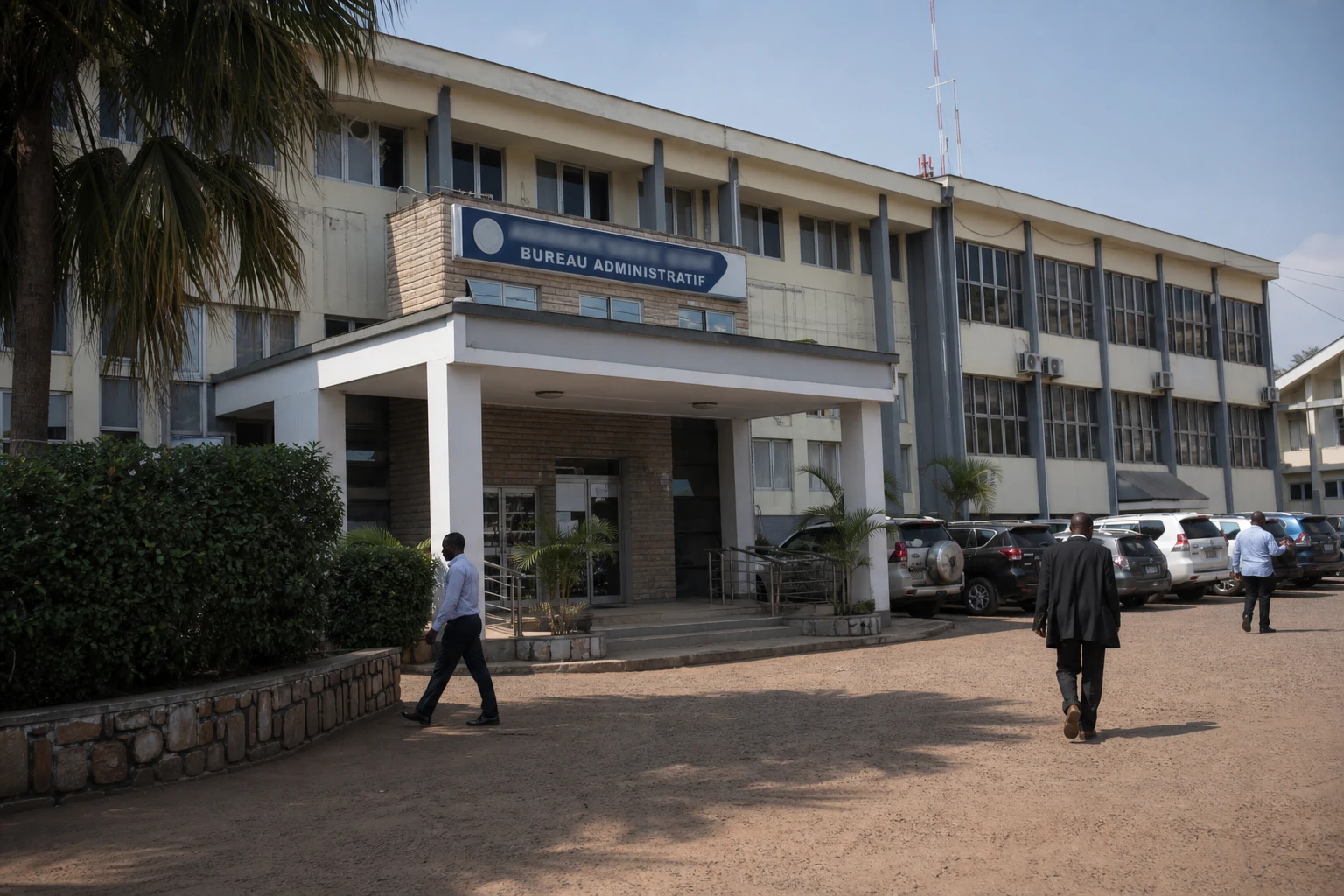
In eastern DR Congo, the front line also cuts off aid routes
When fighting advances, it displaces more than soldiers. It also uproots families, closes schools, empties markets and blocks access to healthcare. In the east of the Democratic Republic of the Congo, this pattern is familiar. Today it is affecting areas already overwhelmed by forced displacement, from south-western Masisi to the South Kivu highlands.
North Kivu and South Kivu remain at the heart of one of the continent’s largest displacement crises. The International Organization for Migration estimates that in 2026, the DRC continues to experience mass displacement driven by armed conflict, particularly in the east. In the two provinces, the territories of Masisi and Fizi are among those with the highest concentrations of displaced people.
Masisi, Walikale, Fizi, Minembwe: areas already under strain
In North Kivu, military pressure has tightened further along the Masisi-Walikale axis. Radio Okapi reported on 8 September 2026 that new population movements had followed fighting in the territories of Masisi and Walikale. On the same day, several Congolese media outlets reported that the AFC/M23 had captured Humura and was advancing towards Walikale, while the FARDC announced counter-offensives in other positions.
This advance is affecting an area already carrying a heavy demographic burden. The IOM’s DTM recorded 447,979 internally displaced people in Masisi territory between May and July 2026, the highest concentration in North Kivu. Data for the same period show that Walikale remains an area of refuge and reception, but is also exposed to the conflict spreading from Masisi.
The picture is similar in South Kivu, although the fault lines are different. The Minembwe highlands and Fizi territory are already home to long-standing displacement linked to armed conflicts, community tensions and the isolation of some localities. DTM and IOM data indicate that Fizi is among the territories, along with Kalehe and Walungu, that account for most displacement in the province.
In this geography, Minembwe is more than a point on the map. It is a highly sensitive area in the highlands, where displacement overlaps with long-standing local divisions. The IOM identifies it as a major location for returns and population movements in South Kivu, pointing to a highly mobile population, often forced to leave again before it can settle permanently.
The real issue: a humanitarian crisis struggling to keep pace with the fighting
The most important development is not simply the resumption of gunfire. It is that the gunfire is hitting territories where assistance is already lagging. The original text cited an assistance deficit of 96% in Minembwe and 99% in Fizi. These percentages should be read as indicators of humanitarian undercoverage, not as casualty figures. They reflect a context in which aid can no longer keep pace with displacement.
The humanitarian system itself acknowledges this. In Kinshasa, the United Nations Humanitarian Coordinator said in January 2026 that the DRC remained confronted with “one of the most protracted, complex and severe humanitarian crises in the world”. He also said that 14.9 million people were then considered to be in need, with the 2026 response plan set at $1.4 billion.
The same statement highlighted a central point: falling funding is forcing a stricter prioritisation of areas and beneficiaries. In other words, when fighting spreads to already fragile territories, aid has no room to manoeuvre. Displaced families move from one front to another, then face a fresh wait in host villages that are often themselves short of water, healthcare and food.
In Masisi, this means successive waves of departure. In Walikale, families are taking in new arrivals even though some of them fled just days earlier. In South Kivu, the highlands and Fizi face the combined pressures of remoteness, unsafe roads and a limited humanitarian presence. This reality weighs first on civilians, then on health facilities, schools and local markets.
A local battle, but a regional test for the DRC and the Great Lakes
This episode goes beyond the confrontation between the AFC/M23 and the FARDC. It is a reminder that eastern DR Congo remains a regional flashpoint, where internal displacement also fuels movements towards neighbouring countries, particularly in the Great Lakes region and around neighbouring Burundi, mentioned in recent humanitarian discussions. It also puts pressure on Congolese stabilisation mechanisms and regional talks on border security.
Kinshasa faces a twofold challenge. It must hold the military ground while maintaining a minimum level of humanitarian access in territories that have become mobile and fragmented. For the provinces, the stakes are even more immediate: preventing each resumption of fighting from turning a road into an escape route. The task facing national NGOs, community networks and health facilities is daunting. They must operate in a shrinking space, with fewer resources and rising needs.
At the continental level, the Congolese case raises a simple question: how can a crisis of this scale continue to be treated as a succession of local emergencies? The answer also lies in the long term. As long as Masisi, Walikale, Minembwe and Fizi remain areas of confrontation and displacement, the DRC will continue to account for a major share of forced displacement in Central Africa, with effects that spill across its borders.



