Algeria
 Egypt
 Libya
 Morocco
 Sudan
 Tunisia
 Benin
 Burkina Faso
 Cabo Verde
 Côte d'Ivoire
 Ghana
 Guinea
 Guinea-Bissau
 Liberia
 Mali
 Mauritania
 Niger
 Nigeria
 Senegal
 Sierra Leone
 The Gambia
 Togo
 Cameroon
 Central African Republic
 Chad
 Equatorial Guinea
 Gabon
 Republic of the Congo
 São Tomé and Príncipe
 Burundi
 Comoros
 Djibouti
 Eritrea
 Ethiopia
 Kenya
 Madagascar
 Malawi
 Mauritius
 Mozambique
 Rwanda
 Seychelles
 Somalia
 South Sudan
 Tanzania
 Uganda
 Angola
 Botswana
 Eswatini
 Lesotho
 Namibia
 South Africa
 Zambia
 Zimbabwe
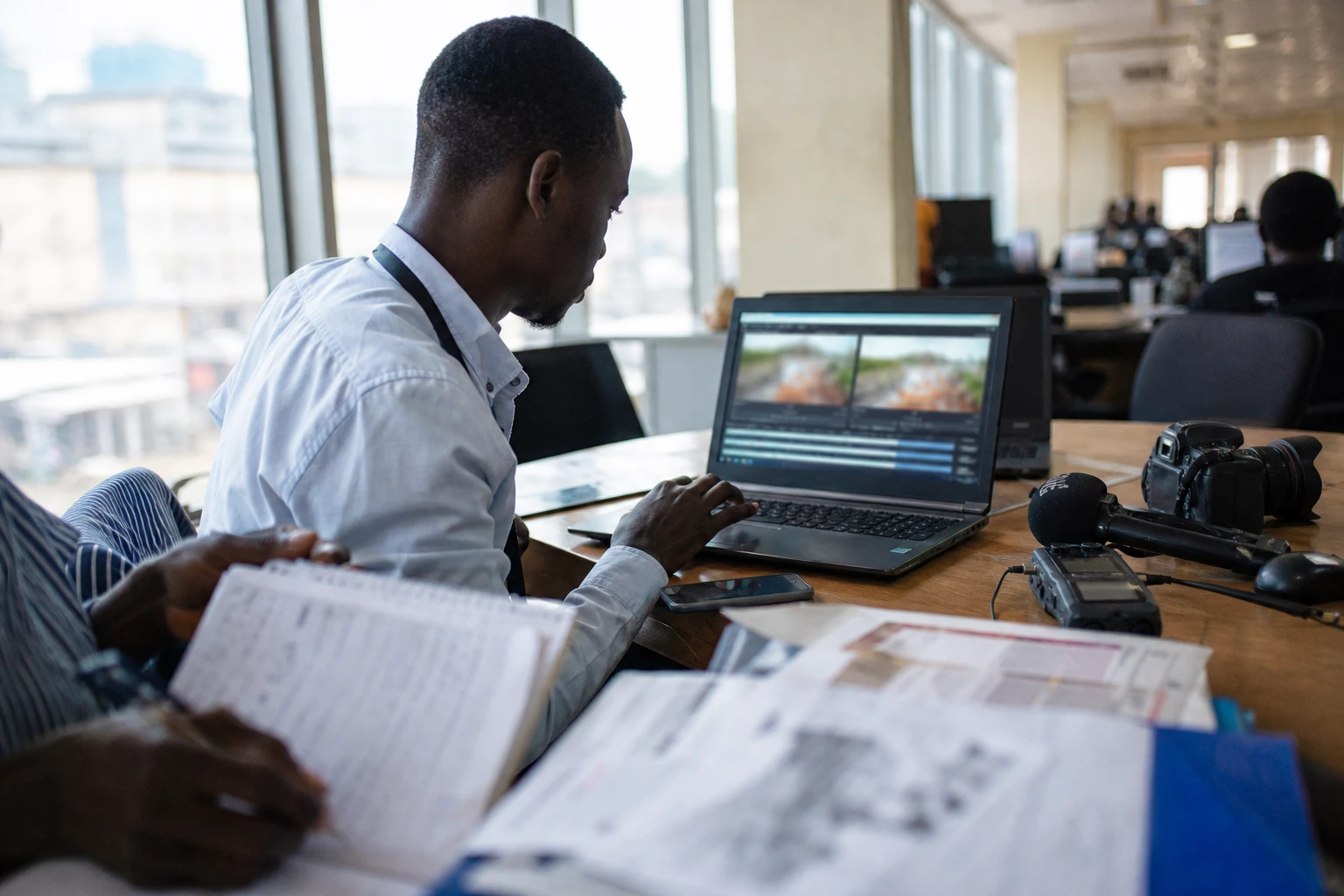
In the east of the Democratic Republic of the Congo, a video can cross borders in a matter of hours. A scene filmed in Ethiopia was presented as evidence of victories by the DRC Armed Forces against the AFC/M23. The manipulation comes as people in North Kivu and South Kivu follow a military situation that is already difficult to verify.
A war in which images travel faster than facts
The footage shows around a dozen men in military uniform, disarmed and seated in front of assault rifles, machine guns and ammunition. Several accounts attributed it to the Armed Forces of the Democratic Republic of the Congo, the FARDC, claiming they had captured AFC/M23 fighters.
However, a fact-check by Africa Check established that the images are not from the DRC. They were published on 10 April 2025 by the Oromo Liberation Army, an armed group active in Ethiopia. The footage therefore related to a different conflict, in another country, more than 1,500 kilometres from Kinshasa.
An Ethiopian media outlet had already reported the post in April 2025, while noting that the armed group’s claims could not be independently confirmed. That caveat matters. It is a reminder that a video can be authentic while being accompanied by a false or unverifiable caption.
The method is a familiar one. An old image is repurposed, cropped and then linked to a recent event. The conflict in the east of the DRC gives it fresh significance. Users who share it may believe they are passing on information from the ground. In reality, they are moving a scene from one theatre of war to another.
The Congolese context encourages misleading narratives
Since the M23 renewed its offensive in 2021, the east of the DRC has remained marked by fighting, displacement and intense competition between military narratives. The AFC, the Congo River Alliance, is the political structure of which M23 is the main armed wing. Kinshasa accuses Rwanda of supporting the coalition. Kigali rejects this interpretation and points to the threat posed by the Democratic Forces for the Liberation of Rwanda, the FDLR, which are present in eastern Congo.
In 2025, fighting led M23 to take control of Goma, the capital of North Kivu, and then Bukavu, the capital of South Kivu. These developments changed the balance of power in the Great Lakes region. They also multiplied propaganda images, announcements of territorial gains and contradictory accusations.
Diplomacy has not ended the tension. The DRC and Rwanda signed an agreement in Washington on 27 June 2025. The text provides, among other things, for respect for territorial integrity, an end to support for armed groups and the withdrawal of Rwandan forces from Congolese territory. However, the AFC/M23 was not a signatory to the agreement. A separate process, led in Doha with the rebel movement, was therefore intended to address hostilities on the ground directly.
This multi-layered diplomatic framework fuels uncertainty. An agreement between Kinshasa and Kigali is not, by itself, enough to control the forces present in occupied areas. For local people, the difference between an announced ceasefire and a lull that is actually observed is tangible: it can be measured by whether roads are passable, markets are open and displaced families return.
Fighter jets that never flew over Minembwe
Another video was recently linked to Minembwe, a locality in the Highlands of Fizi territory, in South Kivu. The 14-second clip shows two fighter jets flying at low altitude. Comments describe them variously as Congolese aircraft or Rwandan planes.
Visual analysis reveals a major inconsistency. The aircraft resemble Eurofighter Typhoons, a model developed by several European countries. Yet neither the DRC nor Rwanda is known to have this type of combat aircraft in its air force. Other details reinforce the doubts. On one aircraft, a small wing near the nose disappears after a turn. This continuity error is common in artificially generated images.
This method is no substitute for a full expert assessment, but it provides an initial warning sign. Artificial intelligence-generated content often contains errors involving hands, weapons, uniforms, insignia, shadows or mechanical movement. In a very short video, these anomalies may go unnoticed. They become visible when the image is paused or examined frame by frame.
Checks by Congolese fact-checking organisations show that the phenomenon extends beyond this single clip. Studio Hirondelle RDC has documented several misleading items linked to the fighting: photographs taken out of context, video edits and AI-generated images. Congo Check also identified a fake video purporting to show Félix Tshisekedi buying American fighter jets.
Disinformation affects civilians before military headquarters
These manipulations are not mere digital errors. In areas affected by fighting, a rumour can spark panic, disrupt travel or fuel reprisals. It can also undermine trust in journalists, local authorities and humanitarian organisations.
The effects are not the same for everyone. In Kinshasa, a fake video can fuel a distant political debate. In Goma, Bukavu or Minembwe, it can influence the daily decisions of a family hesitating over whether to take to the road. In rural areas, where access to verified media remains more limited, messages shared via WhatsApp, Facebook or TikTok can become the main source of information.
Fighters and political leaders also have something to gain. An image of prisoners can create the impression of a victory. A video of aircraft can suggest a military capability that does not exist. Conversely, a false image of defeat can demoralise a population or fuel accusations against a community. The content therefore does not merely describe the war. It sometimes seeks to shape its course.
What to check before sharing
When faced with a dramatic video, the first question is when it was filmed. The second is where it was actually filmed. A reverse image search can find the original post or an older version. The footage should then be compared with official statements, local media and independent fact-checking organisations.
A single piece of evidence is not enough to confirm a military operation. Even an authentic video does not necessarily prove the identity of the people shown, the date of the event or the location given in the post. This caution applies to posts favourable to the FARDC as much as to those supporting the AFC/M23 or accusing Rwanda.
Across the region, the spread of this content accompanies a crisis that reaches beyond the DRC’s borders. Rwanda, Burundi, Uganda and Tanzania remain linked by the security and economic dynamics of the Great Lakes. The African Union and the Southern African Development Community, SADC, are also monitoring the conflict and peace initiatives.
The next stage will therefore be not only military or diplomatic, but also informational. The credibility of ceasefire announcements, casualty figures and images from the ground will depend on the ability of local actors to document the facts. In the east of the DRC, verifying a video has become a way of reducing the space available to rumours.