Algeria
 Egypt
 Libya
 Morocco
 Sudan
 Tunisia
 Benin
 Burkina Faso
 Cabo Verde
 Côte d'Ivoire
 Ghana
 Guinea
 Guinea-Bissau
 Liberia
 Mali
 Mauritania
 Niger
 Nigeria
 Senegal
 Sierra Leone
 The Gambia
 Togo
 Cameroon
 Central African Republic
 Chad
 Equatorial Guinea
 Gabon
 Republic of the Congo
 São Tomé and Príncipe
 Burundi
 Comoros
 Djibouti
 Eritrea
 Ethiopia
 Kenya
 Madagascar
 Malawi
 Mauritius
 Mozambique
 Rwanda
 Seychelles
 Somalia
 South Sudan
 Tanzania
 Uganda
 Angola
 Botswana
 Eswatini
 Lesotho
 Namibia
 South Africa
 Zambia
 Zimbabwe
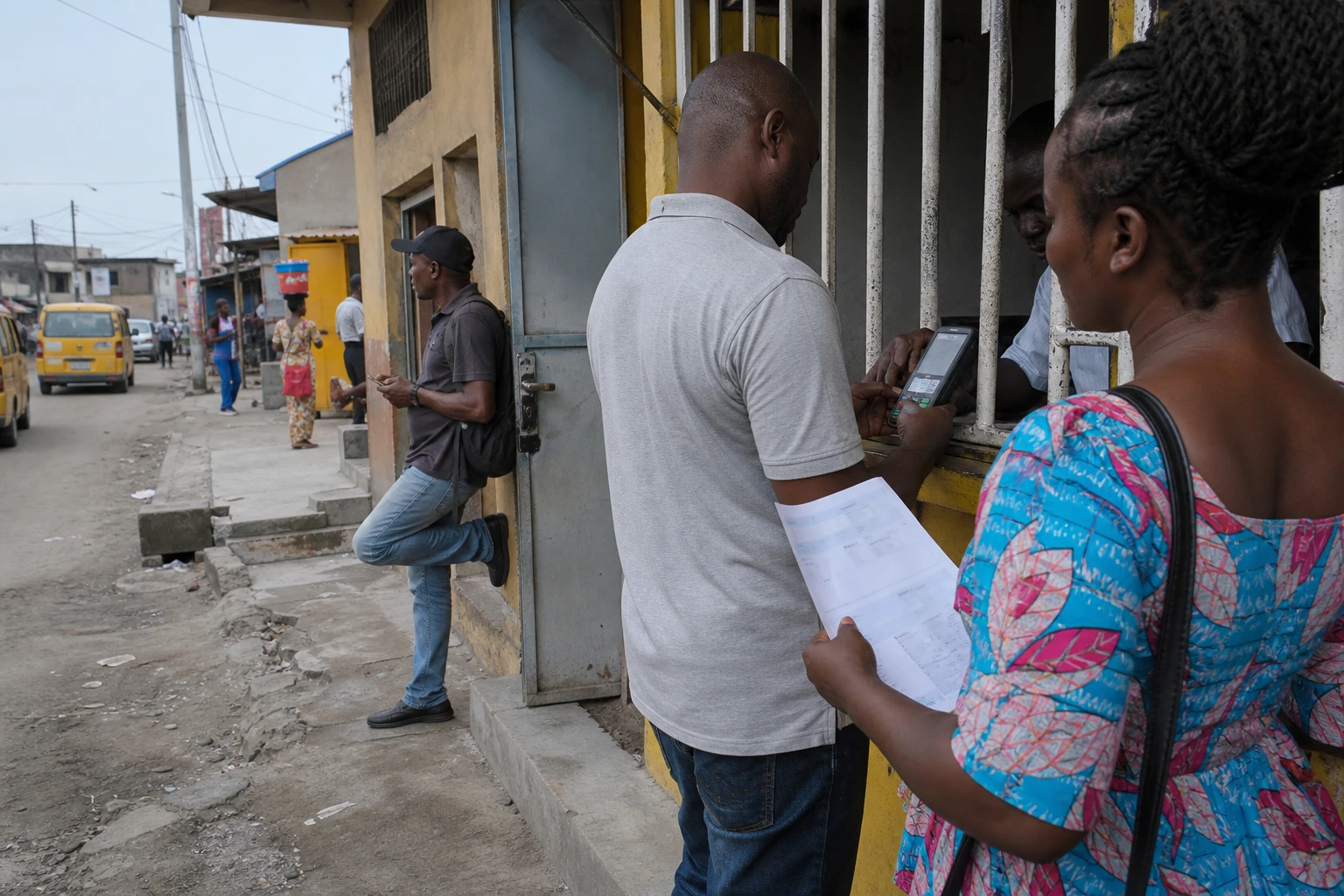
In Kinshasa, electricity sector reform is now taking place as much in the rules as on the networks. For the Democratic Republic of the Congo, the challenge is twofold: to make tariffs clearer and create the conditions needed to extend access to electricity in a country where the needs of households, businesses and public services are growing rapidly.
In Kinshasa, reform focused on sector rules
The Electricity Sector Regulatory Authority (ARE) and the African Development Bank (AfDB) organised a workshop in Kinshasa from 21 to 25 September 2026 on strengthening the sector’s institutional and economic framework. The meeting was held under the African Energy Sector Technical Assistance Programme, known by the acronym AESTAP.
The workshop brought together representatives of the Ministry of Hydraulic Resources and Electricity, the ARE, the national electricity company (SNEL), private operators and several public institutions. Discussions focused on three areas: analysing the actual cost of service, harmonising the method for setting tariffs and the rules governing connections to the grid.
The AfDB presented the workshop as a step towards validating work undertaken with Congolese institutions. The aim is not simply to produce studies. Above all, it is to equip the regulator with practical tools to monitor costs, assess needs and oversee tariff decisions. The African Development Bank’s official presentation of the workshop sets out this direction.
Callixte Kambanda, head of the energy policy, regulation and statistics division at the AfDB, said effective economic regulation should help attract investment, improve the sector’s viability and raise the quality of service.
The cost of electricity at the heart of decisions
The tariff study covering SNEL’s service area is intended to better distinguish the different components of the price of electricity. It examines production, transmission and distribution costs, changes in demand and the revenue needed to operate the utilities.
This approach addresses a common challenge in electricity systems: a tariff set too low can weaken companies in the sector and limit their ability to maintain infrastructure. Conversely, an increase that is poorly prepared can put pressure on households, small businesses and informal economic activity.
The future tariff framework will therefore have to strike a balance. It must improve cost recovery without disregarding consumers’ purchasing power. It must also take account of differences between large industrial customers, urban businesses, connected households and users in areas far from the grid.
Soraya Aziz-Moto, director-general of the ARE, said the study would provide tools to better understand the sector’s costs, changes in demand and the effects of tariff choices. She also stressed the need for more transparent and predictable regulation.
Data is an important part of this reform. According to information from SNEL’s 2024 annual report cited in the workshop, the company had nearly one million billed customers and sold about 10,000 gigawatt-hours of electricity a year. Low-voltage subscribers accounted for more than 99% of its customer base, while a significant share of the energy consumed remained concentrated among a limited number of large, high-voltage industrial customers.
This structure complicates planning. The number of customers is not enough to measure actual demand. The regulator also needs to know consumption volumes, hourly usage patterns, network losses and ability to pay. Without reliable data, investment forecasts remain fragile.
Connections, investment and service quality
The workshop’s third area concerns connections to the grid. Clarifying procedures can reduce delays, give operators greater certainty and limit differences in practice from one area to another. It can also help the authorities better allocate responsibilities among SNEL, private operators, local authorities and new energy projects.
For investors, stable rules matter as much as the availability of funding. A predictable framework makes it easier to prepare projects for power plants, lines and substations. It also makes it possible to assess risks related to tariffs, permits and bill collection.
For Congolese people, the expected effects go beyond administrative reform. Better regulation should mean faster connections, clearer bills and more reliable service. The benefits will not, however, be the same everywhere. Kinshasa and major urban centres have denser markets, while rural areas and distant provinces often require decentralised solutions or more substantial investment in transmission.
The reform will also have to accommodate a range of different needs. Households need affordable and reliable access. Small businesses need a stable power supply to protect their incomes. Industries, meanwhile, need large volumes and a quality of electricity compatible with their equipment.
Reform linked to Africa’s energy drive
The Congolese initiative is part of a broader movement in Central Africa and across the continent. The Democratic Republic of the Congo is a member of the Economic Community of Central African States (ECCAS), which is seeking to strengthen regional trade and shared infrastructure. In this context, the quality of national regulation could eventually facilitate interconnection projects and cross-border investment.
The reform also aligns with the goals of Mission 300, an initiative led by the AfDB and the World Bank Group to provide 300 million Africans with access to electricity by 2030. The programme combines grid expansion, off-grid solar solutions, mini-grids and reforms designed to strengthen utilities. The AfDB describes Mission 300 as a continent-wide effort combining energy access, market reform and capital mobilisation.
For Kinshasa, the next step will be to turn the recommendations into operational decisions. This will require clarifying tariff methods, strengthening the ARE’s capacity, improving the reliability of SNEL’s data and regulating connections. Success will depend less on announcing new principles than on applying them consistently, in the capital and across the provinces.
The Congolese electricity question therefore goes beyond the price of a kilowatt-hour. It affects business competitiveness, the continuity of public services and the country’s ability to harness its energy resources. Regulation can become one of the levers of this transformation, provided it remains clear, enforceable and attentive to the realities of different regions.