
 Algeria
 Egypt
 Libya
 Morocco
 Sudan
 Tunisia
 Benin
 Burkina Faso
 Cabo Verde
 Côte d'Ivoire
 Ghana
 Guinea
 Guinea-Bissau
 Liberia
 Mali
 Mauritania
 Niger
 Nigeria
 Senegal
 Sierra Leone
 The Gambia
 Togo
 Cameroon
 Central African Republic
 Chad
 Equatorial Guinea
 Gabon
 Republic of the Congo
 São Tomé and Príncipe
 Burundi
 Comoros
 Djibouti
 Eritrea
 Ethiopia
 Kenya
 Madagascar
 Malawi
 Mauritius
 Mozambique
 Rwanda
 Seychelles
 Somalia
 South Sudan
 Tanzania
 Uganda
 Angola
 Botswana
 Eswatini
 Lesotho
 Namibia
 South Africa
 Zambia
 Zimbabwe
Vaccination returns to the heart of the response
In the Democratic Republic of the Congo, the fight against Ebola is not being waged only in treatment centres. It also depends on the state’s ability to act quickly, protect health workers and persuade communities often caught off guard by the epidemic. In a country as vast as a continent, every logistical delay costs lives. The Ervebo vaccine, used here in an outbreak linked to the Bundibugyo virus, has once again become one of the most visible tools in the response.
The context matters. The 17th Ebola outbreak reported in the DRC was declared in May 2026 by Congolese health authorities, and was then placed under close regional surveillance by the WHO and Africa CDC. The two institutions warned early on of the risk of spread beyond national borders, in an area where population movements, mining activity, local insecurity and cross-border trade complicate contact tracing.
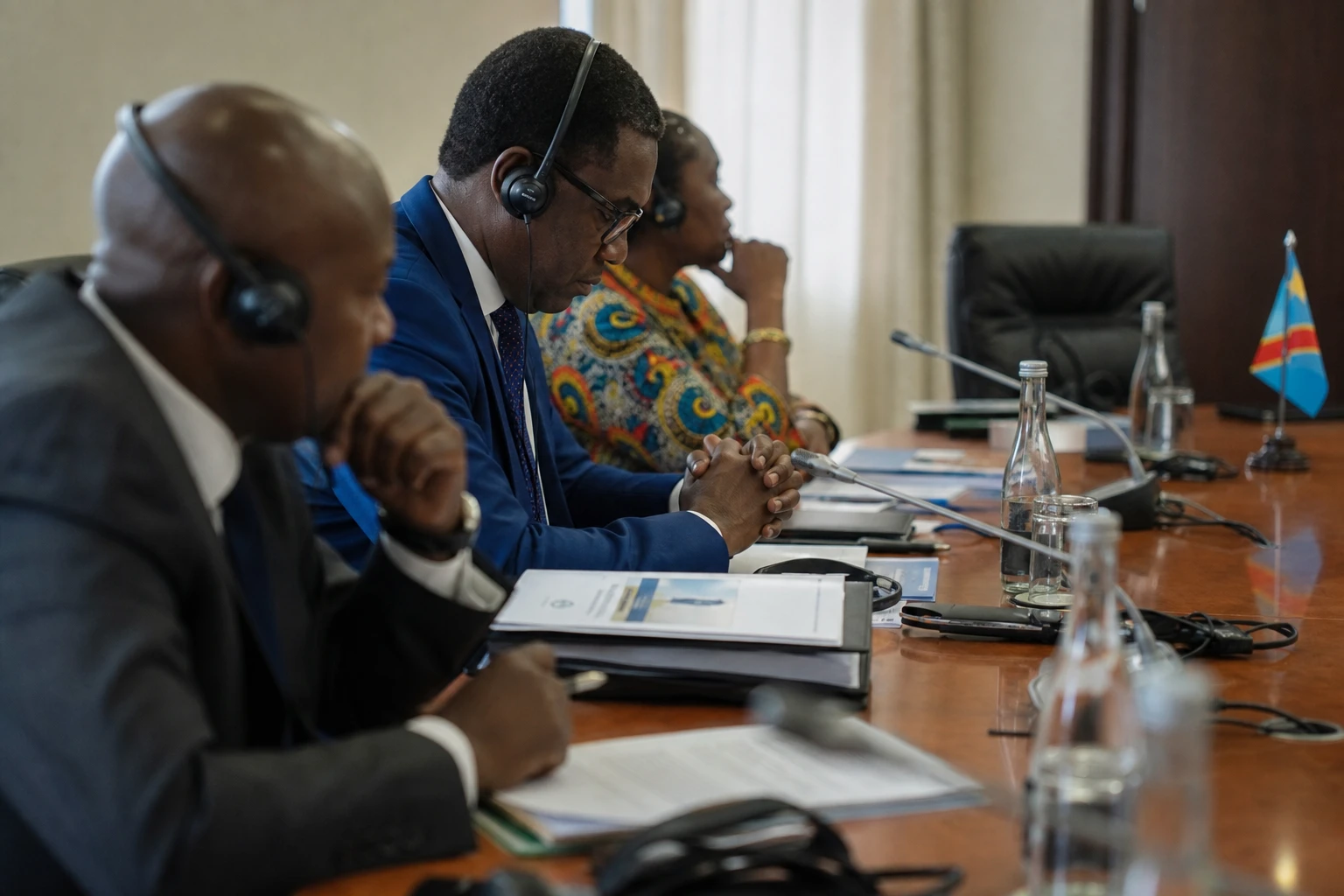
On 27 August 2026, vaccination of health workers began in some areas of the DRC, including Kisangani, in Tshopo province. On 4 September, in Kinshasa, the government and its partners launched a revised 180-day plan to step up the response. The aim is clear: to break chains of transmission before they reach an uncontrollable level.
What the figures show and why they matter
The figures have changed considerably since the initial data provided. The latest official sources report an outbreak far larger than the first tallies mentioned a few weeks ago. As of 26 August 2026, the WHO reported 5,794 confirmed cases in the DRC and 2,786 deaths in the country, while Africa CDC reported 6,342 confirmed cases, 3,072 deaths and 770 people in isolation or treatment centres as of 2 September 2026. The difference reflects the pace of notifications and the reporting cut-off dates, but above all it shows an outbreak that remains active and highly dynamic.
The historical comparison is significant. The WHO says the outbreak is now the largest ever documented in the DRC, with a number of confirmed cases higher than in the 2018-2020 epidemic. For Kinshasa, the challenge is therefore no longer just a health one. It is also institutional: sustaining the response over time, coordinating the provinces, supporting field teams and maintaining public trust.
It is in this context that the Ervebo vaccine has been deployed. On 20 August, the WHO and Africa CDC welcomed the initial allocation of 70,000 doses to the DRC, including 50,000 for health workers and frontline responders and 20,000 for a phase III clinical trial. The vaccine is not being presented as a miracle solution. The agencies have repeatedly stressed that vaccination complements a broader strategy based on early detection, contact tracing, rapid isolation, infection prevention, and safe and dignified burials.
The Congolese authorities’ hope of expanding access to several hundred thousand doses is part of this effort to scale up the response. The global Ebola vaccine stockpile, managed by the international coordination mechanism, was set up to respond to this kind of emergency, with a reserve of 500,000 doses announced. But this reserve is not there to be kept in storage for show. It must be deployable quickly, especially when the spread accelerates.
A Congolese challenge, but a regional one too
For Congolese people, the issue is not an abstract one. It concerns the state’s presence beyond Kinshasa, the quality of healthcare in the provinces, the safety of health workers and the movement of families between rural areas, cities and major trade routes. In affected areas, every suspected case can disrupt an already fragile health centre. Nationally, the epidemic is also weighing on a system that must manage other emergencies at the same time, including cholera, mpox and measles.
The regional dimension is just as important. The DRC belongs to the Southern African Development Community, SADC, but in practice its epidemic affects the entire Great Lakes region. The WHO has reported cases linked to the DRC outside the country, notably in Uganda, Germany and France, a reminder that an outbreak originating in eastern Congo can quickly become an international public health concern. Africa CDC has also described it as a continental public health emergency, stressing cross-border movements and weaknesses in surveillance at entry points.
The key concern now is the speed of implementation. The revised 180-day plan announced in Kinshasa is intended to align resources, strengthen surveillance and extend vaccination where it is most useful. But the DRC has already learned from previous outbreaks that a response is not won with doses alone. It takes teams on the ground, reliable data, secure logistical corridors and consistent public communication. That combination will determine in the coming weeks whether the momentum behind vaccination can finally slow the curve.



