Algeria
 Egypt
 Libya
 Morocco
 Sudan
 Tunisia
 Benin
 Burkina Faso
 Cabo Verde
 Côte d'Ivoire
 Ghana
 Guinea
 Guinea-Bissau
 Liberia
 Mali
 Mauritania
 Niger
 Nigeria
 Senegal
 Sierra Leone
 The Gambia
 Togo
 Cameroon
 Central African Republic
 Chad
 Equatorial Guinea
 Gabon
 Republic of the Congo
 São Tomé and Príncipe
 Burundi
 Comoros
 Djibouti
 Eritrea
 Ethiopia
 Kenya
 Madagascar
 Malawi
 Mauritius
 Mozambique
 Rwanda
 Seychelles
 Somalia
 South Sudan
 Tanzania
 Uganda
 Angola
 Botswana
 Eswatini
 Lesotho
 Namibia
 South Africa
 Zambia
 Zimbabwe
In Kisangani, the response is moving faster than scientific certainty
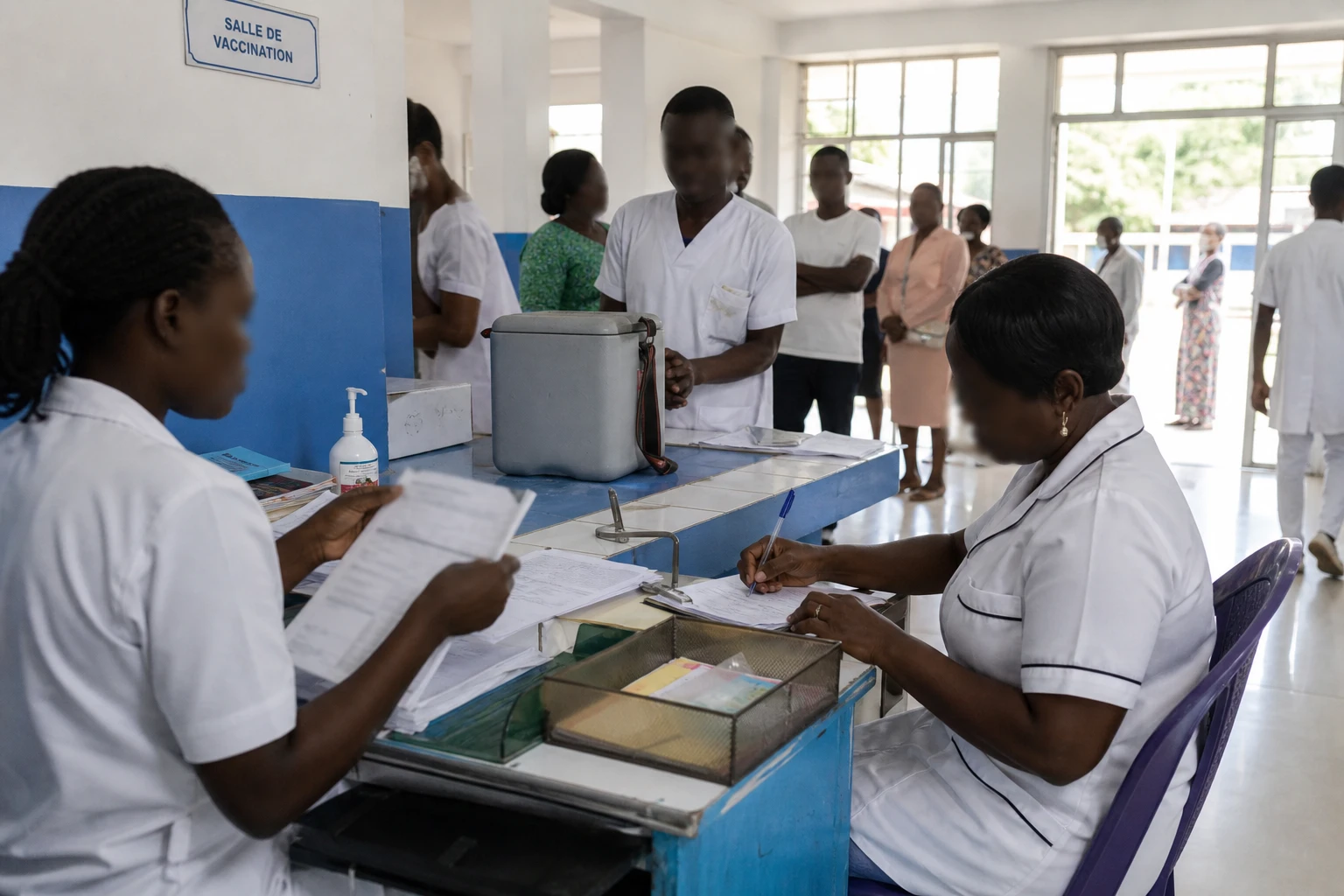
In Tshopo, Ebola vaccination has begun even as one question remains open: does the available vaccine really protect against the strain in circulation? In Kisangani, the authorities have chosen to protect health workers first — those exposed on the front line, whose safety is essential to that of patients.
This decision says much about the situation in the Democratic Republic of the Congo. When an outbreak spreads, waiting for a perfect answer can come at too high a cost. The country is therefore pressing ahead with the resources available while continuing trials and scientific assessment.
An outbreak in the north-east, amid mobility and pressure on health services
The current outbreak is affecting the north-eastern part of the country, with an initial epicentre in Ituri and cases reported in several neighbouring areas, including Tshopo. The WHO says the epidemic is unfolding in a difficult environment marked by insecurity, population movements and intense cross-border trade.
The Congolese government and the WHO have also launched the “Congo River Without Ebola” initiative, aimed at reducing the risk of transmission along the river corridor, which is vital for travel and trade. In a country where Kinshasa relies heavily on domestic connections, controlling the movement of people and goods is becoming a public health tool as well as an economic issue.
What vaccination changes — and what it does not yet guarantee
The vaccine being used, Ervebo, was developed against the Zaire strain. The current epidemic, however, is caused by the Bundibugyo strain. The WHO says clearly that it has not been established in humans that this vaccine protects against Bundibugyo. The Congolese authorities nevertheless say cross-protection is probable, pending more robust data.
The decision to vaccinate healthcare workers first remains logical. They care for suspected cases, handle samples and monitor contacts. If staff fall ill, the response is quickly weakened. In Kisangani, this strategy is therefore intended to protect individuals as well as ensure continuity of the healthcare system.
According to the ACP, the health minister announced that more than 50,000 doses had already been received in the country, while further deliveries were expected for priority areas. The information points to a logistical scale-up, but does not resolve the central question: the vaccine’s actual effectiveness against Bundibugyo remains to be measured.
A test for DR Congo — and for Africa’s response to epidemics
This episode extends beyond Tshopo alone. DR Congo is facing its 17th Ebola epidemic since 1976, according to the WHO Regional Office for Africa. In other words, the country has built up rare experience in surveillance, early warning and ring vaccination. This public health expertise could serve other countries in the region facing emerging viruses or outbreaks near their borders.
But the Bundibugyo case also highlights a limit that is often overlooked: not all forms of Ebola have the same countermeasures. The WHO says that, to date, no vaccine or treatment has been approved for this strain. The response is therefore evolving, as the urgency on the ground drives research to accelerate.
For Central Africa, the stakes are twofold. The outbreak must be contained in the affected provinces, while its spread along major river and road routes to the rest of the country and beyond must also be prevented. In this kind of crisis, the most vulnerable border is not only geographical. It is also a health, logistical and social boundary.