
 Algeria
 Egypt
 Libya
 Morocco
 Sudan
 Tunisia
 Benin
 Burkina Faso
 Cabo Verde
 Côte d'Ivoire
 Ghana
 Guinea
 Guinea-Bissau
 Liberia
 Mali
 Mauritania
 Niger
 Nigeria
 Senegal
 Sierra Leone
 The Gambia
 Togo
 Cameroon
 Central African Republic
 Chad
 Equatorial Guinea
 Gabon
 Republic of the Congo
 São Tomé and Príncipe
 Burundi
 Comoros
 Djibouti
 Eritrea
 Ethiopia
 Kenya
 Madagascar
 Malawi
 Mauritius
 Mozambique
 Rwanda
 Seychelles
 Somalia
 South Sudan
 Tanzania
 Uganda
 Angola
 Botswana
 Eswatini
 Lesotho
 Namibia
 South Africa
 Zambia
 Zimbabwe
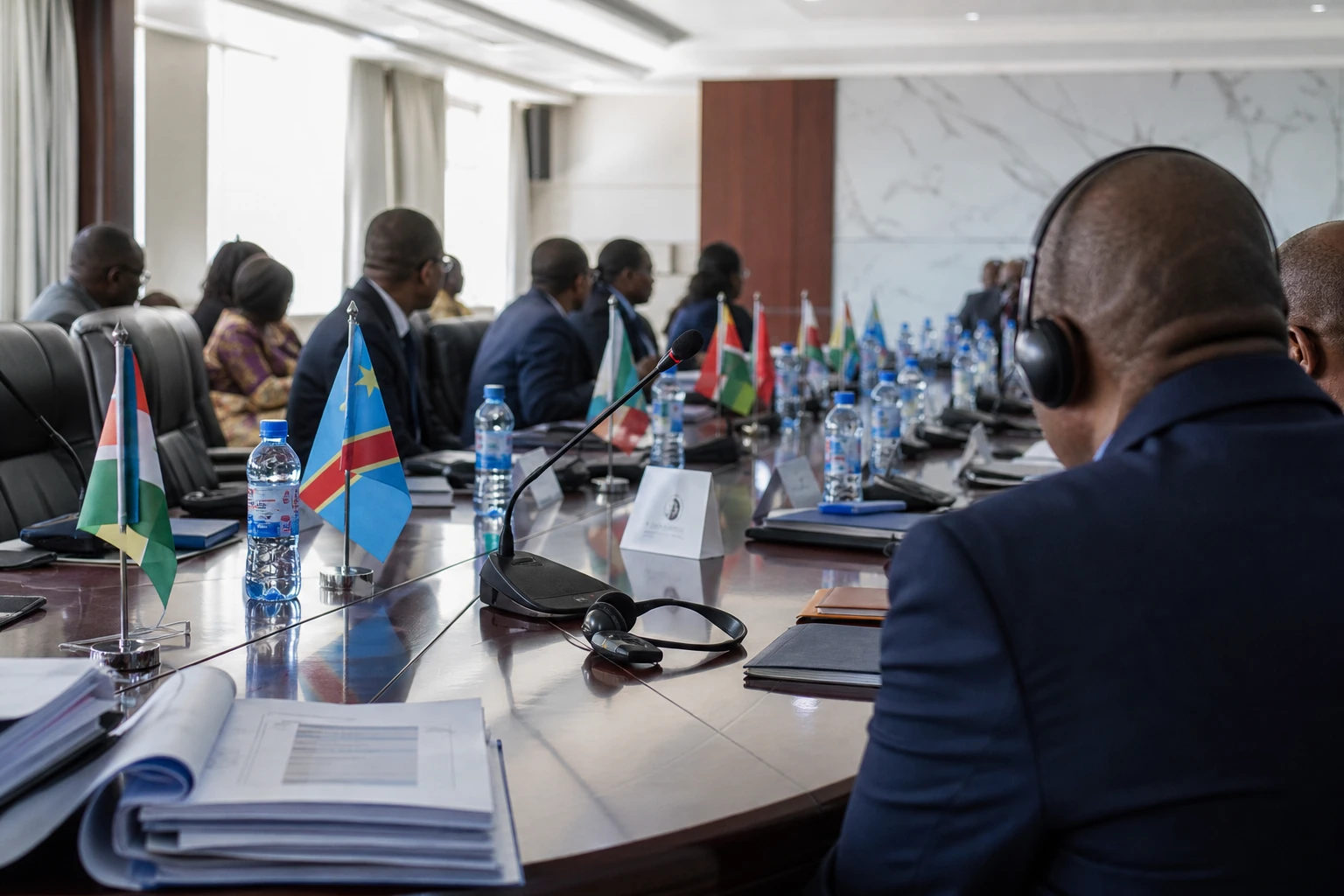
In Kinshasa, the fight against Ebola goes beyond the case curve
When a haemorrhagic fever outbreak spreads across several provinces, the issue is no longer just medical. It also becomes logistical, budgetary and political. In the Democratic Republic of the Congo, the response to Bundibugyo Ebola is entering precisely this transitional phase: authorities say infections are declining, but the virus continues to move with people, along roads and through trade.
DR Congo is no stranger to alerts. The country has already faced lengthy Ebola crises, with a strong public health memory in the east and institutional experience built up over the years. This time, the response is being led from Kinshasa, under the authority of Judith Suminwa Tuluka’s government, with support from the World Health Organization, Africa CDC and bilateral partners. The issue therefore extends beyond Ituri, the initial epicentre, and now concerns national health governance as a whole.
Numbers are falling, but the outbreak is not over
The latest data published by the WHO indicate that, as of 7 September 2026, DR Congo had reported 6,757 confirmed cases and 3,267 confirmed deaths, a crude case fatality rate of 48.3%. The organisation also says the outbreak has spread to 61 health zones in six provinces, with transmission still active in some of them.
On 10 September, the response team presented a more optimistic assessment to the Prime Minister: the curve was now declining and the epidemic peak had passed. This assessment is based on recent trends in daily cases, but it does not mean transmission has ended. On the contrary, the WHO notes that different dynamics are unfolding across the provinces: Ituri, which has the highest number of cases, has been seeing a decline since mid-August, while North Kivu continues to record a sustained rise.
Another warning sign: South Ubangi became a newly affected province after a case was confirmed on 10 September in the Gbulu health zone. The acting governor said a patient’s death had been confirmed following analysis by the National Institute of Biomedical Research. Local health sources report that the patient was a 23-year-old man who had travelled through several provinces and neighbouring countries before his death. His journey illustrates a key point: in Central Africa, rapid human movement can outpace conventional health barriers.
Financial support is increasing, but the response remains primarily Congolese
On 1 September, London announced a new aid package, bringing its total contribution to £78 million; a few days later, Africa CDC confirmed a commitment of £78.7 million. The support is intended to fund surveillance, prevention, treatment and cross-border coordination in DR Congo and Uganda. But Africa CDC stresses a point that has become central in African health crises: emergency funding cannot replace health systems capable of acting quickly, sustainably and with national resources.
In Kinshasa, the government has also revised its strategy, launching a revised 180-day multisectoral plan on 4 September to intensify the response. The document marks a change of pace: the aim is no longer only to contain an outbreak, but to prevent transmission chains from restarting in provinces already affected and in those exposed through trade, family travel and informal activities.
The role of the Congolese authorities therefore remains decisive. Prime Minister Judith Suminwa Tuluka has chaired several technical meetings, showing that the response is being treated as a matter for the state, not simply as a Health Ministry issue. In a vast country crossed by security front lines and busy trade routes, this centralisation can speed up decisions. It must also avoid a familiar pitfall: strong announcements in Kinshasa, but insufficient resources at health-zone level.
Why this outbreak matters well beyond DR Congo
The spread of Bundibugyo Ebola in DR Congo is of concern to all of Central Africa and its eastern neighbours. The WHO has maintained the event’s status as a public health emergency of international concern, following the initial declaration on 17 May 2026. The emergency committee warned that a deterioration in transmission could have profound regional consequences. This is not an abstract formulation: imported cases, cross-border mobility and trade along commercial corridors make every new outbreak potentially regional.
For Congolese households, the stakes are immediate: access to diagnosis without delay, avoiding interruptions in care and preserving trust in health centres. For the state, the challenge is broader: protecting frontline workers, securing points of entry, funding field operations and sustaining them over time. In the most exposed provinces, particularly in the east and north-west, the response also hinges on roads, markets, landing sites and the daily movement of people.
The continental significance is clear. This crisis is a reminder that health security in Africa depends less on emergency declarations than on the ability of states, the African Union, the WHO and partners to coordinate surveillance, funding and local communication swiftly. If the curve is indeed falling, DR Congo can draw on its own experience to strengthen the response. If it turns upwards again, the human and regional cost will be even greater. The coming weeks will show whether the announced decline holds up against the virus’s mobility and realities on the ground.



