
 Algeria
 Egypt
 Libya
 Morocco
 Sudan
 Tunisia
 Benin
 Burkina Faso
 Cabo Verde
 Côte d'Ivoire
 Ghana
 Guinea
 Guinea-Bissau
 Liberia
 Mali
 Mauritania
 Niger
 Nigeria
 Senegal
 Sierra Leone
 The Gambia
 Togo
 Cameroon
 Central African Republic
 Chad
 Equatorial Guinea
 Gabon
 Republic of the Congo
 São Tomé and Príncipe
 Burundi
 Comoros
 Djibouti
 Eritrea
 Ethiopia
 Kenya
 Madagascar
 Malawi
 Mauritius
 Mozambique
 Rwanda
 Seychelles
 Somalia
 South Sudan
 Tanzania
 Uganda
 Angola
 Botswana
 Eswatini
 Lesotho
 Namibia
 South Africa
 Zambia
 Zimbabwe
A major hub under health pressure
In Kisangani, the danger is not visible only in the figures. It can be seen in the queues, in hospital corridors and in the constant movement of people and goods along the Congo River. When a disease such as Ebola gains ground, Tshopo quickly becomes a point of friction between medical urgency and logistical realities.
This outbreak is unfolding in a country already accustomed to managing epidemics in hard-to-reach areas. In recent years, the Democratic Republic of the Congo has mounted multiple responses to Ebola, mpox and other diseases with epidemic potential. But the equation remains the same: surveillance, rapid care, vaccination where available, and community trust.
Cases now spread across six provinces
The Congolese health ministry and the WHO have confirmed that the Ebola epidemic caused by the Bundibugyo virus now affects six provinces: Bas-Uélé, Haut-Uélé, Ituri, North Kivu, South Kivu and Tshopo. As of 6 September 2026, 6,686 confirmed cases, including 3,226 deaths, had been recorded, for a case fatality rate of 48.3%.
The trend is worrying because the outbreak has spread beyond its initial centre in Ituri. The virus is now present in 61 health zones, indicating wider transmission than at the start of the response. Health authorities, supported by the WHO, Africa CDC and several UN agencies, have therefore launched a revised 180-day plan in Kinshasa to strengthen co-ordination, community surveillance and care.
Tensions rose in Kisangani in July, when four cases imported from Ituri were confirmed. The city was then officially included in the outbreak area. Since then, Tshopo authorities have tightened some measures, particularly those governing the movement of bodies from affected areas, to limit further infections.
New centre aims to speed up isolation and bring care closer
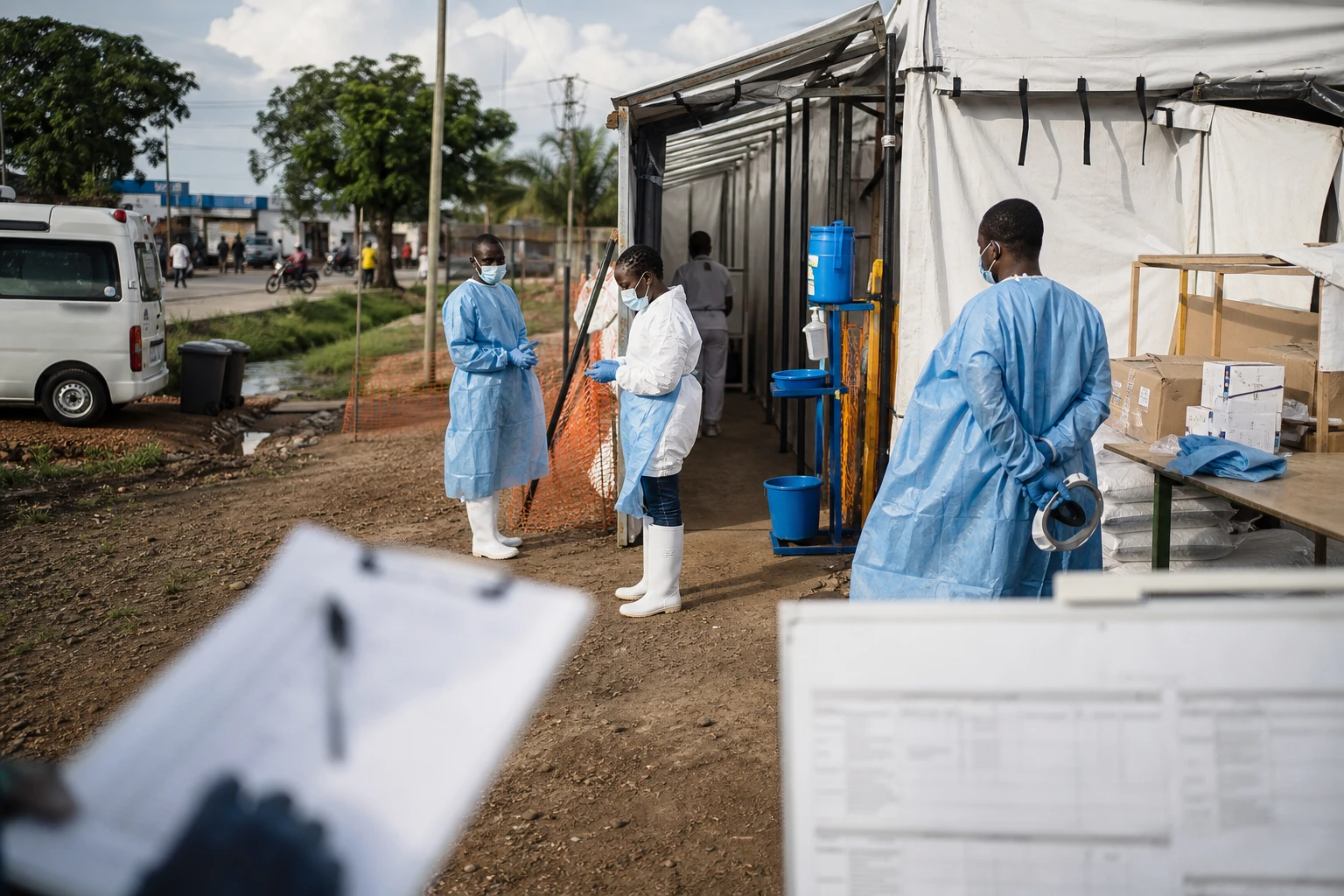
In response to the pressure, a new treatment centre is under construction in Kisangani. It is initially expected to have 22 beds, with the possibility of expanding to 50. The aim is simple: to separate suspected cases from confirmed cases earlier and reduce the risk of transmission in general health facilities.
This type of infrastructure changes the response on several levels. First, it prevents patients with symptoms consistent with Ebola from remaining too long in general wards. It also reduces the time needed to transfer them to another site. Finally, it provides greater protection for healthcare workers, who follow separate patient pathways, enhanced disinfection protocols and specific training.
In practice, needs go beyond bed capacity alone. Kisangani already lacked dedicated staff, ambulances and suitable isolation facilities. Several local warnings had highlighted the fragility of the system even before the new centre opened. It is a useful reminder: in the fight against Ebola, buildings matter, but so do teams, supply chains and contact tracing.
Resources remain a central issue. The WHO has announced a vaccine allocation for DR Congo, but it is mainly intended to protect frontline workers and support a clinical trial into the vaccine’s impact in the context of this Bundibugyo strain. The organisation also notes that, at this stage, no vaccine or specific treatment has been fully validated for this variant, unlike the Zaire strain.
A health response with social and regional dimensions
The challenge in this epidemic is not only medical. It is social, too. Ebola is transmitted through direct contact with an infected person or their bodily fluids. This calls for clear public information, without confusion with Covid-19 or alarmist messaging. Prevention depends on early alerts, rapid isolation of suspected cases, protection for healthcare workers and the co-operation of families.
The situation in eastern Congo makes everything more difficult. Armed violence, population displacement, mining-related mobility and weaknesses in some health infrastructure can disrupt follow-up. In a province such as Tshopo, a river and commercial hub, a local outbreak can quickly become a wider problem. That is why the “Congo River Without Ebola” initiative was launched: to secure the Kisangani-Kinshasa corridor and reduce the risk of spread to other major cities, as well as to the Republic of the Congo and the Central African Republic.
For residents, the impact is immediate. Families must contend with fear, movement restrictions and difficulties in accessing safe care quickly. For healthcare workers, the priority remains containing the epidemic without shutting the door to other patients. For the authorities, the true measure of success will be less the number of announcements than the ability to break chains of transmission, province by province.
Across Africa, this outbreak is a reminder of a familiar reality for public health services: viruses respect neither administrative borders nor bureaucratic delays. The strongest response is regional, co-ordinated and grounded in local realities. In DR Congo, the test in Kisangani will say much about the country’s ability to protect its vital transport routes while maintaining public trust.



