
 Algeria
 Egypt
 Libya
 Morocco
 Sudan
 Tunisia
 Benin
 Burkina Faso
 Cabo Verde
 Côte d'Ivoire
 Ghana
 Guinea
 Guinea-Bissau
 Liberia
 Mali
 Mauritania
 Niger
 Nigeria
 Senegal
 Sierra Leone
 The Gambia
 Togo
 Cameroon
 Central African Republic
 Chad
 Equatorial Guinea
 Gabon
 Republic of the Congo
 São Tomé and Príncipe
 Burundi
 Comoros
 Djibouti
 Eritrea
 Ethiopia
 Kenya
 Madagascar
 Malawi
 Mauritius
 Mozambique
 Rwanda
 Seychelles
 Somalia
 South Sudan
 Tanzania
 Uganda
 Angola
 Botswana
 Eswatini
 Lesotho
 Namibia
 South Africa
 Zambia
 Zimbabwe
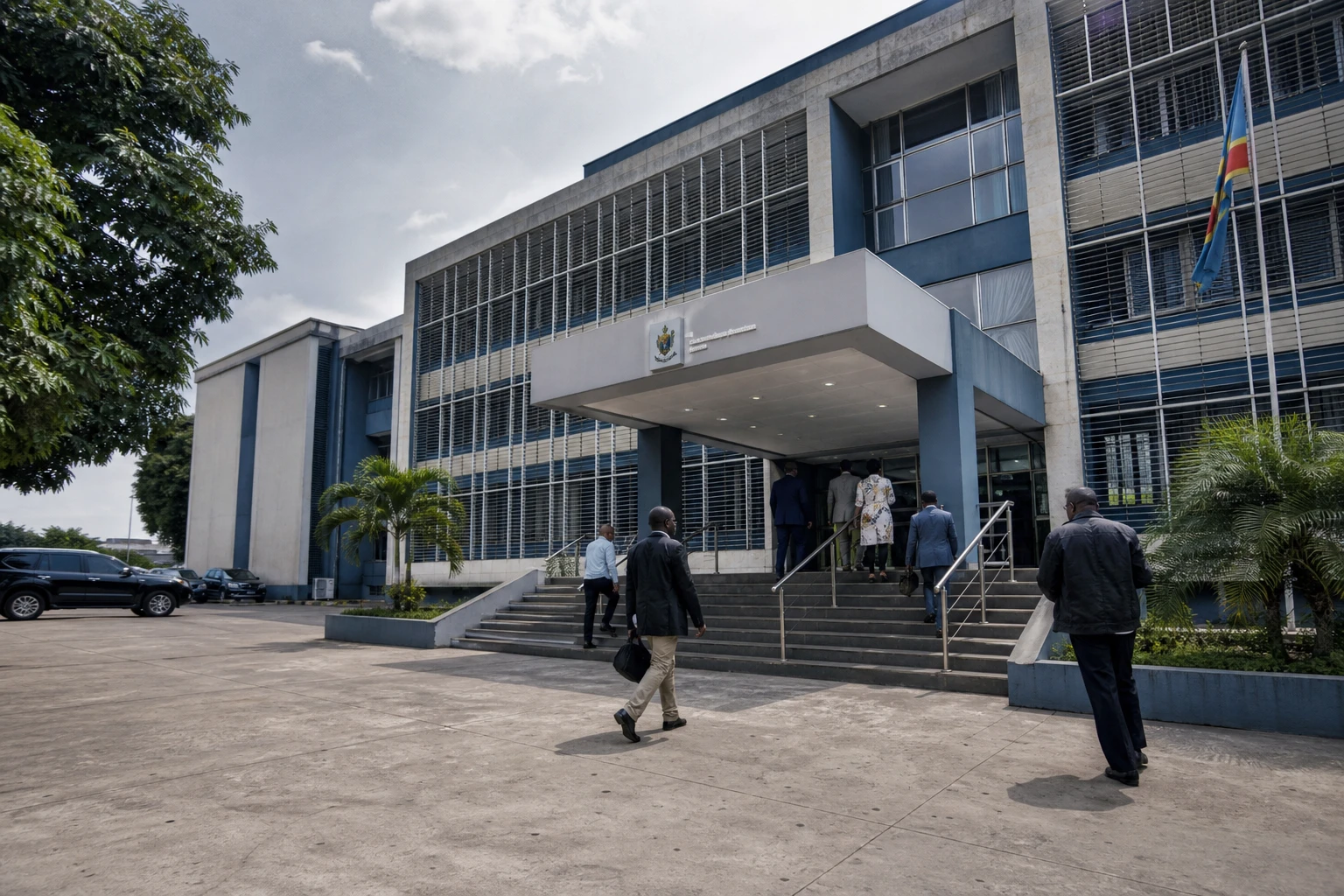
An outbreak that continues to test the Congolese response
In the Democratic Republic of the Congo, every new Ebola alert is a reminder of a simple reality: the health crisis is not playing out only in laboratories, but also on roads, in matters of trust and amid security concerns. When an epidemic spreads in the east, it affects families, health workers, markets and travel between provinces alike.
This time, Ebola virus disease caused by the Bundibugyo strain has crossed a threshold of great significance for the Congolese people. The Ministry of Communication announced 6,041 confirmed cases and 2,911 deaths. The World Health Organization, for its part, confirmed that the outbreak was declared on 17 May 2026 and that it was the 17th Ebola epidemic recorded in the country since 1976. In Kinshasa, the National Institute for Biomedical Research confirmed the Bundibugyo origin based on samples collected in Ituri.
Ituri, North Kivu, Haut-Uele: a health corridor under pressure
The epicentre is in the north-east of the country, where health zones, mining sites, trade routes and areas of insecurity meet. The WHO says the situation is complicated by population movements, cross-border crossings and logistical constraints. In this context, the response does not depend on the Ministry of Health alone. It also involves provincial authorities, surveillance teams, laboratory services and humanitarian partners.
Ituri is bearing a significant share of the effort, with North Kivu and Haut-Uele among the areas being closely monitored. This geography is no minor detail. It partly explains the speed of the spread. Where roads are long, services are fragile and mobility is high, a chain of transmission can spread before it is fully detected.
According to the WHO, the Congolese authorities have activated emergency mechanisms and deployed multidisciplinary teams. The organisation has also announced the dispatch of five tonnes of supplies to Bunia, the provincial capital of Ituri, to strengthen prevention, the transport of samples and clinical care. The message is clear: the response is under way, but it is having to chase the virus.
What the figures say, and what they conceal
Passing the 6,000-case mark does not tell the whole story. First, it shows that transmission has spread beyond the bounds of a localised alert. It also suggests that some patients were not identified early enough, as confirmed by initial reports referring to numerous community deaths. When a patient dies before being isolated, the virus has already gained ground.
The authorities have stressed that there is neither an approved vaccine nor a specific approved treatment for the Bundibugyo strain. This is a central point. The DRC has built up valuable experience in tackling Ebola, but that experience is being tested by a rarer variant. The response tools therefore rely mainly on rapid detection, contact tracing, isolation, hygiene in healthcare facilities and safe burials.
This situation also calls for a misconception to be corrected. In public health, an affected province is not a doomed province. But a province with poor services, beset by conflict and population displacement, needs sustained support. Without it, case numbers rise faster than the response capacity.
A health crisis inseparable from local power dynamics
In the east of the DRC, public health often faces a twofold obstacle: insecurity and mistrust. Response teams must work in areas where the presence of armed groups, community tensions and public fatigue undermine the flow of information. This slows investigations, complicates safe burials and puts health workers at risk.
The situation is also having an immediate economic impact. Movement restrictions, fear of infection and market disruption are harming small traders, transport operators, displaced families and informal workers. In a city such as Bunia, where trade shapes part of daily life, public health and the local economy move forward together, or fall back together.
In Kinshasa, the government is seeking to show that national coordination is holding. This is as much a political issue as a health one. In a country as vast as the DRC, the Ebola response also serves as a test of state capacity: the ability to raise the alarm quickly, supply resources, persuade and protect without resorting to force. This requirement is all the more pressing because the crises in the east remain numerous and intertwined.
A Congolese issue, but a regional alert
The issue extends beyond the DRC’s borders. The WHO has highlighted the risk of cross-border spread to Uganda, which has already introduced surveillance measures. In the Great Lakes region, workers, traders and families cross borders constantly. An epidemic in Ituri therefore quickly becomes a regional, and then continental, concern.
This is also why the WHO has placed the outbreak under international coordination. The precedent is well known: in past outbreaks, delays in detection and failures to build public trust have cost time, and then lives. This time too, success will depend less on one grand gesture than on a succession of precise, local responses sustained over time.
For the DRC, the challenge is twofold. It must contain the epidemic without exacerbating tensions on the ground. It must also preserve the belief that an African response can be led with local expertise, regional support and national command. That is where the next stage will be decided: in the affected provinces, but also in the country’s ability to turn a health emergency into a demonstration of institutional resilience.



