
 Algeria
 Egypt
 Libya
 Morocco
 Sudan
 Tunisia
 Benin
 Burkina Faso
 Cabo Verde
 Côte d'Ivoire
 Ghana
 Guinea
 Guinea-Bissau
 Liberia
 Mali
 Mauritania
 Niger
 Nigeria
 Senegal
 Sierra Leone
 The Gambia
 Togo
 Cameroon
 Central African Republic
 Chad
 Equatorial Guinea
 Gabon
 Republic of the Congo
 São Tomé and Príncipe
 Burundi
 Comoros
 Djibouti
 Eritrea
 Ethiopia
 Kenya
 Madagascar
 Malawi
 Mauritius
 Mozambique
 Rwanda
 Seychelles
 Somalia
 South Sudan
 Tanzania
 Uganda
 Angola
 Botswana
 Eswatini
 Lesotho
 Namibia
 South Africa
 Zambia
 Zimbabwe
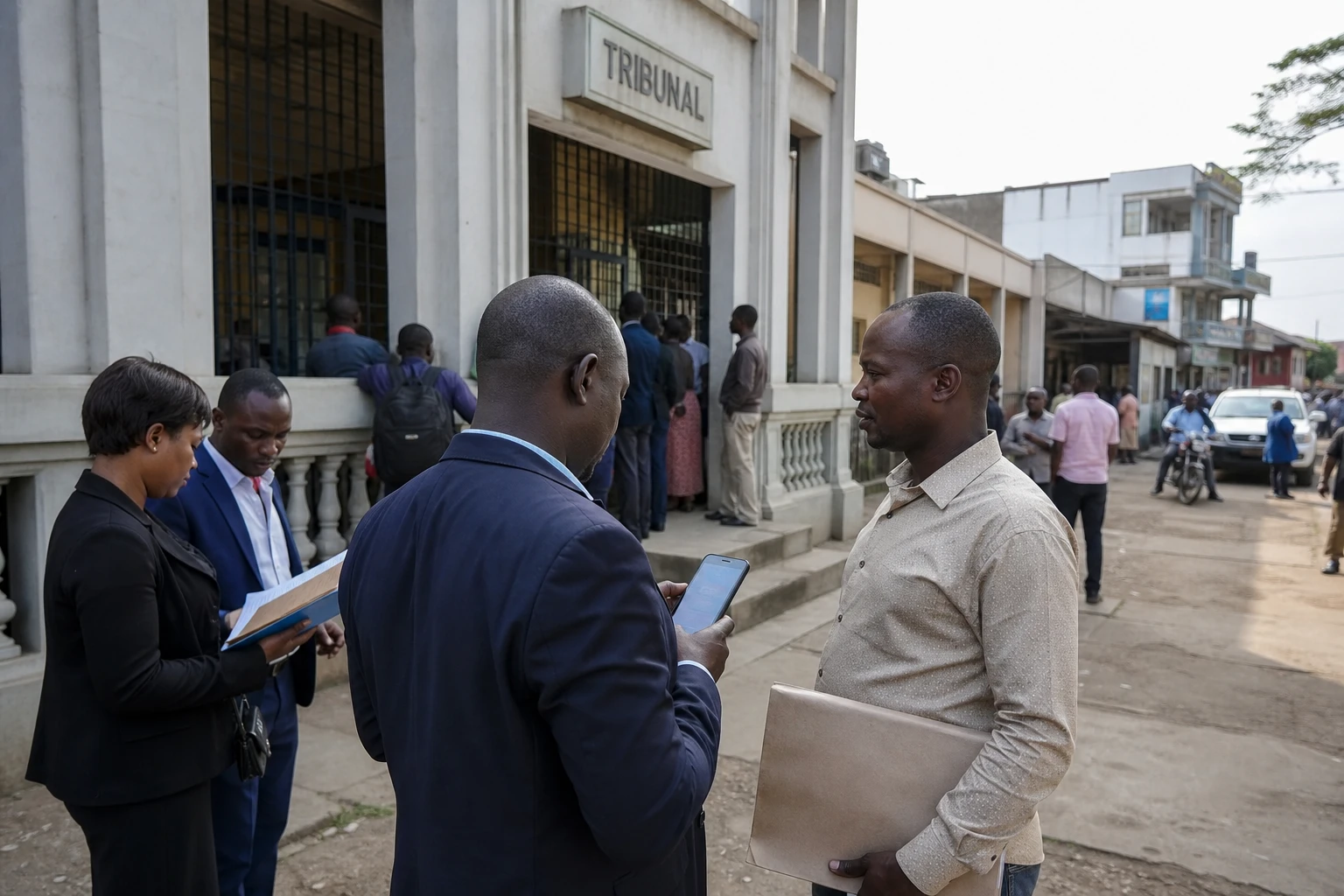
In Butembo and Kinshasa, two deaths within a few days have confronted the Congolese justice system with the same question: were they targeted acts of violence, collective unrest or ordinary criminal cases? Until investigations provide a substantiated answer, every hypothesis fuels distrust.
Two cases, two flashpoints
The first death was that of Marie-Célestin Karondwa Mwanaweka, a local official of the Union for Democracy and Social Progress (UDPS) in Butembo, in North Kivu province. The second was that of Manassé Lomboto Lomengola, head of security for the ADD Congo party and a member of the Coalition for the Defence of the Constitutional Order, known by the acronym C64, in Kinshasa.
The two cases unfolded in very different contexts. In Butembo, the debate concerns the response to Ebola virus disease. In the capital, it is set against violence surrounding an opposition demonstration. Bringing the cases together does not mean their causes are the same. Rather, it reveals how fragile the public climate is when the facts remain unclear and institutions are slow to produce a verifiable account.
In Butembo, a death linked to the Ebola debate?
Marie-Célestin Karondwa was assaulted on Sunday 27 September, after appearing on a programme on Mwangaza radio, according to the local UDPS federation. Party officials say unidentified people attacked him on his way back. His house was then reportedly set on fire. The UDPS is calling for an investigation to identify those responsible and determine the motive for the attack.
The politician had defended on radio the preventive measures against Ebola in the Butembo health zone. According to figures cited in the case file, 256 confirmed cases and 165 deaths had been recorded as of 26 September. These figures must, however, be understood in the context of their source and date, as epidemiological tallies can change rapidly.
The UDPS has put forward the possibility that the assault was linked to awareness-raising about Ebola. At this stage, this has not been established by a judicial decision. Other hypotheses, including a neighbourhood dispute, have also reportedly been examined. The civil prosecutor’s office and the municipal authorities in Butembo are responsible for the initial inquiries. No arrests have been announced in the information available.
This caution is important in a region where health teams have already faced distrust, rumours and attacks on public health measures. A premature accusation could worsen tensions between residents, political officials and medical workers. Conversely, the absence of a visible investigation allows competing accounts to proliferate.
In Kinshasa, a body held for the investigation
In Kinshasa, the controversy concerns the death of Manassé Lomboto Lomengola after the march organised by C64 on Tuesday 15 September. The opposition coalition aimed, among other things, to denounce a proposed amendment to the Constitution, the prospect of a third presidential term and the terms of the institutional debate.
The march, which began in the Limete district, was halted after clashes between demonstrators and young people described as being close to Force du progrès, a structure affiliated with the UDPS. The Congolese National Police then intervened to disperse the crowd, including with tear gas, according to several local media outlets.
Manassé Lomboto’s political allies say he was violently attacked during the unrest. Prince Epenge, head of ADD Congo, is calling for an investigation capable of establishing responsibility. This account is a statement by an interested party. It cannot be treated as a judicial finding before the available testimony, footage and medical evidence have been examined.
On Saturday 26 September, the prosecutor’s office at the Kinshasa/Kalamu court of major jurisdiction ordered that the body remain in the mortuary of the Centre Hospitalier Universitaire du Cinquantenaire until the investigation was complete. The decision prevented the family and the deceased’s loved ones from collecting the body as planned.
The judicial measure may help preserve evidence relevant to the investigation. But its late announcement also angered C64, which denounced the presence of police officers around the facility. Opposition officials see this as political pressure. The prosecutor’s office, for its part, presents the retention of the body as a measure connected to establishing the exact causes of death.
The central question: establish the facts before making accusations
In both cases, the difficulty lies in the coexistence of several accounts. In Butembo, the UDPS points to an attack possibly linked to support for the response to Ebola, while other hypotheses remain open. In Kinshasa, the opposition alleges that violence was inflicted during the march, while the justice system is still seeking to document the medical and material circumstances of the death.
A credible investigation must therefore establish the chronology, identify witnesses, examine footage and record forensic findings. It must also distinguish individual responsibility from accusations directed at entire organisations. This distinction applies equally to supporters of the ruling camp and those of the opposition.
For the families, uncertainty prolongs their grief. For political parties, it becomes a factor in mobilisation. For residents, it reinforces the feeling that the justice system acts mainly when cases take on a political dimension. In Kinshasa’s neighbourhoods and the cities of North Kivu, this perception undermines trust in institutions.
The national context heightens these tensions. The Democratic Republic of the Congo is emerging from a political period marked by disputes over institutional rules, polarisation between the ruling majority and the opposition, and the rapid spread of unverified information. In the east of the country, security and health crises place additional pressure on local authorities.
An issue that extends beyond the two cities
The significance of these cases extends beyond Butembo and Kinshasa. The Democratic Republic of the Congo occupies a central place in the stability of the Great Lakes region. Its neighbours are watching both the security situation and the management of political demonstrations, as well as the state’s ability to deliver justice in sensitive cases.
At continental level, these events are a reminder of a fundamental principle: combating rumours and preventing violence require swift, transparent and accessible investigations. This applies both to deaths linked to demonstrations and to assaults committed amid health-related tensions.
The next steps will be decisive. In Butembo, it will be necessary to establish whether the prosecutor’s office identifies those responsible for the assault and confirms or rules out a link with the Ebola debate. In Kinshasa, the retention of the body must lead to medical and judicial findings being made public. Without precise results, both cases will continue to fuel already deep distrust.



