
 Algeria
 Egypt
 Libya
 Morocco
 Sudan
 Tunisia
 Benin
 Burkina Faso
 Cabo Verde
 Côte d'Ivoire
 Ghana
 Guinea
 Guinea-Bissau
 Liberia
 Mali
 Mauritania
 Niger
 Nigeria
 Senegal
 Sierra Leone
 The Gambia
 Togo
 Cameroon
 Central African Republic
 Chad
 Equatorial Guinea
 Gabon
 Republic of the Congo
 São Tomé and Príncipe
 Burundi
 Comoros
 Djibouti
 Eritrea
 Ethiopia
 Kenya
 Madagascar
 Malawi
 Mauritius
 Mozambique
 Rwanda
 Seychelles
 Somalia
 South Sudan
 Tanzania
 Uganda
 Angola
 Botswana
 Eswatini
 Lesotho
 Namibia
 South Africa
 Zambia
 Zimbabwe
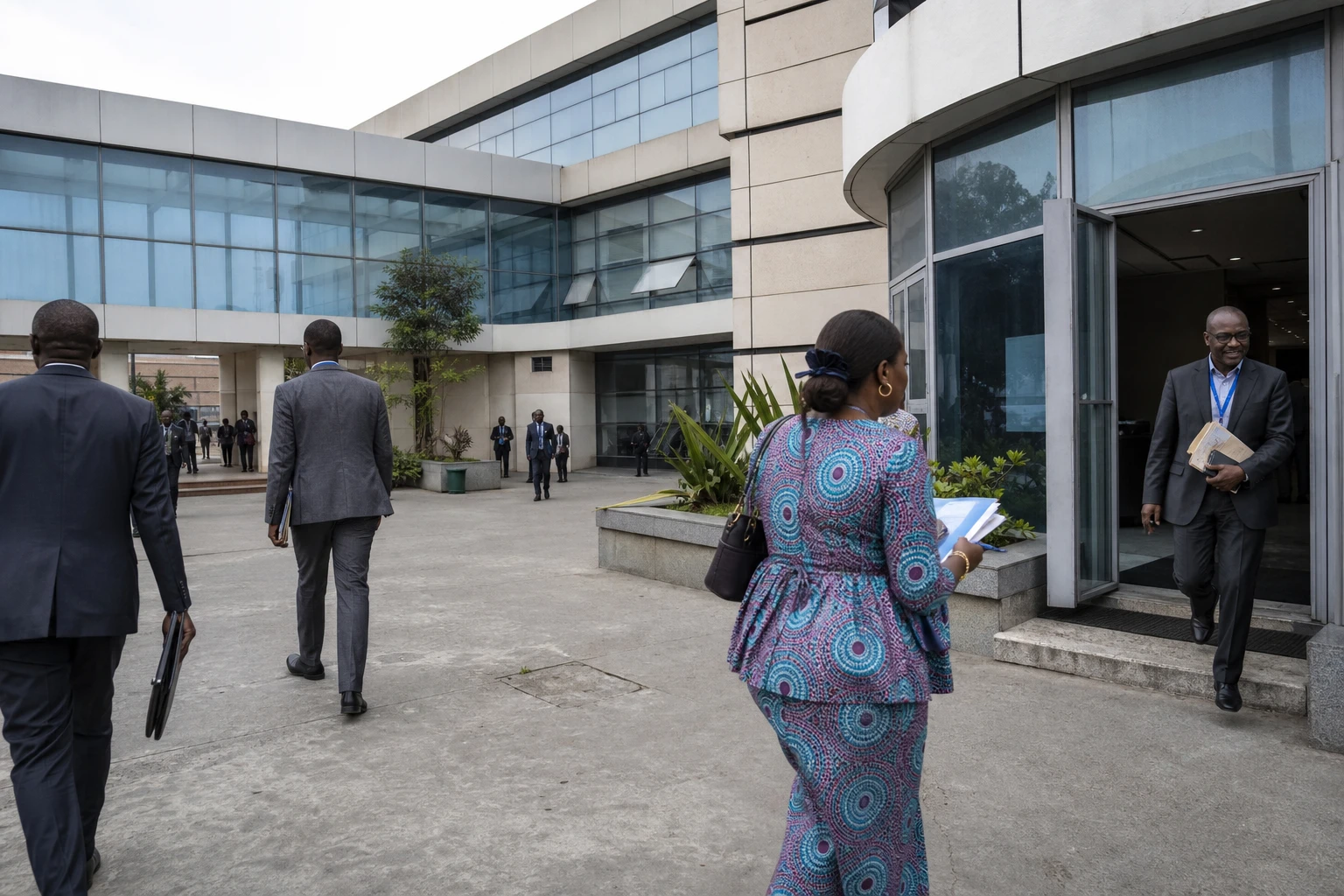
In Kinshasa, dialogue is no longer just a promise. It is becoming a political test.
In the Democratic Republic of the Congo, the word “dialogue” often resurfaces when pressure mounts. But this time, the issue is more specific: who speaks on behalf of the nation, within what framework and subject to what limits. President Félix-Antoine Tshisekedi Tshilombo announced on Thursday 27 August 2026 the launch of a National Dialogue for Peace, Cohesion and the Renewal of the State, in a format described as time-limited and open to several social groups, including the Congolese diaspora.
For Congolese people, the stakes are twofold. On the one hand, the persistent insecurity in the east must be addressed. On the other, a new round of talks must not turn into a mere allocation of posts. This is the line Kinshasa says it wants to hold: political openness, but without granting legitimacy to those still fighting the constitutional order with weapons.
A country under pressure, between war in the east and the search for national cohesion
The DRC is going through a difficult period. In the east, the security crisis remains acute, despite parallel negotiation channels under way in Doha and regional and international support. In late August, representatives of the Congolese government and the AFC/M23 met again in Switzerland, alongside Qatar, the United States, Togo, the African Union mediator, the AU Commission and Switzerland, to assess implementation of the Doha process. The United Nations, too, says that no lasting peace is possible without addressing the political and security causes of the conflict in the Great Lakes region.
In this context, the domestic dialogue announced in Kinshasa does not replace external negotiations. Rather, it addresses a different set of issues: national cohesion, state reform and the rebuilding of political ties within the country. The presidency says it intends to hold consultations in all 26 provinces before the national sessions. This decentralised approach matters, because the Congolese crisis cannot be viewed from the capital alone. It is also experienced in the provinces, where the state is sometimes absent, weakened or challenged.
The facts: openness, but with safeguards
The presidential message sets out three points. First, the dialogue will be presented as “not monopolised”, representative and secure. Second, it must include civil society, women, young people, professional groups, farmers, teachers, researchers, artists, informal-sector workers and the diaspora. Finally, a limit has been set: individuals or groups fighting the constitutional order with weapons or illegally occupying part of the country cannot turn military force into a route into politics.
This red line is central. It is intended to avoid a confusion seen in other periods of crisis in Central Africa and the Great Lakes region: the idea that an armed group can gain political recognition simply by controlling territory or imposing a balance of power. Kinshasa argues instead that legitimacy must remain tied to the Constitution, institutions and justice.
The diaspora issue, meanwhile, has gained momentum in recent weeks. The Congolese Press Agency reported that Congolese people in Belgium, the United States, France and Canada had called for a role in the dialogue. The same trend emerged at another diaspora forum, where participants called for structured representation and a permanent consultation mechanism. The request from the Convergence for the Emergence of Congo is therefore part of a broader movement.
Why the diaspora matters at this political moment
The Congolese diaspora is not simply an audience far away. It supports families financially, contributes expertise, builds economic networks and maintains links with the country’s universities, hospitals, businesses and government departments. In a state where technical capacity remains unevenly distributed, it represents a pool of expertise. That is why several stakeholders are calling for it to be included in an organised way, rather than merely invited symbolically at the last minute.
The proposal for a National Agency for the Reception and Support of the Diaspora follows this logic. The idea, already put forward by civil society stakeholders and echoed in Kinshasa, is to create a permanent public one-stop shop. Such a body could help direct projects, facilitate the sharing of expertise and support the temporary or permanent return of some professionals. In practice, it would address a familiar problem: Congolese people abroad want to contribute, but often struggle to find a clear point of entry into the state apparatus.
Implications beyond Kinshasa
This national dialogue extends beyond Congolese domestic politics. In the Great Lakes region, every political opening in Kinshasa is watched by its neighbours, the African Union and partners involved in peace processes. Timing also matters: the DRC continues to negotiate both domestically and in external forums, requiring the government to avoid sending contradictory messages. If the national dialogue lends credibility to internal unity, it could strengthen Kinshasa’s position in regional discussions. If it appears closed or unbalanced, it could instead undermine the diplomatic process.
For Central Africa, the stakes are clear: a lasting political transition cannot rely solely on managing emergencies. It requires stronger institutions, a more inclusive public voice and a recognised role for people living outside the country, without weakening national sovereignty. The next milestone to watch will be how the presidential announcement is put into practice: the timetable, the format of provincial consultations, the list of participants and the real role granted to the Congolese diaspora.



