Algeria
 Egypt
 Libya
 Morocco
 Sudan
 Tunisia
 Benin
 Burkina Faso
 Cabo Verde
 Côte d'Ivoire
 Ghana
 Guinea
 Guinea-Bissau
 Liberia
 Mali
 Mauritania
 Niger
 Nigeria
 Senegal
 Sierra Leone
 The Gambia
 Togo
 Cameroon
 Central African Republic
 Chad
 Equatorial Guinea
 Gabon
 Republic of the Congo
 São Tomé and Príncipe
 Burundi
 Comoros
 Djibouti
 Eritrea
 Ethiopia
 Kenya
 Madagascar
 Malawi
 Mauritius
 Mozambique
 Rwanda
 Seychelles
 Somalia
 South Sudan
 Tanzania
 Uganda
 Angola
 Botswana
 Eswatini
 Lesotho
 Namibia
 South Africa
 Zambia
 Zimbabwe
In the Democratic Republic of the Congo, three debates are converging this week: the legacy of a controversial security apparatus, the terms of political dialogue and control over mineral resources. They raise the same fundamental question: who decides, and in whose interests?
A contested political legacy
Kalev Mutond, who headed the National Intelligence Agency (ANR) from 2011 to 2019 under Joseph Kabila, died in Paris on 5 October 2026, aged 69. Radio Okapi and Actualite.cd reported his death and career. Those close to him say he was in France for medical treatment; the cause of his death has not been made public. Radio Okapi looks back at the career of the former head of the ANR, while Actualite.cd reports the known circumstances of his death.
His name remains associated with a period of intense political tension. Opposition figures and former detainees accused the services under his command of arbitrary arrests, unlawful detention and ill-treatment. These allegations should not be confused with judicial findings establishing his personal responsibility in each case. Hostile reactions after his death nevertheless testify to the weight the ANR continues to carry in the memories of many Congolese.
This record calls for a distinction between the intelligence function, which is necessary for state security, and alleged abuses in its exercise. The death of a former chief neither closes the debate over responsibility nor settles the question of the safeguards that should govern security services. It also revives questions about institutional continuity since the change of power in 2019.
Dialogue, between openness and safeguards
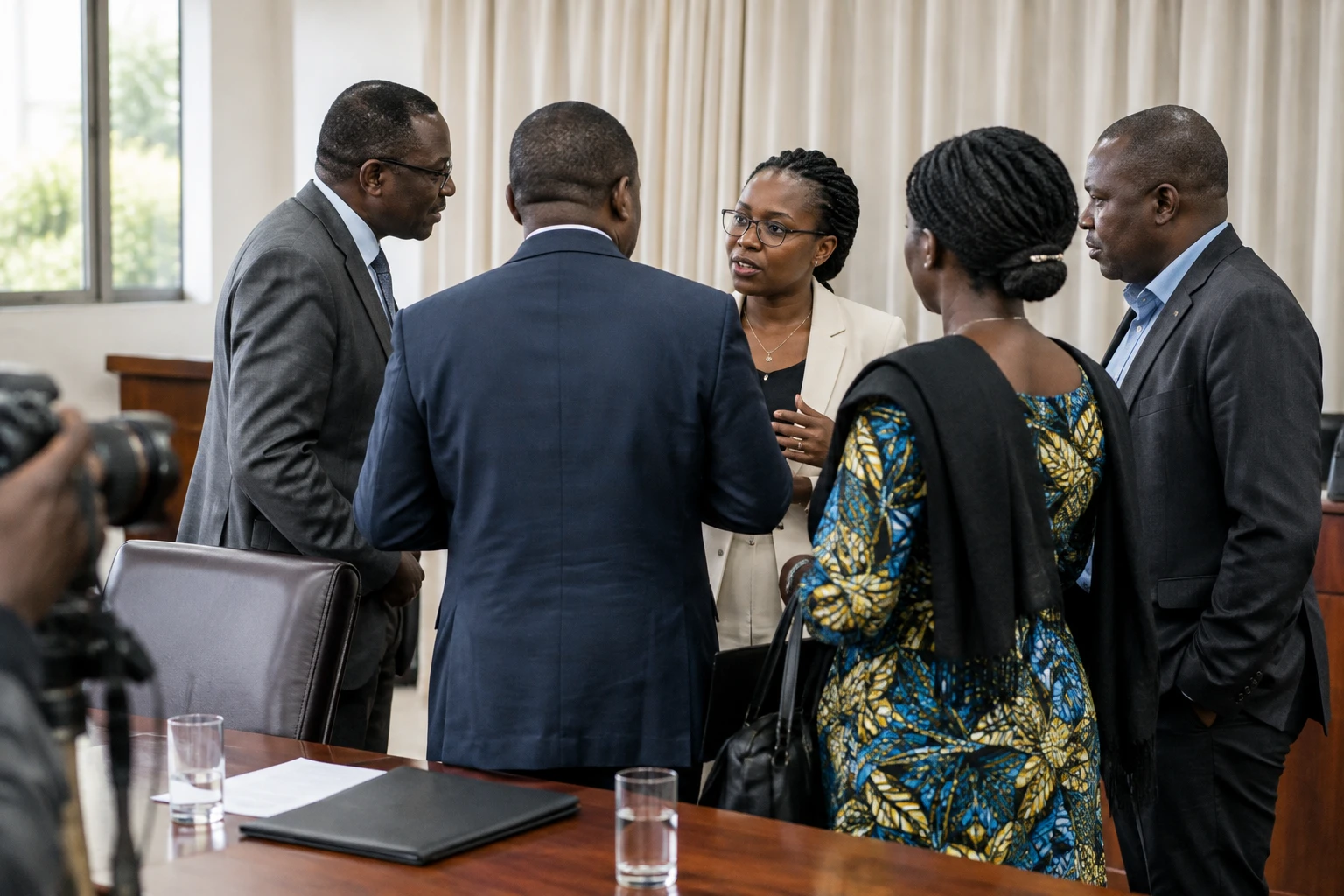
At the same time, discussions on a national dialogue are testing trust between the government, opposition groups and civil society organisations. On 3 October in Lubumbashi, Bishop Fulgence Muteba, president of the National Episcopal Conference of Congo (CENCO), received a delegation from the presidency led by Anthony Nkinzo. CENCO and the Church of Christ in Congo (ECC), the country’s two main Christian denominations, say they are ready to contribute to the search for peace, but advocate an inclusive process with safeguards.
The meeting and this position were reported by CENCO’s media outlet and Congolese media. Since 2024, the churches have been promoting a “Social Pact for Peace and Living Well Together in the DRC and the Great Lakes”. Their approach aims to involve a broad range of actors and examine the root causes of crises, rather than limiting discussions to an agreement between political leaders. CENCO sets out the issues at stake in its commitment to dialogue; Congo Quotidien reports on the Lubumbashi meeting.
It remains to be seen who will take part, under what rules and with what follow-up. For the authorities, dialogue could offer a political path through national tensions. For opposition groups and citizens, its credibility will depend on whether absent voices are represented, whether people can speak freely and whether commitments are implemented. The security situation in the east of the country gives these discussions a significance that extends beyond the institutions in Kinshasa.
Mapping the subsoil is not enough
On 5 October, the government launched the Aerial Geophysical and Geological Mapping Programme in Kinshasa. It is due to run for thirty-six months and deploy eight aircraft, with initial operations announced in areas including Kongo-Central, Kwango, Kwilu, Greater Kasaï and Greater Katanga. The programme is intended to produce data to help identify geological formations and guide mining exploration. The Congolese Press Agency had previously reported the signing of the contract for the project; Congolese media have covered its launch and terms. The ACP had announced the contract signing, and Enquete.cd details the aim of improving knowledge and negotiating power.
A more precise map could help the state better understand its territory and negotiate with investors. But geological information alone guarantees neither balanced contracts nor local benefits. Data and access rules will also need to be published, public-sector expertise strengthened and affected communities involved before exploration projects begin. The impact will differ for central government bodies, companies, local subcontractors and residents of the areas being surveyed.
Mining subcontracting: enforcing the rules
The Regulatory Authority for Subcontracting in the Private Sector (ARSP) says it is stepping up inspections in the mining industry. Its director-general, Juan Ted Beleshayi Kasanda, estimates that nearly $20bn escapes the Congolese economy each year in this sector. This figure is an estimate attributed to the official, not a loss independently established by the available evidence. The ARSP says it has identified contracts with companies it deems ineligible at Sicomines and Ivanhoe Mines. The authority has, in particular, published a ruling targeting Ivanhoe subsidiaries. The ARSP ruling sets out its orders concerning subcontracting contracts.
Congolese law restricts access to subcontracting to companies that meet national ownership and eligibility criteria. The regulator summarises the rule as a 51% share for Congolese firms and 49% for foreign partners. The aim is to anchor more contracts in the local economy. However, enforcing the rule must go hand in hand with transparent checks, avenues of appeal and verification of ultimate beneficial owners. The ARSP itself has raised the risk of front companies being used to circumvent the spirit of the law.
For major companies, these checks could mean reviewing contracts and suppliers. For Congolese businesses, they could open up markets, provided they have the necessary skills, financing and equipment. For workers and mining communities, the question is whether more value will actually remain in the country.
An issue that crosses borders
Mapping and subcontracting are part of a continent-wide debate about local processing of resources and how their value is shared. The DRC, at the heart of Central Africa and a member of the Southern African Development Community (SADC), is seeking to strengthen its negotiating capacity in a region where mining supply chains cross borders. Announcements will not be enough: geological data, regulatory decisions and the outcomes of political dialogue will need to be monitored over time.