
 Algeria
 Egypt
 Libya
 Morocco
 Sudan
 Tunisia
 Benin
 Burkina Faso
 Cabo Verde
 Côte d'Ivoire
 Ghana
 Guinea
 Guinea-Bissau
 Liberia
 Mali
 Mauritania
 Niger
 Nigeria
 Senegal
 Sierra Leone
 The Gambia
 Togo
 Cameroon
 Central African Republic
 Chad
 Equatorial Guinea
 Gabon
 Republic of the Congo
 São Tomé and Príncipe
 Burundi
 Comoros
 Djibouti
 Eritrea
 Ethiopia
 Kenya
 Madagascar
 Malawi
 Mauritius
 Mozambique
 Rwanda
 Seychelles
 Somalia
 South Sudan
 Tanzania
 Uganda
 Angola
 Botswana
 Eswatini
 Lesotho
 Namibia
 South Africa
 Zambia
 Zimbabwe
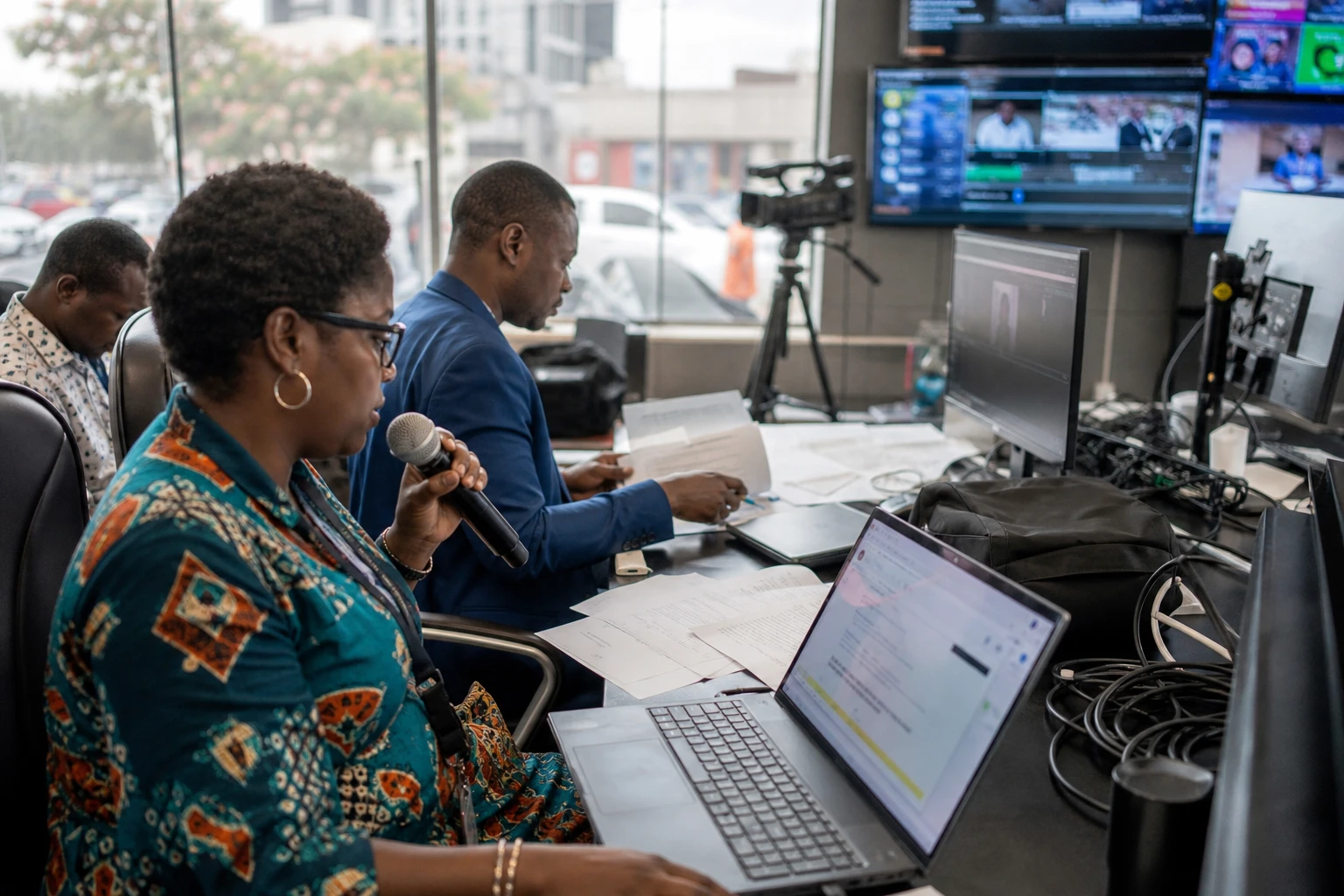
When dialogue becomes a test of political credibility
In the Democratic Republic of Congo, national dialogue is not merely an institutional formula. It is often the moment when people gauge whether the authorities genuinely accept dissent, or are mainly seeking to regain control of a crisis that has already spilled beyond the political arena. In Kinshasa and the provinces, the question is simple: can national cohesion be rebuilt without opening the table to those who challenge, unsettle or inconvenience the authorities?
The issue has resurfaced in a country marked by a persistent war in the east, governance tensions and fragile trust between institutions, the opposition and civil society. The Congolese presidency announced on 28 August 2026 a “national dialogue for peace, cohesion and the refoundation of the state”, initially envisaged through consultations in all 26 provinces before a phase in Kinshasa. At the same time, the United Nations says the conflict in the east continues to be fuelled by the AFC/M23 and the presence of Rwandan forces, according to UN reports and statements.
Provincial dialogue under intense national pressure
The format chosen by Kinshasa is significant. The head of state has decided to launch the process with local consultations in the provinces and territories, before national meetings. The approach is intended to present the dialogue as rooted in the country beyond the political circles of the capital. But it also raises a fundamental question: are these consultations intended to listen to the country, or to filter in advance what can be discussed in Kinshasa?
This is precisely where the criticism voiced by several figures in Congolese civil society lies. Lawyer and civic activist Martin Milolo argues for a genuinely open forum in which viewpoints opposed to the authorities, including the political opposition, have a place. His argument reflects a broader debate in the DRC: dialogue cannot be credible if it becomes a mechanism for sorting interlocutors into those deemed “acceptable” and those excluded in advance. The demand for inclusion is all the stronger because, for months, political leaders, religious denominations and civic organisations have been calling for a clearer, more broadly shared framework.
In practice, the political calendar is adding to the tension. The ruling majority and the opposition are preparing for the parliamentary session and mobilisations announced for the same period. Warnings of a risk of clashes are less a matter of rhetoric than a reflection of an already combustible situation, in which civic space must remain protected. The United Nations has also stressed that freedom of expression and the right to peaceful assembly remain essential safeguards for a peaceful political transition.
Exclusions, red lines and a Congolese precedent
The debate is not only about the method. It also concerns who takes part. The Congolese authorities have suggested that those involved in armed conflict do not belong in the same forum as the political and social forces invited to discuss national cohesion. This distinction separates domestic dialogue from military or diplomatic negotiations, which are already being handled elsewhere, notably in Doha for talks involving the AFC/M23 and in Washington for the regional DRC-Rwanda track.
This separation is not illogical. In the DRC, war crimes, abuses against civilians and serious violations of the law cannot be resolved through a simple political compromise. UN reports instead highlight that the conflict in the east has reached a critical point, with territorial advances by the M23 and massive risks to civilians. In other words, national dialogue can address institutional deadlock and national cohesion, but it does not replace justice or the peace mechanisms already under way on the ground.
The memory of the Mobutu years continues to haunt discussions. In Congolese political history, forums held under tight government control have often generated more mistrust than lasting solutions. By contrast, the Sovereign National Conference embodied, despite its limitations, a different idea of public debate: the possibility of a genuine discussion about the rules of the game. Several civil society actors are invoking that precedent today to call for dialogue that is neither cosmetic nor tightly controlled. This reading is not nostalgic; it simply serves as a reminder that in the DRC, the form of dialogue matters almost as much as its content.
What this standoff says about the DRC today
In reality, the dialogue debate reveals three fault lines. The first is institutional: between a government intent on keeping the initiative and an opposition unwilling to enter a framework drawn up elsewhere. The second is territorial: Kinshasa does not experience the crisis in the same way as Goma, Bukavu or towns in the centre and west, where priorities often include security, displacement, prices and the return of state authority. The third is moral: part of the country is calling for both reconciliation and punishment for crimes, without one cancelling out the other.
In this context, the phrase “reconciliation, justice and respect for the Constitution” sums up the expectations of a large part of public opinion. Reconciliation is essential to mend a society riven by community conflicts and political rivalries. Justice is just as important, because a dialogue that whitewashed crimes would permanently undermine trust. As for respect for the Constitution, it remains the only common ground capable of preventing dialogue from becoming a brief interlude with no lasting impact. Debates over the format, duration, exclusions and sequence of negotiations show that the DRC is discussing not just a forum, but the very balance between stability and representation.
For the Great Lakes region, the stakes extend well beyond Congo’s borders. The DRC remains at the crossroads of security, economic and diplomatic dynamics involving the African Union, regional processes and neighbouring capitals. As long as the east remains militarised and the domestic political arena remains polarised, every dialogue initiative will have continental significance: it will either open a credible path to stability or join the long list of fragile compromises. That is why what happens next must be closely monitored, not only in Kinshasa but also in the provinces, where a decisive part of Congolese cohesion is now at stake.



