Algeria
 Egypt
 Libya
 Morocco
 Sudan
 Tunisia
 Benin
 Burkina Faso
 Cabo Verde
 Côte d'Ivoire
 Ghana
 Guinea
 Guinea-Bissau
 Liberia
 Mali
 Mauritania
 Niger
 Nigeria
 Senegal
 Sierra Leone
 The Gambia
 Togo
 Cameroon
 Central African Republic
 Chad
 Equatorial Guinea
 Gabon
 Republic of the Congo
 São Tomé and Príncipe
 Burundi
 Comoros
 Djibouti
 Eritrea
 Ethiopia
 Kenya
 Madagascar
 Malawi
 Mauritius
 Mozambique
 Rwanda
 Seychelles
 Somalia
 South Sudan
 Tanzania
 Uganda
 Angola
 Botswana
 Eswatini
 Lesotho
 Namibia
 South Africa
 Zambia
 Zimbabwe
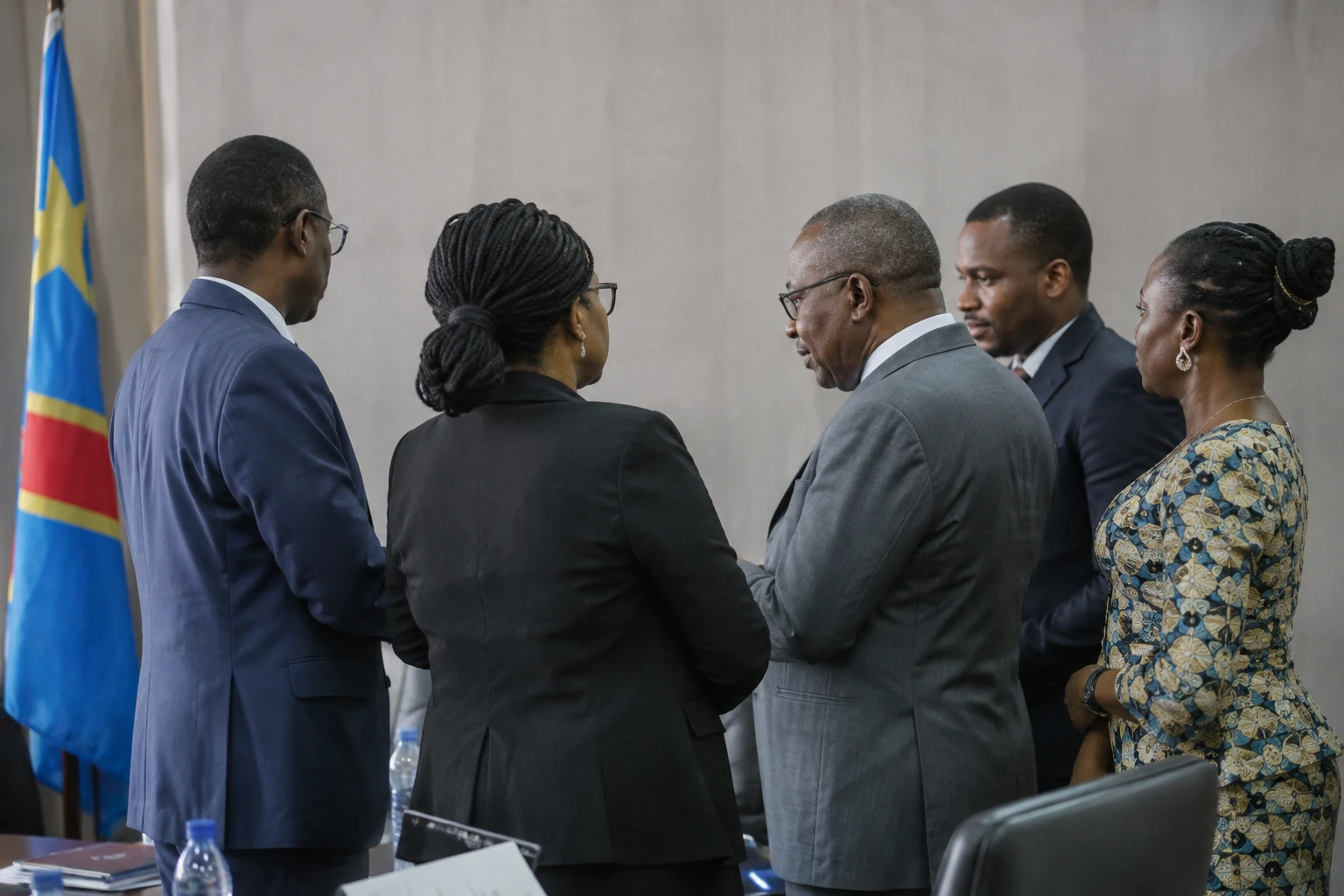
In the Democratic Republic of the Congo (DR Congo), the constitutional debate is about more than the 2006 text. It concerns a concrete question: will the rules governing political alternation remain unchanged as the next presidential election approaches? On 6 November 2026, Lambert Mende, a member of the Sacred Union presidium, took part in the discussion in an interview whose available summary does not detail his answers on the Joseph Kabila period.
A debate that goes beyond the rivalry between camps
The Constitution, adopted in 2006 and revised in 2011, sets the presidential term at five years, renewable once. Article 220 explicitly protects the number and length of terms from revision. This provision makes any initiative to change the Constitution a major institutional issue.
The subject is set against a recent political history marked by tensions over the succession to Joseph Kabila. At the end of his second term, in 2016, the presidential election did not take place on the originally scheduled date. The election was eventually held in December 2018, followed by the first transfer of power between elected presidents since independence, in January 2019. This sequence made the question of election dates particularly sensitive in DR Congo.
The country belongs to the Southern African Development Community (SADC), a regional organisation bringing together states in Southern and Central Africa. DR Congo is also a member of the Economic Community of Central African States (ECCAS). The Congolese institutional debate therefore extends beyond Kinshasa: it concerns regional stability and the credibility of succession rules at a time when the country is facing a serious security crisis in the east.
Lambert Mende, between political legacy and the current majority
A former government spokesman under Joseph Kabila, Lambert Mende now sits on the presidium of the Sacred Union, the platform supporting Félix Tshisekedi. His trajectory places him at the intersection of two political periods. This explains the interest in his assessment of the former government’s record, but does not in itself make it possible to infer his position on every past decision.
The summary published on 6 November presents the interview as a discussion of decisions taken under Joseph Kabila and the constitutional reform envisaged by the presidential camp. However, it provides neither the details of Mende’s answers nor a complete quotation about decisions he would not regret. It would therefore be imprudent to attribute to him a specific justification or a broader statement than those actually reproduced.
The summary also places the interview after one given to Martin Fayulu, a member of the C64 opposition coalition. The coalition opposes the prospect of a constitutional amendment that, its members say, could favour Félix Tshisekedi remaining in power beyond his second term. This is a concern expressed by the opposition, not an official decision established by the interview summary alone.
The constitutional safeguard and the political arguments
Supporters of reform have put forward arguments related to the functioning of institutions and adapting the text to the country’s realities. But Article 220 sets a specific limit: the number and length of presidential terms cannot be revised. Any amendment affecting this rule would therefore raise a legal question distinct from simply improving administrative or institutional procedures.
In 2026, the debate gained fresh momentum. President Félix Tshisekedi said he was open to a revision or a change to the Constitution submitted to a referendum, while stating that the population should be consulted. He also raised the possibility of a third term if Congolese people asked him to seek one. These remarks have fuelled opposition concerns, while supporters of reform argue that the discussion should cover the text as a whole and how it functions.
Neither position amounts to a legal decision. For now, the issue is what procedure would be proposed, which provisions would be affected and how the competent institutions would interpret Article 220. A referendum, by itself, does not automatically answer whether a reform would be compatible with the limits set out in the current Constitution.
A political deadline that concerns citizens too
For political leaders, the controversy is reshaping alliances and lines of debate. For citizens, it bears on the predictability of elections and the possibility of a transfer of power within the announced timeframes. In Kinshasa, where the national institutions are based, the issue is playing out in political statements and negotiations. In the provinces, it is also reflected in the trust placed in institutions and the attention authorities will be able to give to local needs.
The security context weighs on this discussion. In the east, fighting and population displacement present the authorities and communities with immediate emergencies. That does not make the constitutional debate secondary; on the contrary, the way political rules are discussed can affect national confidence as the country also seeks answers to a crisis that extends beyond its borders.
The next step to watch is therefore not a political formula but a concrete institutional act: the submission of a text, a consultation timetable, parliamentary debate or a court ruling. Lambert Mende’s trajectory sheds light on realignments within the majority. But the strength of the process will depend on public rules, verifiable procedures and a debate in which the voices of the majority, the opposition and Congolese civil society can be heard.
Sources consulted: summary of the interview with Lambert Mende ; text of the Constitution published by the DR Congo presidency ; revised Constitution, particularly Article 220 ; Actualite.cd report on Félix Tshisekedi’s remarks ; analysis published by Le Potentiel on Article 220.