
 Algeria
 Egypt
 Libya
 Morocco
 Sudan
 Tunisia
 Benin
 Burkina Faso
 Cabo Verde
 Côte d'Ivoire
 Ghana
 Guinea
 Guinea-Bissau
 Liberia
 Mali
 Mauritania
 Niger
 Nigeria
 Senegal
 Sierra Leone
 The Gambia
 Togo
 Cameroon
 Central African Republic
 Chad
 Equatorial Guinea
 Gabon
 Republic of the Congo
 São Tomé and Príncipe
 Burundi
 Comoros
 Djibouti
 Eritrea
 Ethiopia
 Kenya
 Madagascar
 Malawi
 Mauritius
 Mozambique
 Rwanda
 Seychelles
 Somalia
 South Sudan
 Tanzania
 Uganda
 Angola
 Botswana
 Eswatini
 Lesotho
 Namibia
 South Africa
 Zambia
 Zimbabwe
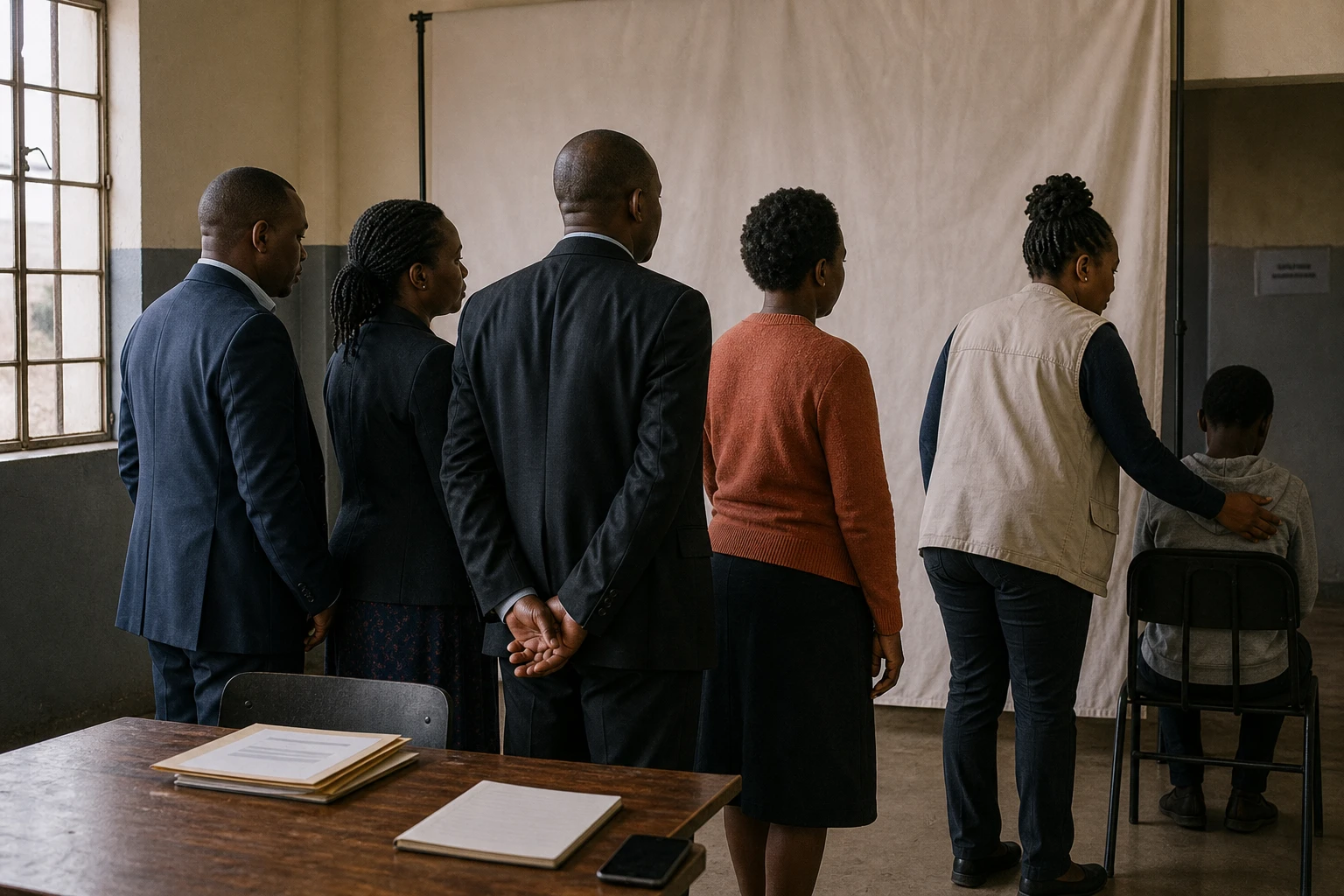
In the Democratic Republic of the Congo, children face more than one form of violence. They may be recruited, abducted, injured, subjected to sexual violence or deprived of schooling. In 2025, the United Nations monitoring and reporting mechanism documented 4,114 grave violations against 3,263 Congolese children.
The figure therefore does not measure the total number of children affected. One child may have been a victim of several violations. This distinction is essential to understanding the significance of the figure and avoiding the reduction of individual experiences to a single statistic.
A tally covering several realities
The United Nations mechanism identifies six categories of grave violations: killing or maiming; the recruitment and use of children by armed forces and groups; sexual violence; abduction; attacks on schools and hospitals; and the denial of humanitarian access.
For the DRC, data published for 2025 record 1,397 children recruited and used by parties to the conflict. Of these, 421 are reported to have been used in combat roles. The United Nations also verified the killing or maiming of 918 children, including 519 killed and 399 injured.
Sexual violence affected 592 children, the vast majority of them girls. The report also mentions 1,067 children abducted, 121 attacks on schools and hospitals, and 19 incidents involving the denial of humanitarian access. These figures relate to verified cases. They do not necessarily represent all the incidents committed, as access to affected areas remains difficult.
The detailed summary from the Office of the UN Special Representative of the Secretary-General for Children and Armed Conflict presents the data by category and by group involved. United Nations data on violations against children in the DRC point in particular to a high concentration of abuses in areas affected by fighting in the east of the country.
Eastern DRC at the heart of the deterioration
The increase comes amid renewed fighting in North Kivu, South Kivu and Ituri. The AFC-M23 offensive and the response by government forces and their local allies have increased the exposure of civilians, according to the United Nations annual report covering 2025.
This assessment should be set against the DRC’s recent trajectory. The country remains marked by the presence of numerous armed groups, population displacement and fragile public services in remote areas. Children are directly affected, but also suffer from school closures, interruptions to healthcare and family separation.
The crisis extends beyond the borders of the Congo. It is part of the Great Lakes region, where tensions between the DRC, Rwanda and Burundi intersect with local rivalries, cross-border displacement and security negotiations. The Southern African Development Community, SADC, deployed a mission to the DRC before beginning its withdrawal in 2025. At the same time, the African Union and several regional mediation efforts are seeking to support a political settlement.
In February 2025, the United Nations Security Council adopted Resolution 2773, which calls, among other things, for an end to the M23 offensive and the withdrawal of unauthorised foreign forces. The practical implementation of these commitments remains crucial to protecting civilians and children.
Multiple perpetrators, a shared duty to protect
The UN report attributes violations to several parties to the conflict. It names armed groups including M23, CODECO, the ADF and various Mai-Mai factions. It also mentions members linked to government forces and allied groups.
This plurality does not mean that responsibility is identical in every case. Rather, it is a reminder that every party engaged in hostilities must respect international humanitarian law. The Congolese state, for its part, retains primary responsibility for protecting its population and investigating abuses committed by its agents or by actors under its control.
The recruitment of children has lasting consequences for communities. After leaving an armed group, many need medical, psychological, educational and family support. Without sustained assistance, the risk of stigma, poverty and repeated recruitment increases.
Reintegration cannot therefore be limited to a child’s departure from an armed group. It requires a safe return to family or community, a return to school or vocational training, and sufficiently long-term follow-up. It also requires the protection of displaced children and those living in areas where the administration has little presence.
What the figures capture less well
A figure verified by the UN is the result of a documentation process. It is not an automatic estimate of every incident committed. In some areas, investigators cannot travel. Families may lack access to reporting services. Sexual violence is often under-reported for fear of reprisals or stigma.
The data should therefore guide protection efforts, not establish a hierarchy of suffering. The 4,114 violations recorded in 2025 chiefly reveal recurring patterns: children’s exposure to fighting, their use by armed actors, the destruction of places of learning and the weakening of humanitarian assistance.
The United Nations annual report says that 2025 was the deadliest year for children in the DRC since the monitoring mechanism was established in 2005. The UN Secretary-General’s report on children and armed conflict calls on the parties to honour their commitments, facilitate humanitarian access and protect schools and hospitals.
What happens next will depend on conditions on the ground and agreements
Children’s protection will depend first and foremost on the military situation in eastern DRC. A formal ceasefire will not be enough unless it is monitored, respected and accompanied by genuine humanitarian access. Rural communities, often far from administrative centres, will remain particularly exposed if protection services do not reach them.
Diplomatic discussions will also need to address children’s rights. This means specific commitments on recruitment, sexual violence, abductions, schools and reintegration. Judicial accountability must advance in parallel, regardless of uniform, group or claimed authority.
The stakes extend beyond the DRC to the region as a whole. Stability in the Great Lakes will depend on the ability of states and African organisations to curb cross-border armed support, protect displaced people and maintain essential services. For Congolese children, however, the most tangible measure will remain local: being able to live, learn and grow without being turned into a target, a combatant or a bargaining chip.



