Algeria
 Egypt
 Libya
 Morocco
 Sudan
 Tunisia
 Benin
 Burkina Faso
 Cabo Verde
 Côte d'Ivoire
 Ghana
 Guinea
 Guinea-Bissau
 Liberia
 Mali
 Mauritania
 Niger
 Nigeria
 Senegal
 Sierra Leone
 The Gambia
 Togo
 Cameroon
 Central African Republic
 Chad
 Equatorial Guinea
 Gabon
 Republic of the Congo
 São Tomé and Príncipe
 Burundi
 Comoros
 Djibouti
 Eritrea
 Ethiopia
 Kenya
 Madagascar
 Malawi
 Mauritius
 Mozambique
 Rwanda
 Seychelles
 Somalia
 South Sudan
 Tanzania
 Uganda
 Angola
 Botswana
 Eswatini
 Lesotho
 Namibia
 South Africa
 Zambia
 Zimbabwe
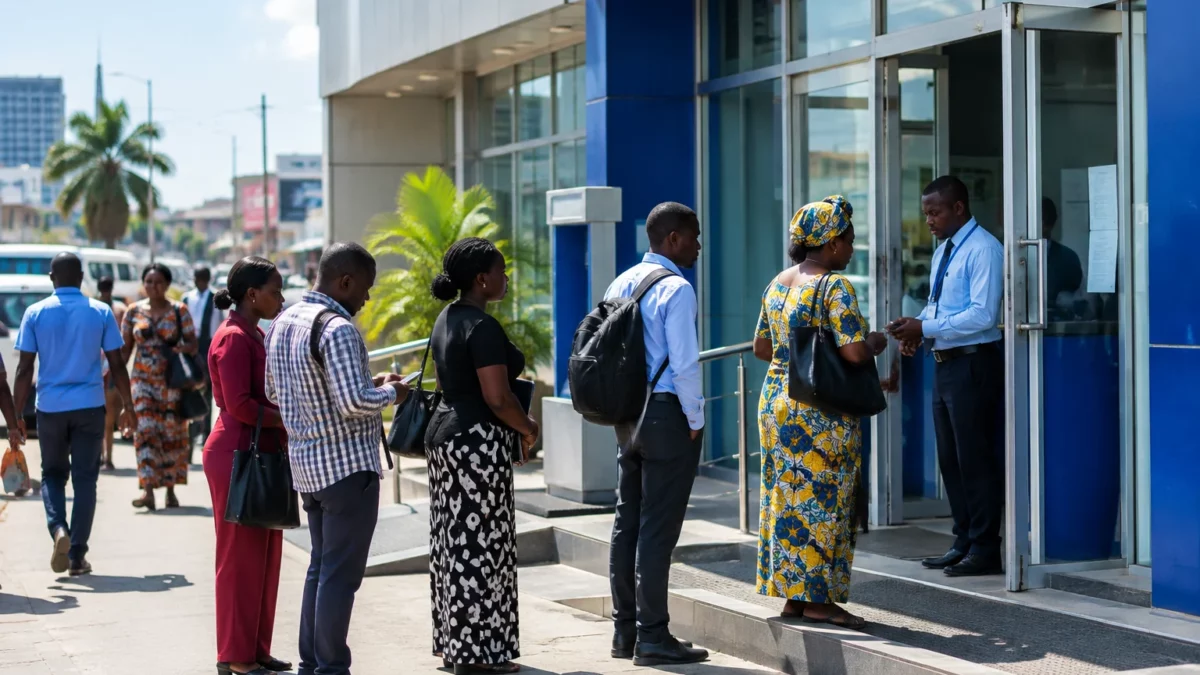
Can public debt become the main lever for reviving a financial institution? In the Democratic Republic of the Congo (DR Congo), the government is considering the gradual repayment of claims held by CADECO, estimated at nearly $30 million. But paying the institution will not be enough to restore its ability to collect savings and finance the economy.
A public institution at the centre of discussions
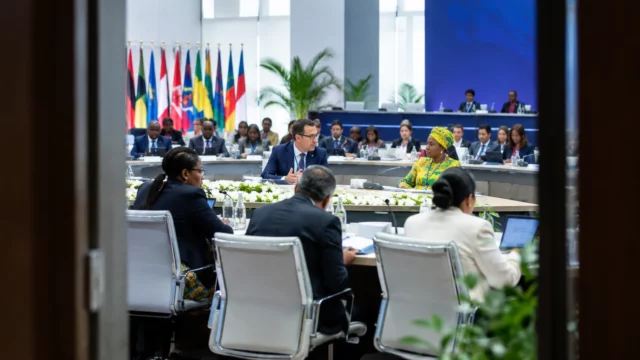
On Friday 13 November 2026, in Kinshasa, Prime Minister Judith Suminwa Tuluka brought together officials from CADECO and the Industry Promotion Fund (FPI), as well as members of the government. Discussions focused on the savings bank’s claims against the state and ways to support its recovery.
The figure cited, nearly $30 million, is presented as an estimate of CADECO’s claims against the state. In February 2023, its board chairman, Jean-Pierre Dikoma, had already said that the state, the institution’s sole shareholder, owed it more than $29 million. That earlier statement confirms that the issue is longstanding, but does not independently verify the amount currently being considered by the authorities.
After the meeting, Judith Suminwa asked teams from the ministries of finance and the state portfolio, as well as the management of CADECO and the FPI, to continue discussions. They are to clarify the terms and timetable for any potential payment. So far, no final schedule or disbursement has been announced publicly.
FPI director-general Hervé Claude Ntumba Batukonke referred to a “third way” of supporting the recovery, distinct from a conventional subsidy. The details of this approach remain to be defined. Technical teams still need to propose a specific mechanism.
Problems that have persisted for years
Founded in 1950, the Caisse générale d’épargne du Congo, or CADECO, is a public financial institution. It is tasked with collecting savings and helping to finance economic activity. Historical data, however, show a gap between this ambition and the role the institution has actually played.
In its 2018 financial stability report, the Central Bank of Congo said CADECO was primarily focused on paying public-sector employees and collecting tax revenues. Its contribution to financing the economy then stood at $7.56 million, while its balance sheet totalled $54 million. The central bank said its survival depended on a revision of the state’s strategy, given, in particular, its network across the country.
A study by FINACTU published in December 2019 offered a damning assessment and recommended an audit before any decision on the institution’s future. The 2018 figures cited in the study showed accumulated losses and arrears, but the consultancy also noted that the reliability of the financial statements did not allow the situation to be fully verified. These figures describe an earlier period and should not be presented as a current financial position.
In 2023, Jean-Pierre Dikoma argued that CADECO should resume managing payroll for civil servants, teachers, police officers and military personnel. In his view, the return of these operations would bring in resources and generate activity. This is the position of an institution executive, not a government decision announced to date.
Repayment will not resolve the question of the business model
Gradual repayment could improve CADECO’s cash flow and clarify some of the financial relationship between the state and its public enterprise. However, repayment of a claim does not in itself guarantee that the savings bank can attract deposits sustainably, process payments and extend credit.
The issue therefore raises two separate questions. The first concerns the recognition and settlement of a state debt. The second relates to governance, the quality of the accounts, the services offered and the resources needed for a revival. The involvement of the FPI, a public body tasked with supporting industry, could offer a financing route. But its terms, cost and the obligations imposed on CADECO remain to be clarified.
The impact of a successful revival would vary among users. In Kinshasa and major urban centres, the savings bank could help broaden the financial services available. In less well-served areas, its network could improve access to savings and payments, provided branches have the necessary operational resources. For small businesses, access to credit would also be at stake, and would not automatically follow from repayment of the state’s arrears.
A matter of trust beyond DR Congo
CADECO faces more than a need for funding. Its revival bears on the state’s credibility as both shareholder and debtor, as well as savers’ confidence in a public institution. Publishing verifiable accounts, a payment schedule and measurable targets would help distinguish announcements from results.
At regional level, the issue relates to debates about the role of public banks and financial inclusion in Central Africa. The Economic Community of Central African States (ECCAS), a regional co-operation organisation, is not presented as a party to the discussions. The issue’s regional significance instead lies in a question shared by states: how to support public financial institutions without separating their funding from their governance and their ability to serve users.
The next step is now a technical one: teams must turn the political direction into specific proposals. The amount actually certified, the timetable, the form of FPI support and the reform commitments will be decisive. Until these details are made public, CADECO’s revival remains a project under discussion, not an accomplished recovery.