Algeria
 Libya
 Morocco
 Sudan
 Tunisia
 Benin
 Burkina Faso
 Cabo Verde
 Côte d'Ivoire
 Ghana
 Guinea
 Guinea-Bissau
 Liberia
 Mali
 Mauritania
 Niger
 Nigeria
 Senegal
 Sierra Leone
 The Gambia
 Togo
 Cameroon
 Central African Republic
 Chad
 DR Congo
 Equatorial Guinea
 Gabon
 Republic of the Congo
 São Tomé and Príncipe
 Burundi
 Comoros
 Djibouti
 Eritrea
 Ethiopia
 Kenya
 Madagascar
 Malawi
 Mauritius
 Mozambique
 Rwanda
 Seychelles
 Somalia
 South Sudan
 Tanzania
 Uganda
 Angola
 Botswana
 Eswatini
 Lesotho
 Namibia
 South Africa
 Zambia
 Zimbabwe
Another vaccine, but not yet an on-the-ground response
In the east of the Democratic Republic of the Congo, the battle against Ebola is being fought not only in treatment centres. It is also being fought in laboratories, production chains and decisions about who makes what, where and how quickly. For Congolese people, the issue is immediate: to curb an outbreak spreading fast in areas where healthcare is already under strain.
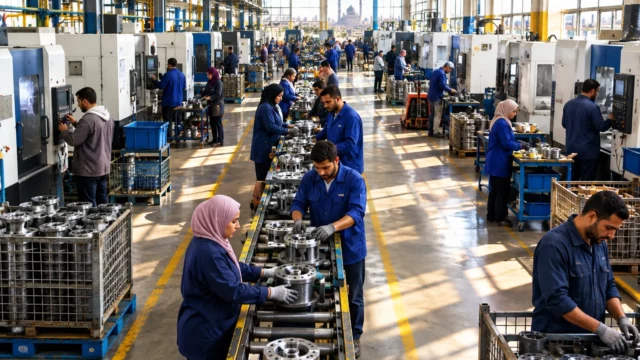
It is against this backdrop that the CEPI fund decided on 27 August 2026 to allocate up to $16.5 million to Minapharm, an Egyptian biopharmaceutical group, to advance a vaccine candidate against the Bundibugyo virus to a first human trial, expected to take place in Africa. The project was designed by ProBioGen, a Berlin-based company integrated into the group, and is based on the MVA-CR19 vaccine platform.
Congo faces a rare outbreak that has now spread across the continent
The DRC is facing its 17th Ebola epidemic. The virus involved is the Bundibugyo strain, a rarer form than the Zaire strain, which dominated previous major outbreaks. The WHO confirmed that the outbreak affected the DRC and Uganda and, on 17 May 2026, declared it a public health emergency of international concern. A few hours later, Africa CDC also classified it as a public health emergency of continental security.
As of 26 August 2026, the WHO reported 5,794 confirmed cases and 2,786 deaths in the DRC, a case fatality rate of 48.1%. The Congolese Ministry of Health is also publishing regular situation reports, signalling increasingly close monitoring and a determination to adjust the response almost in real time. The issue extends beyond national borders: Uganda has already been affected by imported cases, underscoring how porous health systems are in the Great Lakes region.
What this Egyptian vaccine candidate offers
The new candidate funded by CEPI stands out for its technology. It uses an MVA vaccine vector, a highly weakened virus that cannot replicate in human cells, to present Bundibugyo virus proteins to the immune system. CEPI says it is its only Bundibugyo candidate designed to stimulate both B- and T-cell responses—in other words, antibody production and a cellular response. This may hold out the prospect of more robust protection, but that promise still needs to be demonstrated.
The project will first undergo preclinical studies, followed by a phase 1 trial. This first human trial will assess the vaccine’s safety and its ability to trigger an immune response. According to CEPI, production will be shared between Berlin and Cairo before active ingredient manufacturing is progressively transferred to Egypt. The timetable is therefore scientific, industrial and political all at once.
This matters for Africa. Africa CDC has for several years stressed the continent’s health sovereignty: its ability to produce vaccines, tests and treatments locally instead of relying almost entirely on imports. In the case of Bundibugyo, a candidate developed by an African company and tested in Africa fits this strategy of building industrial capacity.
Ervebo, the available option, and the project under way
While a vaccine specifically validated against Bundibugyo remains unavailable, authorities and scientific partners are also focusing on Ervebo, the vaccine already licensed against the Zaire strain. At the end of July 2026, the WHO recommended moving it directly into a phase 3 trial as part of the current epidemic, without first conducting a phase 2 trial. The WHO nevertheless says its effectiveness against Bundibugyo has not been established in humans.
In other words, the response does not rest on a single bet. It combines vaccination with measures that have proved their worth over decades: surveillance, rapid testing, isolation, contact tracing, infection prevention, community engagement, and dignified and safe burials. It is this wider framework, more than vaccine technology alone, that could still contain the outbreak.
For the Congolese population, the difference between a vaccine in development and a tool already available is crucial. Minapharm’s candidate will have no immediate effect on today’s patients. But it could shape what comes next: better preparing the DRC and the continent for the next Bundibugyo outbreak, and reducing the time lost between alert and response. In a region marked by displacement, insecurity and weaknesses in the health system, that time saved is almost as valuable as a medicine.
What this sequence says about Central Africa
The DRC is at the centre of a broader test for Central Africa. On one hand, states are relying on emergency responses coordinated by the WHO, Africa CDC and national ministries. On the other, the continent is seeking to move beyond the traditional pattern in which solutions arrive too late, imported and made elsewhere. The Bundibugyo case shows that research, production and regulation must now advance together.
The timetable to watch is therefore twofold. On the health front, it is the daily evolution of cases in the DRC, particularly in the eastern provinces. On the scientific front, it is the Egyptian candidate’s progress into clinical trials and the results of the phase 3 trial involving Ervebo. If either of these milestones fails, Africa’s dependence on external innovation will remain unchanged. If one succeeds, the response to Bundibugyo Ebola could become a rare example of research capacity built on the continent.