
 Algeria
 Egypt
 Libya
 Morocco
 Sudan
 Tunisia
 Benin
 Burkina Faso
 Cabo Verde
 Côte d'Ivoire
 Ghana
 Guinea
 Guinea-Bissau
 Liberia
 Mali
 Mauritania
 Niger
 Nigeria
 Senegal
 Sierra Leone
 The Gambia
 Togo
 Cameroon
 Central African Republic
 Chad
 Equatorial Guinea
 Gabon
 Republic of the Congo
 São Tomé and Príncipe
 Burundi
 Comoros
 Djibouti
 Eritrea
 Ethiopia
 Kenya
 Madagascar
 Malawi
 Mauritius
 Mozambique
 Rwanda
 Seychelles
 Somalia
 South Sudan
 Tanzania
 Uganda
 Angola
 Botswana
 Eswatini
 Lesotho
 Namibia
 South Africa
 Zambia
 Zimbabwe
In eastern DR Congo, a health outbreak becomes a stress test
In the east of the Democratic Republic of the Congo, Ebola never spreads alone. The virus advances through areas where roads are long, healthcare is sometimes far away and trust is fragile. It is this mix, more than the pathogen alone, that explains the difficulty of the response.
The outbreak that began in May 2026 has reached an unprecedented scale for an Ebola epidemic linked to the Bundibugyo virus in the country. It now affects six provinces: Ituri, North Kivu, South Kivu, Haut-Uélé, Bas-Uélé and Tshopo. This distribution confirms a pattern of spread at the heart of an area already marked by insecurity, population displacement and overstretched health systems.
What the latest figures show
As of 7 September 2026, the World Health Organization reported 6,757 confirmed cases and 3,267 deaths in DR Congo, giving a crude case fatality rate of 48.3%. The same situation report also recorded 1,611 recoveries, including 1,590 in DR Congo. These figures make this outbreak one of the most severe ever recorded in the country.
Just a few days earlier, Congolese authorities had presented an already alarming picture. On 2 September, a Congolese media outlet reported a ministerial toll of more than 3,000 deaths and placed the epidemic in six provinces. The range is consistent with the WHO report published on 10 September, confirming the overall trend, even though exact figures change from day to day during an active outbreak.
The outbreak was officially declared on 15 May 2026 in Ituri province. Africa quickly treated it as a continental emergency: Africa CDC declared the event a public health emergency of continental security on 18 May, while the WHO activated its emergency support mechanisms.
Vaccines, research and community-level response
The scientific question remains central. The virus involved is Bundibugyo, a rarer Ebola strain than the Zaire strain used in most previous vaccination campaigns. In May, the WHO said that Ervebo, the only licensed Ebola vaccine, could not be considered a planned response to Bundibugyo outside a controlled research setting, given the lack of sufficient evidence on its cross-protection.
This cautious approach led the WHO and its partners to support clinical trials and monitoring arrangements to better document Ervebo’s possible effect on this strain. At the same time, a revised 180-day plan was launched in Kinshasa on 4 September with support from the WHO, the United Nations system and Africa CDC. The stated aim is simple: break chains of transmission, speed up diagnosis and bring care closer to communities.
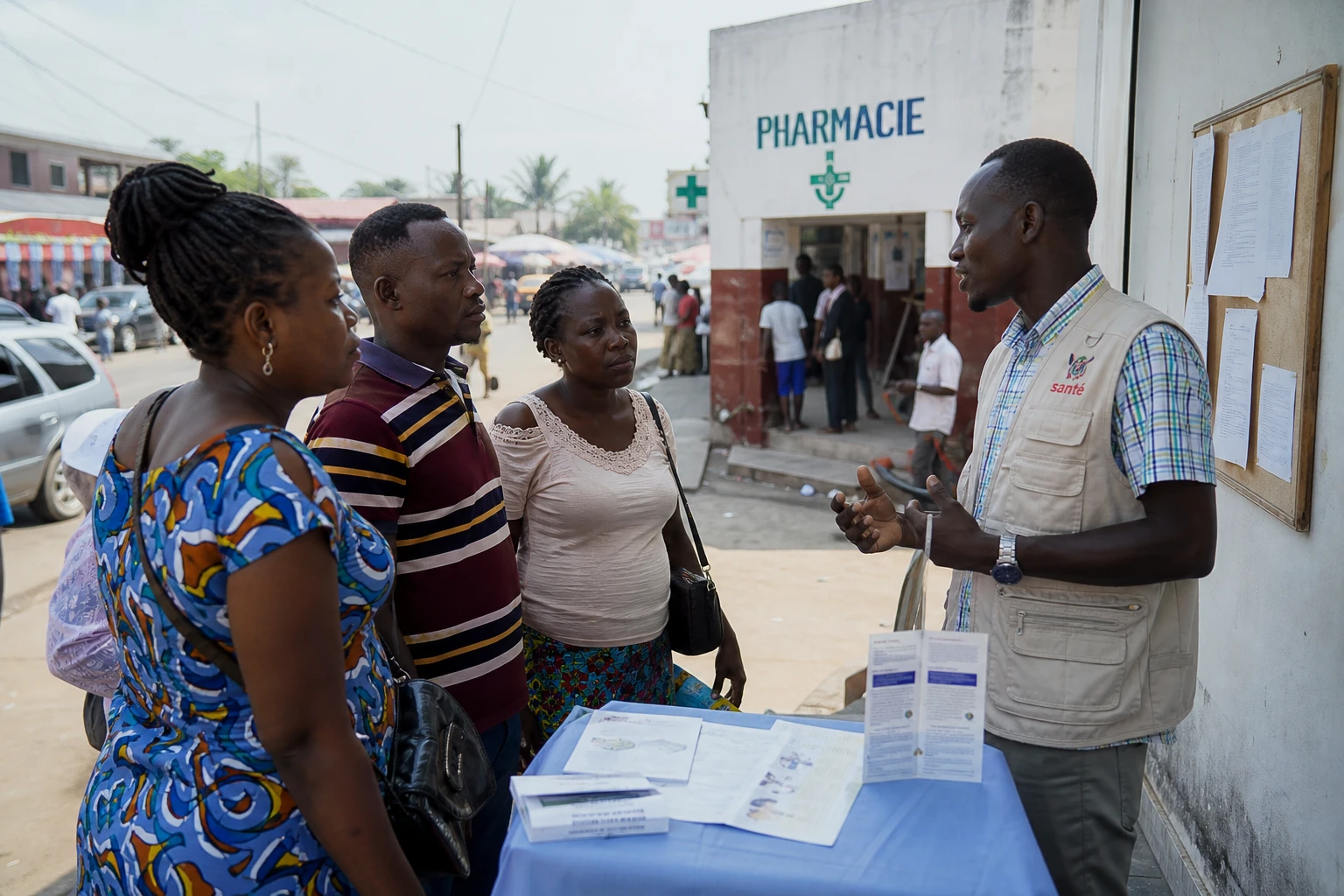
On the ground, the response relies on mixed teams of clinicians, epidemiologists, anthropologists, community health workers and laboratory staff. This is no incidental choice. In an Ebola epidemic, the cooperation of families matters as much as logistics. If contacts are not identified quickly, alerts come late or care seems out of reach, the virus gains ground.
What this crisis means for DR Congo and the region
For Kinshasa, the stakes go beyond public health. The government must protect the eastern provinces while also preserving economic and social continuity in a country where domestic links are already fragile. The launch of the “Congo River Without Ebola” initiative illustrates this logic: securing the river corridor also means protecting vital exchanges between provinces and limiting the risk of spread to major urban centres.
For the population, the crisis means forced displacement, delayed consultations and greater pressure on treatment centres. For health workers, it means exposure, fatigue and a constant need for protection. The WHO has also reported that late case detection continues to fuel transmission within households and health facilities.
At regional level, the crisis is a reminder that viruses do not stop at administrative borders. DR Congo shares its vulnerabilities with its eastern neighbours, particularly Uganda, which has already recorded cases linked to the same outbreak. Africa CDC stresses cross-border coordination, surveillance at points of entry and the protection of health workers. In the Great Lakes region, where cross-border movement is part of daily life, this vigilance has become a collective imperative.
The next phase will hinge on three fronts: the speed of detection, the ability to fund a prolonged response and public acceptance of health measures. In DR Congo, as elsewhere in Central Africa, Ebola is no longer just a medical alert. It exposes inequalities in access to healthcare, the strength of local institutions and the region’s ability to act together before the epidemic changes scale again.



