Algeria
 Egypt
 Libya
 Morocco
 Sudan
 Tunisia
 Benin
 Burkina Faso
 Cabo Verde
 Côte d'Ivoire
 Ghana
 Guinea-Bissau
 Liberia
 Mali
 Mauritania
 Niger
 Nigeria
 Senegal
 Sierra Leone
 The Gambia
 Togo
 Cameroon
 Central African Republic
 Chad
 DR Congo
 Equatorial Guinea
 Gabon
 Republic of the Congo
 São Tomé and Príncipe
 Burundi
 Comoros
 Djibouti
 Eritrea
 Ethiopia
 Kenya
 Madagascar
 Malawi
 Mauritius
 Mozambique
 Rwanda
 Seychelles
 Somalia
 South Sudan
 Tanzania
 Uganda
 Angola
 Botswana
 Eswatini
 Lesotho
 Namibia
 South Africa
 Zambia
 Zimbabwe
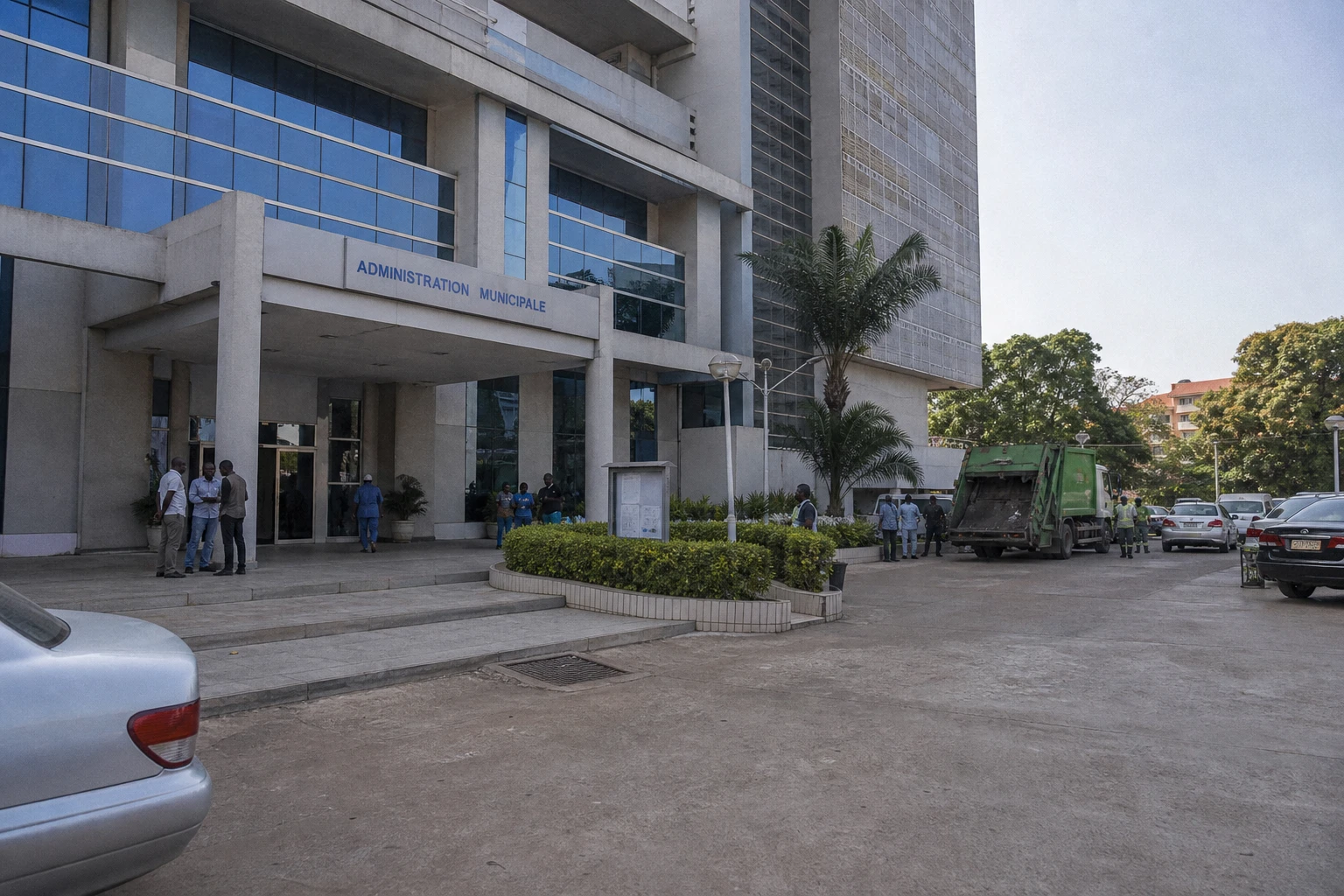
In Conakry, a landfill has become a symbol of urban pressures
At Dar-es-Salam, in the Guinean capital, the disaster is about more than a pile of rubbish collapsing after rainfall. It also speaks to population pressure, thousands of families settling on the edge of a saturated site, and Conakry’s struggle to keep pace with its own growth. In a city where waste, rainwater runoff and precarious housing intersect every rainy season, the Dar-es-Salam disaster is a reminder that an environmental risk can quickly become a social and political issue.
The Dar-es-Salam site is not new to the public agenda. Guinean authorities have long spoken of its gradual closure, the relocation of residents and, eventually, its conversion into an urban park. In 2025, and again in 2026, the Prime Minister’s Office and technical services confirmed progress on rehabilitation projects and a landfill site to replace a dump already described as saturated and located in the middle of a densely populated urban area. The issue therefore goes beyond today’s emergency: it concerns how Conakry manages its waste, outlying neighbourhoods and public infrastructure.
What the presidential visit says about the political moment
On Saturday 29 August, Guinean President Mamadi Doumbouya visited the landslide site in Dar-es-Salam, a week after the disaster that occurred during the night of 22 to 23 August. Members of the government were present. According to the official account relayed at the site, the head of state wanted to express his condolences to the families, assess the scale of the damage and monitor the operations launched by the authorities. The official death toll reported in recent days stands at 34, while other sources had initially reported more than 30 deaths.
At the site, presidential spokesman General Amara Camara emphasised two messages. First, shared mourning with bereaved families. Second, the responsibility of the administration, which says it has carried out repeated evictions and compensation payments without managing to prevent what it considers illegal occupations from returning. In this official interpretation, the landslide is not portrayed as a pure inevitability, but as the culmination of an entanglement of delayed decisions, local resistance and inadequate urban oversight. It is also a way of placing the event within a narrative of restored authority, at a time when the government is seeking to show it is in control on the ground.
The visit comes as demolitions of homes built near the landfill continue. The authorities argue that the area is permanently at risk. Families are often left facing a double shock: the loss of loved ones on one hand, and the prospect of relocation on the other. The demolitions therefore raise a difficult question. How can a dangerous area be cleared without reproducing the same precarious conditions elsewhere? How can people be protected without simply shifting the problem to another neighbourhood in Conakry?
Beyond the disaster, the question of urban management in Guinea
The Dar-es-Salam case highlights an often-underestimated point: waste management is a public safety issue, not just a matter of hygiene. For years, the landfill has received waste from much of Conakry, a conurbation where infrastructure has failed to keep pace with construction and the expansion of neighbourhoods. The government now says it wants to combine the gradual closure of the site with a reorganisation of the waste chain and the expansion of a technical centre at Baritodé. If these projects go ahead, they could ease pressure on the capital; if they are delayed, Dar-es-Salam will remain a symbol of urban vulnerability.
The disaster also points to a familiar regional challenge in West Africa. Major coastal capitals are growing quickly, with informal neighbourhoods expanding faster than public services. Guinea is not alone in this, but the episode in Conakry shows just how closely sanitation, urban planning and risk prevention policies need to be considered together. In a context where ECOWAS is also following Guinea’s institutional trajectory after the military transition, every local governance issue becomes a test of the central government’s credibility. A capital able to secure its waste sites, slopes and residents sends a strong political signal well beyond Guinea.
The continent-wide significance is clear: rapid urbanisation, climate vulnerability, inadequate infrastructure, and the need to invest in basic public services before risks erupt. The Dar-es-Salam disaster is therefore more than a tragic human-interest story. It highlights the place of African cities in budgetary trade-offs, efforts to curb hazardous settlement and states’ ability to anticipate rather than repair. In Conakry, the task is now as much political as it is sanitary.