Algeria
 Egypt
 Libya
 Morocco
 Sudan
 Tunisia
 Benin
 Burkina Faso
 Cabo Verde
 Côte d'Ivoire
 Ghana
 Guinea-Bissau
 Liberia
 Mali
 Mauritania
 Niger
 Nigeria
 Senegal
 Sierra Leone
 The Gambia
 Togo
 Cameroon
 Central African Republic
 Chad
 DR Congo
 Equatorial Guinea
 Gabon
 Republic of the Congo
 São Tomé and Príncipe
 Burundi
 Comoros
 Djibouti
 Eritrea
 Ethiopia
 Kenya
 Madagascar
 Malawi
 Mauritius
 Mozambique
 Rwanda
 Seychelles
 Somalia
 South Sudan
 Tanzania
 Uganda
 Angola
 Botswana
 Eswatini
 Lesotho
 Namibia
 South Africa
 Zambia
 Zimbabwe
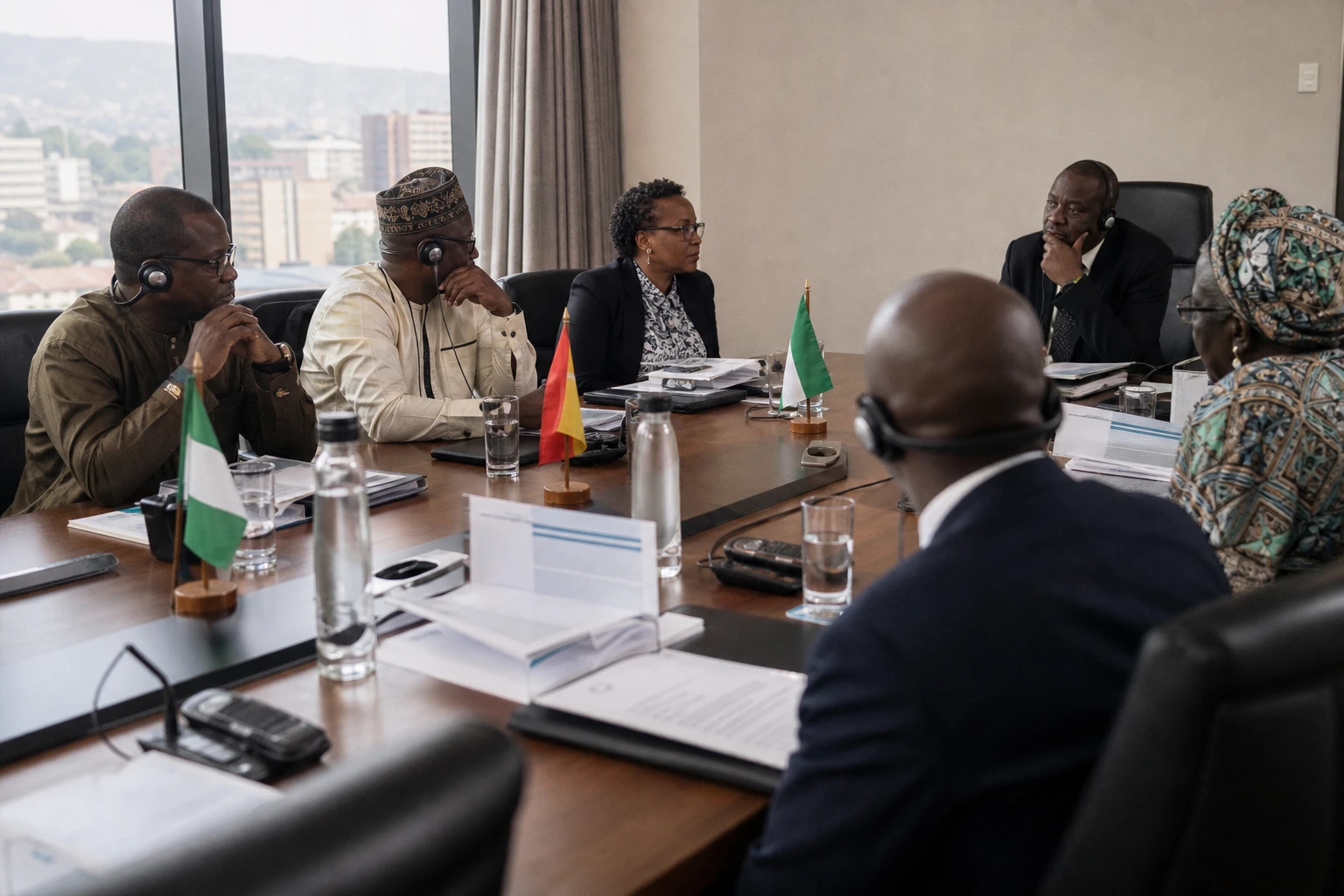
In Conakry, the end of emergency accommodation opens a more difficult phase: helping families affected by the Dar-es-Salam landslide find a roof over their heads without losing sight of the question of destroyed property. On 29 September 2026, after spending 36 days in reception centres, those displaced left the schools that had sheltered them.
Assistance to move on from the emergency
The Guinean government has announced a total allocation of 21 million Guinean francs per head of household. The sum is intended to fund temporary relocation. It amounts to six months’ rent, calculated at 3.5 million Guinean francs a month.
The payment is planned in two instalments. The first tranche of 10 million Guinean francs was handed over on 29 September. The remaining 11 million is to be distributed in the following days, according to the National Agency for the Management of Humanitarian Emergencies and Disasters, ANGUCH.
The assistance comes as nearly 2,000 people have left the centres set up, notably in schools in Dixinn and Bellevue. The start of the school year meant these premises had to be vacated. Relocation has therefore become a social emergency, as well as a condition for schools to resume their function.
Guinean authorities say that during their stay, families received accommodation, medical follow-up and food assistance. ANGUCH also says it has registered the households concerned, as well as the owners and tenants of buildings that were destroyed or demolished.
Human toll remains linked to a cross-border disaster
The landslide occurred on the night of 22–23 August 2026 at the Dar-es-Salam landfill site, in the commune of Gbessia, Conakry. The official death toll, announced at the funeral ceremonies, stands at 36.
Among the victims were 17 Sierra Leonean nationals. Their presence is a reminder of the regional dimension of the disaster. Conakry is home to a mobile population made up of Guineans and nationals of neighbouring countries. Urban disasters can therefore quickly take on a cross-border dimension, particularly in a region where families, livelihoods and migration journeys extend beyond national borders.
The victims were buried on 4 September at the Martyrs’ Cemetery in Bambéto, following a memorial ceremony attended by Guinean and Sierra Leonean representatives. The toll was announced by ANGUCH Director General Lanceï Touré, and later reported by several Guinean and international media outlets.
Property owners call for a separate response
The announced scheme addresses first and foremost the need to rent accommodation. It does not, however, resolve the situation of property owners whose homes were destroyed or demolished after the disaster.
This distinction matters. A tenant needs to fund a move to a new home. A property owner may have lost a house, a plot of land, equipment and sometimes a source of income. The same allocation per head of household may not be enough to address these losses equitably.
Residents organised in the group “Dar-es-Salaam is not a rubbish dump” are therefore asking the government to clarify the rules for compensation. They are also concerned about the criteria used to distinguish between property owners, tenants and other occupants of the buildings concerned.
The register compiled by ANGUCH could provide a basis for this clarification. However, the authorities have not yet publicly set out the timetable, amount or process for any compensation for destroyed property. While these details remain unclear, leaving the reception centres does not mean the dispute is over.
Relocation alone is not enough to rebuild lives
The challenge goes beyond paying rent. Families need to find a stable environment, enrol children in school and resume their activities. For informal-sector workers, who often depend on living close to markets and transport hubs, moving to another neighbourhood can quickly cut their incomes.
The safety of new homes is also at issue. Displaced families must not be directed to other areas exposed to landslides, flooding or waste accumulation. The choice of relocation neighbourhoods will therefore need to take account of access to water, transport, healthcare and schools.
In Conakry, pressure on land makes this equation more difficult. Guinea’s capital concentrates a large share of jobs, services and schools. Time-limited assistance may enable an immediate move, but it does not guarantee a lasting solution for households that have lost their homes.
A test for urban management in Guinea
The disaster has also revived debate about waste management, the occupation of high-risk areas and coordination between government agencies. The landslide occurred as an operation to clear and evict people from the site had been announced. This timing has heightened questions about prevention and planning around the landfill.
For the authorities, the immediate priority is to complete the relocation and restore the schools used as reception centres. For residents, the stakes are broader: securing guarantees on neighbourhood safety, recognition of losses and transparency in public decision-making.
The issue also concerns West African cooperation. Guinea and Sierra Leone are members of the Economic Community of West African States, ECOWAS, which facilitates cooperation among countries in the region. The presence of Sierra Leonean victims in Dar-es-Salam underscores the importance of shared mechanisms for rescue efforts, victim identification and assistance to families during urban disasters.
As of 1 October 2026, the 21 million Guinean franc assistance therefore marks an immediate exit from the crisis, not a comprehensive settlement. The next steps will be closely watched: payment of the second tranche, the start of the school year, effective relocation and any compensation for property owners.