Algeria
 Egypt
 Libya
 Morocco
 Sudan
 Tunisia
 Benin
 Burkina Faso
 Cabo Verde
 Côte d'Ivoire
 Ghana
 Guinea-Bissau
 Liberia
 Mali
 Mauritania
 Niger
 Nigeria
 Senegal
 Sierra Leone
 The Gambia
 Togo
 Cameroon
 Central African Republic
 Chad
 DR Congo
 Equatorial Guinea
 Gabon
 Republic of the Congo
 São Tomé and Príncipe
 Burundi
 Comoros
 Djibouti
 Eritrea
 Ethiopia
 Kenya
 Madagascar
 Malawi
 Mauritius
 Mozambique
 Rwanda
 Seychelles
 Somalia
 South Sudan
 Tanzania
 Uganda
 Angola
 Botswana
 Eswatini
 Lesotho
 Namibia
 South Africa
 Zambia
 Zimbabwe
In Conakry, a familiar site becomes a symbol of poorly managed risk
In Dar es Salam, in the commune of Gbessia, the issue is no longer just waste. It now concerns the safety of local residents, urban management in Conakry and the Guinean state’s ability to prevent foreseeable disasters. In Guinea’s capital, a place long associated with squalor became the scene of a catastrophe within a matter of hours.
The Dar es Salam site is no secret. For years, it has been one of the capital’s flashpoints, where precarious housing, demographic pressure and constrained urban management converge. Closure and clearance operations had already been announced before the landslide, proof that the authorities knew of the danger.
The disaster, then the presidential visit
On 23 August 2026, heavy rain caused a mass of waste to collapse at the Dar es Salam landfill in Conakry. The Guinean government reported a provisional toll of at least 30 dead, six seriously injured and 16 lightly injured. The African Press Agency, APA, confirmed the same provisional toll, while the Associated Press reported 30 deaths and homes buried.
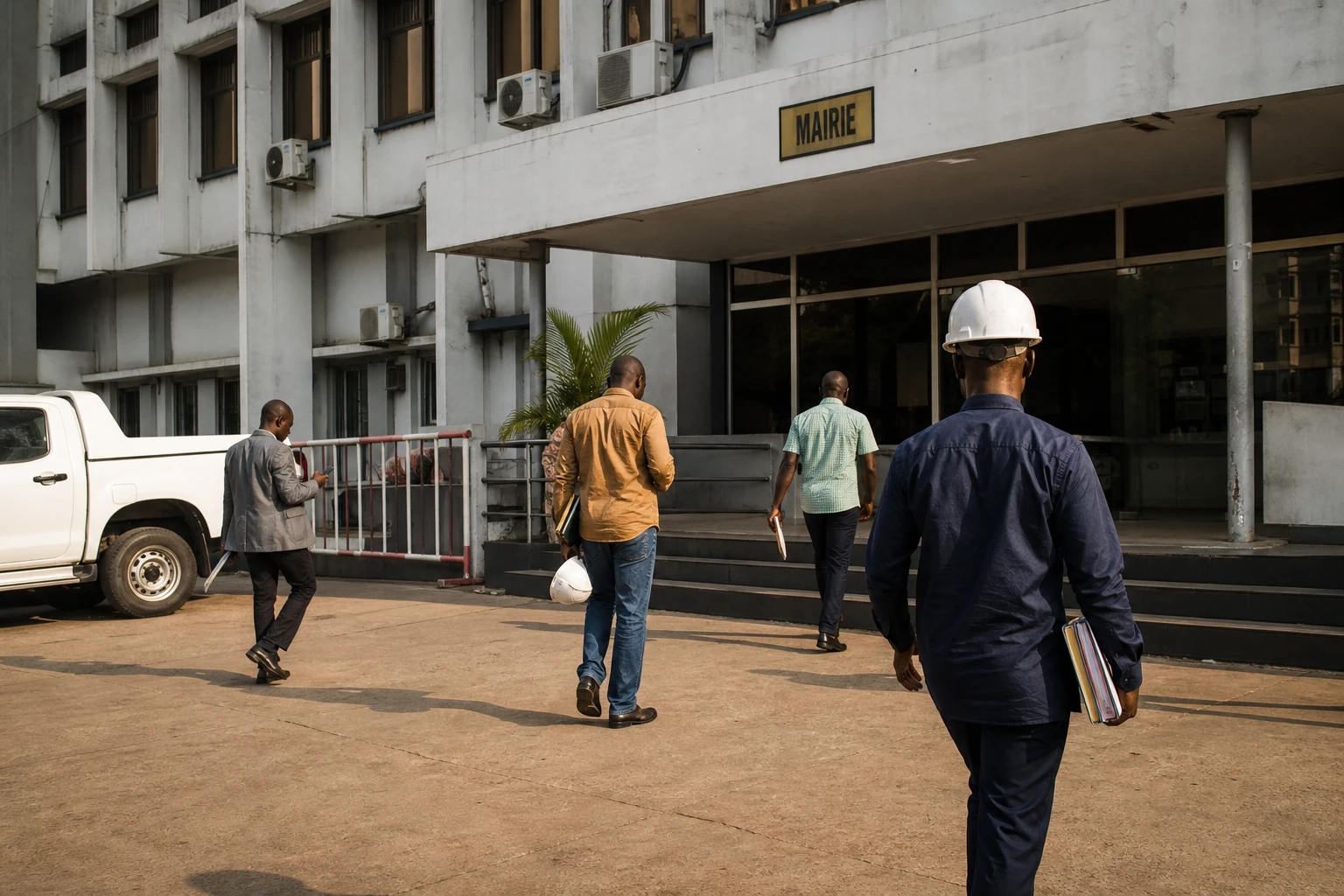
On 29 August 2026, nearly a week after the disaster, Mamadi Doumbouya visited the site. The Guinean presidency said the head of state visited Dar es Salam during a tour of the capital, after stopping at the Alpha Yaya Diallo camp. It said he had come to express his sympathy to the affected families and assess progress on the operations under way.
The authorities presented the visit as an expression of solidarity, but also as a step towards closing the site. According to the presidency, people living within the landfill’s perimeter have already been compensated several times to enable their relocation. The stated aim is now to turn the area into a public park, after cleaning up and redeveloping the site.
What Dar es Salam reveals about Guinea’s capital
The Dar es Salam landslide is not just about the weather. It exposes a tangle of urban vulnerabilities well known across West Africa: rapid urbanisation, housing built close to risk zones and inadequate waste-treatment infrastructure. In Conakry, the Dar es Salam landfill was already considered saturated and hazardous. Before the disaster, the authorities had begun a process to clear and secure the perimeter.
The central issue in this case is therefore prevention. When a site’s vulnerability is known, administrative delays matter as much as the storm. The tragedy shows the human cost of a late closure, difficult relocation and imperfect communication of warnings. It also raises a simple question: who protects families when the city grows faster than its public services?
Mamadi Doumbouya’s visit also carries political weight. Since the September 2021 coup, Guinea has remained on a military transition path, with a presidency that emphasises rebuilding the state and restoring public order. In this context, every local crisis takes on national significance. It becomes a test of the executive’s credibility, especially in the capital, the seat of power and the country’s nerve centre.
The government is seeking to demonstrate a structured response: rescue, evacuation, clearance and then redevelopment. But for families living nearby, the stakes are more immediate. They need to know where they will live, where they will work and how they can avoid being exposed to a new risk in the next rainy season. The gap between talk of urban transformation and the reality on the ground remains visible.
A warning for Conakry, and the wider region
The Dar es Salam case extends beyond Guinea. In several West African capitals, waste management, control of informal housing and stormwater drainage remain major challenges. The Economic Community of West African States, ECOWAS, does not treat this as an isolated emergency: it is part of the broader issues of urban resilience, civil protection and climate adaptation.
For Conakry, what happens next will hinge on two fronts. First, the site must be made genuinely safe and the affected populations supported. Second, the authorities must deliver on their promise of a new use for the land, without making relocation merely a way of moving the problem elsewhere. The events set in motion by the Dar es Salam landslide will show whether Guinea can turn a disaster that had been foreseen into a lasting urban policy.