Algeria
 Egypt
 Libya
 Morocco
 Sudan
 Tunisia
 Benin
 Burkina Faso
 Cabo Verde
 Côte d'Ivoire
 Ghana
 Guinea
 Guinea-Bissau
 Liberia
 Mali
 Mauritania
 Niger
 Nigeria
 Senegal
 Sierra Leone
 The Gambia
 Togo
 Cameroon
 Central African Republic
 Chad
 DR Congo
 Equatorial Guinea
 Gabon
 Republic of the Congo
 São Tomé and Príncipe
 Burundi
 Comoros
 Djibouti
 Eritrea
 Ethiopia
 Kenya
 Madagascar
 Malawi
 Mauritius
 Mozambique
 Seychelles
 Somalia
 South Sudan
 Tanzania
 Uganda
 Angola
 Botswana
 Eswatini
 Lesotho
 Namibia
 South Africa
 Zambia
 Zimbabwe
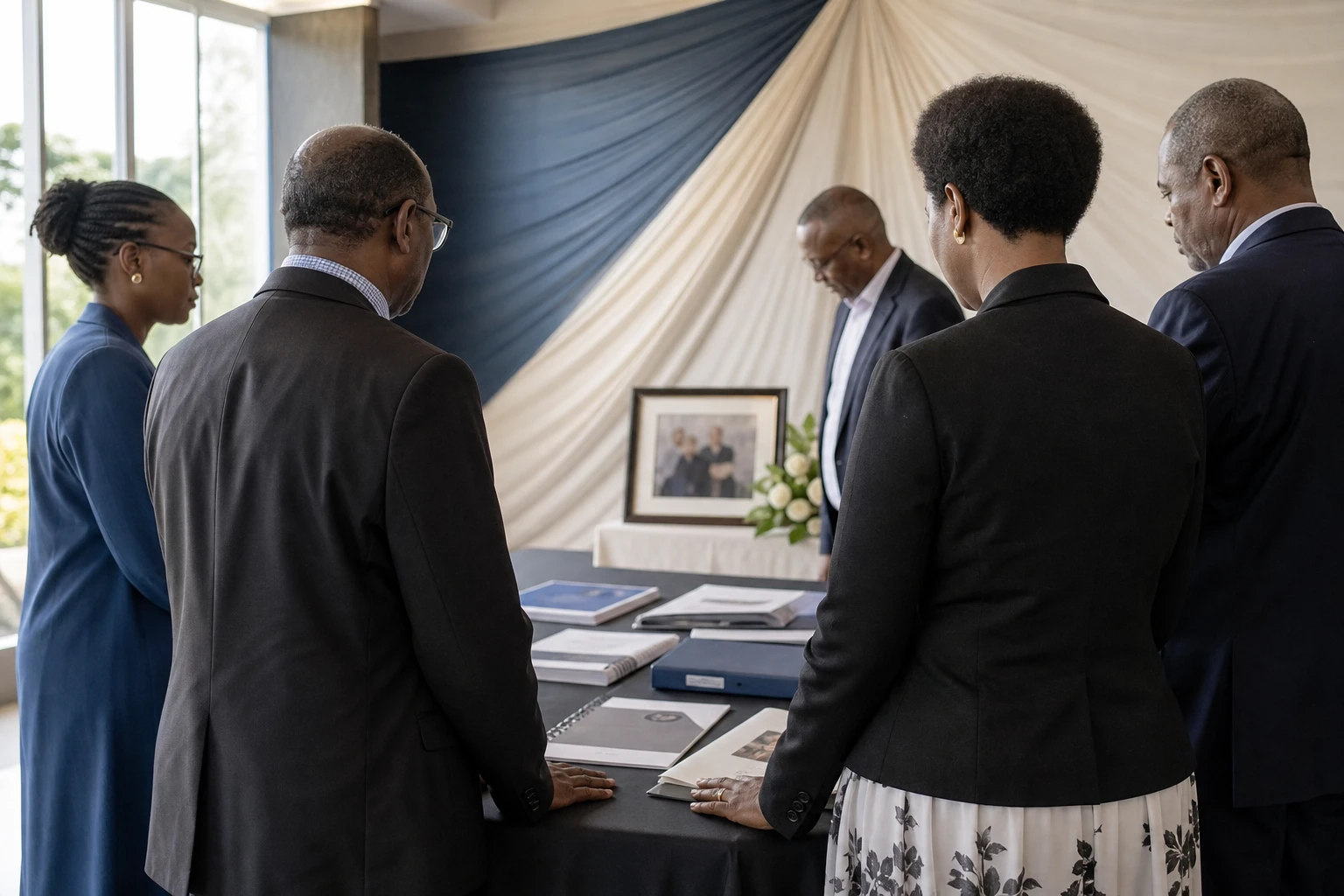
In Kigali and among Rwandan diaspora families, the death of Dafroza Gauthier has revived a central question: what becomes of the pursuit of justice when one of the people who championed it for three decades is gone? A co-founder of the Collective of Civil Parties for Rwanda, she died on Saturday 3 October 2026 in Reims, France, aged 72.
A personal journey turned into a legal fight
Dafroza Mukarumongi Gauthier was not an outside observer of the 1994 genocide against the Tutsi. Her mother was killed on 8 April 1994 at a parish where she had taken refuge. According to testimony given in 2024, between 70 and 80 members of her maternal family were also exterminated.
This family history profoundly shaped her commitment. With her husband, Alain Gauthier, she travelled to Rwanda from 1996 onwards. The couple gathered accounts from survivors, witnesses and former detainees there. This information later informed legal dossiers submitted to the French authorities.
In November 2001, the couple founded the Collective of Civil Parties for Rwanda, or CPCR. The association supports victims and helps document cases involving people suspected of taking part in the genocide who later settled in France.
The work relied on a lengthy and demanding method. Witnesses had to be found, accounts checked, locations identified and documents compared. The couple also had to persuade the courts to take up events that had taken place more than 20 years earlier, in another country and in a particularly sensitive political context.
French justice and crimes committed in Rwanda
France can try certain international crimes when their alleged perpetrators are on its territory. This jurisdiction has allowed proceedings to be opened against Rwandan nationals suspected of taking part in the genocide against the Tutsi.
The CPCR played an important role in this development. According to several corroborating sources, Dafroza and Alain Gauthier helped prepare most of the complaints filed in France against Rwandan suspects. Their work notably facilitated the exchange of testimonies between Rwanda, victims living in Europe and French magistrates.
The proceedings nevertheless moved slowly. Investigations concern long-past events, often committed in rural areas where archives are scarce. They also require individual responsibility to be distinguished from collective accounts, without reducing victims to figures or turning hearings into mere exercises in remembrance.
Several people were eventually convicted by French courts for their participation in the genocide. The exact number of convictions linked to the CPCR’s work varies according to the scope used by different sources. The essential point, however, remains the same: the collective helped bring the Rwandan case into the long-term workings of the French justice system.
This work also accompanied a shift in public debate in France. For a long time, France’s responsibilities in Rwanda were discussed amid fierce controversy. The Duclert commission’s report, submitted in 2021, concluded that the French state bore heavy responsibilities in the context leading up to the genocide, while ruling out the classification of genocide complicity.
Rwandan remembrance and relations with France
For the Rwandan authorities and survivors’ organisations, Dafroza Gauthier’s commitment represented above all support for victims. In 2017, the Rwandan government awarded her and Alain Gauthier a national honour for their contribution to the search for truth and the prosecution of people suspected of taking part in the genocide.
Organisations such as Ibuka, which brings together survivors’ associations, also praised her work. These tributes are a reminder that justice is not limited to convicting an accused person. It also restores victims’ identities, documents their history and counters discourse that denies or minimises the genocide.
Dafroza Gauthier herself emphasised this dimension. In an interview cited after her death, she explained that a trial should rehabilitate victims, recall their names and say who they were. This approach is in keeping with Rwanda’s remembrance policy since 1994, particularly during the annual period of genocide commemoration, from 7 April to 3 July.
It is also part of a national trajectory shaped by the reconstruction of the state, the search for those responsible and the prevention of genocidal ideology. These aims remain sensitive. They touch on social cohesion, education and relations between Rwanda and the countries that have hosted survivors, refugees or suspects.
A legacy that goes beyond the French-Rwandan relationship
Dafroza Gauthier’s death comes as Rwanda continues its work of remembrance and justice, while several proceedings related to the genocide remain open abroad. The question of suspects living outside the continent therefore remains an issue for Kigali and survivors’ associations.
At the regional level, Rwanda is a member of the East African Community, or EAC, an organisation seeking to strengthen economic and political integration among its member states. Although the prosecutions brought in France fall under bilateral judicial co-operation, they concern more broadly the capacity of African countries and their partners to combat transnational impunity.
The Rwandan case also recalls a continental reality: mass crimes do not stop at borders. Suspected perpetrators can change countries, status or identity. Victims, meanwhile, often continue to search for evidence and places where their voices can be heard.
The CPCR will now have to continue its work without one of its leading figures. The succession will not be merely organisational. It will also be a matter of remembrance and justice. The testimonies collected will need to be preserved, links with survivors maintained and ongoing proceedings followed.
In Kigali, France and the Rwandan diaspora, Dafroza Gauthier’s death therefore marks the end of a presence, but not the end of a case. Her life’s work leaves a clear demand: establish the facts, identify those responsible and restore to victims a place the genocide sought to tear away from them.
Her death was confirmed by her husband, Alain Gauthier, to Agence France-Presse. Rwandan and French-language media also reported the date and place of her death. Available information indicates that she died of an illness in Reims.