Algeria
 Egypt
 Libya
 Morocco
 Sudan
 Tunisia
 Benin
 Burkina Faso
 Cabo Verde
 Ghana
 Guinea
 Guinea-Bissau
 Liberia
 Mali
 Mauritania
 Niger
 Nigeria
 Senegal
 Sierra Leone
 The Gambia
 Togo
 Cameroon
 Central African Republic
 Chad
 DR Congo
 Equatorial Guinea
 Gabon
 Republic of the Congo
 São Tomé and Príncipe
 Burundi
 Comoros
 Djibouti
 Eritrea
 Ethiopia
 Kenya
 Madagascar
 Malawi
 Mauritius
 Mozambique
 Rwanda
 Seychelles
 Somalia
 South Sudan
 Tanzania
 Uganda
 Angola
 Botswana
 Eswatini
 Lesotho
 Namibia
 South Africa
 Zambia
 Zimbabwe
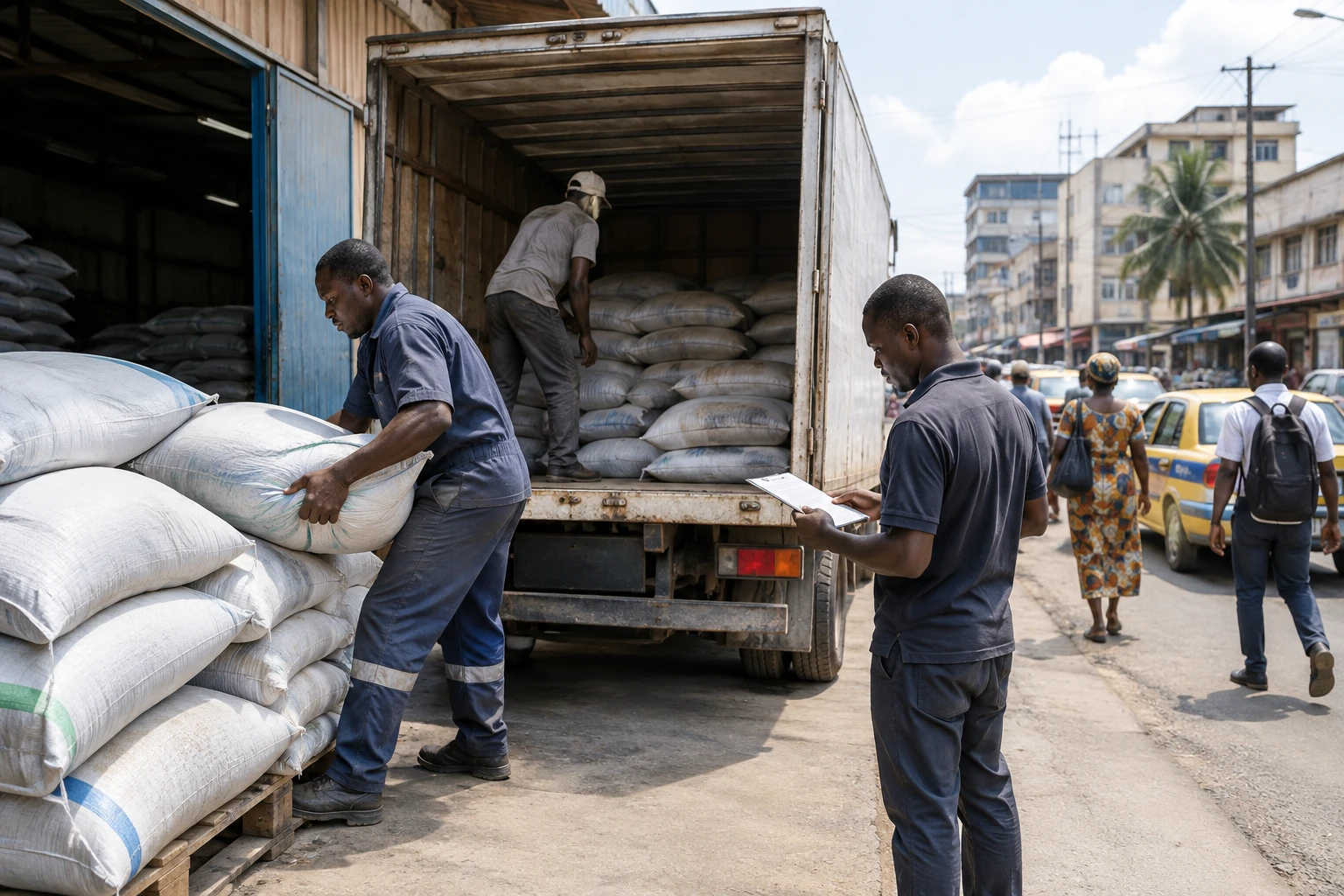
For livestock farmers in Côte d’Ivoire, feed costs have a direct bearing on the viability of their businesses. By reducing VAT to zero on certain animal feeds and their inputs, the government aims to ease this burden. But the impact on prices will depend on how the measure is implemented in practice and on changes in other production costs.
Tax rules changed in several stages
Until the end of 2025, feed for livestock and poultry, along with several inputs used to produce it, was exempt from value-added tax (VAT). Côte d’Ivoire’s 2026 Finance Act abolished the exemption, which meant the standard rate of 18% was due to apply.
The change was quickly adjusted. An ordinance of 7 January 2026 set a reduced rate of 9%, applicable from 17 January, according to a statement from the Directorate General of Taxes. This sequence explains why producers faced a tax increase, even though the 18% rate was not maintained for the period originally envisaged.
On 26 October 2026 in Abidjan, Minister of Animal and Fisheries Resources Sidi Tiémoko Touré announced that the rate would be cut to 0% for the 2026-2027 financial year. He presented the decision as support for domestic production and food sovereignty. The announcement was made at a public meeting organised by the Ivorian News Agency. The Ivorian News Agency sets out the announced tax timetable.
The scope of the measure warrants attention. Communications refer to animal feed and the relevant inputs, but practical arrangements will need to specify which products qualify and what steps are required. As of the date of the announcement, this is a measure announced for the 2026-2027 financial year. Its effective implementation will depend on its incorporation into the relevant tax legislation and guidance.
Costs feed through to markets
The pressure is not limited to feed manufacturers. When feed accounts for a large share of livestock costs, a tax increase can affect the entire chain: manufacturers, farmers, traders and consumers. The ministry estimates that animal feed accounts for more than 60% of the sector’s expenses. This figure relates to a major production cost, but does not mean that VAT is automatically passed on in full to the final price.
In the poultry sector, professional organisations reported price adjustments after the reduced rate came into force. In February, the National Association of Small-Scale Poultry Farmers of Côte d’Ivoire approved a farm-gate price of 2,400 CFA francs for a 1.7-kilogram broiler, 200 francs above the previous price reported by the Ivorian press. The farm-gate price is the amount paid to the farmer, before subsequent sales. This increase illustrates cost pressures, but on its own it does not show that the tax was responsible for the entire price change.
Farms are not all affected in the same way. Producers with cash reserves or storage capacity may sometimes be better placed to absorb a temporary increase than smaller operators. Households, for their part, feel the effects when costs are passed on through the price of chicken or eggs. The exemption may therefore ease a burden without, by itself, guaranteeing an immediate fall in retail prices.
For local animal-feed companies, raw materials are also a key issue. Maize, soya and wheat are used to make many feed mixes, and some supplies depend on overseas trade. A zero VAT rate does not eliminate import costs, price fluctuations or transport constraints. It can, however, reduce the tax bill on products that are covered by the measure.
One lever among many for domestic production
The decision is part of a broader national strategy. The National Policy for the Development of Livestock, Fisheries and Aquaculture for 2026-2030 aims to strengthen the sectors and reduce dependence on imports. The public assessment accompanying the national development plan says Ivorian production meets 49% of demand for meat and offal. The import bill for these products reached 782 billion CFA francs in 2024, according to government data reported by the Ivorian News Agency.
The tax cut will therefore not replace the investment needed in production, processing, animal health and access to inputs. The government has also begun work to prepare financing for the livestock sector with partners, including the African Development Bank and the United Nations Food and Agriculture Organization. The challenge will be to align these investments with the needs of small and medium-sized farms, as well as those of operators that are already well established.
At regional level, Côte d’Ivoire is part of the ECOWAS region, the Economic Community of West African States. Its regional agricultural policy, ECOWAP, aims in particular to coordinate efforts on agriculture and food security. Lower animal-feed costs may support Ivorian supply, but the resilience of the sectors also depends on regional trade, supplies and price stability.
The next step, then, is less about the announcement than its execution: publication of the applicable rules, definition of eligible products and monitoring of implementation. Livestock farmers are waiting to find out when the 0% VAT rate will actually apply and whether the relief will be reflected in farm bills. For consumers, the tangible indicator will be the movement in chicken and egg prices. The Directorate General of Taxes sets out the general VAT rules, while ECOWAS outlines the regional framework for its agricultural policy.