Algeria
 Egypt
 Libya
 Morocco
 Sudan
 Tunisia
 Benin
 Burkina Faso
 Cabo Verde
 Ghana
 Guinea
 Guinea-Bissau
 Liberia
 Mali
 Mauritania
 Niger
 Nigeria
 Senegal
 Sierra Leone
 The Gambia
 Togo
 Cameroon
 Central African Republic
 Chad
 DR Congo
 Equatorial Guinea
 Gabon
 Republic of the Congo
 São Tomé and Príncipe
 Burundi
 Comoros
 Djibouti
 Eritrea
 Ethiopia
 Kenya
 Madagascar
 Malawi
 Mauritius
 Mozambique
 Rwanda
 Seychelles
 Somalia
 South Sudan
 Tanzania
 Uganda
 Angola
 Botswana
 Eswatini
 Lesotho
 Namibia
 South Africa
 Zambia
 Zimbabwe
A product can promise an even complexion and leave lasting marks. In Côte d’Ivoire, the alert now concerns thousands of cosmetics classified as high risk. But identifying a risk is not enough: consumers must also be informed, the products concerned must be withdrawn, and their possible return to the market must be monitored.
Products identified, but follow-up measures need clarification
The available figures give a sense of the challenge. According to results presented by the Ivorian Pharmaceutical Regulatory Authority (AIRP), a campaign conducted between October 2024 and December 2025 identified 11,849 products and 1,140 operators. Of these products, 2,639 were classified as high risk. Skin-lightening products accounted for the largest category, with 1,969 entries, followed notably by products intended to enlarge the buttocks and those marketed as vaginal tightening or detoxifying products. The report on the results of the AIRP campaign sets out this classification.
The classification “high risk” does not automatically mean that every product has been banned, seized or confirmed as toxic. It flags a category that requires greater attention. This distinction is essential: without an easily accessible public list or an account of the measures taken, consumers cannot know precisely which products to avoid and which have been withdrawn.
In September 2026, the Ivorian Centre for Medical and Civic Education (CEMC-CI) asked the AIRP to clarify the status of the products identified: whether they had been brought into compliance, banned, seized, withdrawn or destroyed. The organisation is also calling for regular information on inspections and post-withdrawal monitoring. Its calls for transparency on product monitoring raise a concrete public health question: how can an inventory be turned into effective protection?
Skin damage and homemade products
The issue goes beyond statistics. A user quoted in the report that prompted this alert describes spots that appeared on her neck and arms after using a skin-lightening ointment. She also recounts the effects on her daily life and how others treat her. Her testimony illustrates possible lasting effects, but on its own it cannot establish the product’s composition or provide a medical diagnosis.
CEMC-CI president Marcelin Doh says his organisation has assisted more than 250 people facing complications linked to non-compliant cosmetics. This figure is the NGO’s own tally; it is not a national count published by the health authorities. The organisation has also raised the alarm about homemade preparations to which, it says, brake fluid, bleach or motor oil may be added. These claims call for inspections and product testing, since a dangerous composition cannot be confirmed on the basis of testimony alone.
Ivorian regulations already govern cosmetics. In 2015, the government announced restrictions targeting, in particular, skin-lightening products containing more than 2% hydroquinone, as well as mercury and its derivatives and certain corticosteroids. The government announcement at the time also provided for a system to monitor manufacturing, imports and distribution. The existence of rules, however, does not guarantee that they are enforced at every stage of the commercial chain.
Informing consumers without putting the burden entirely on them
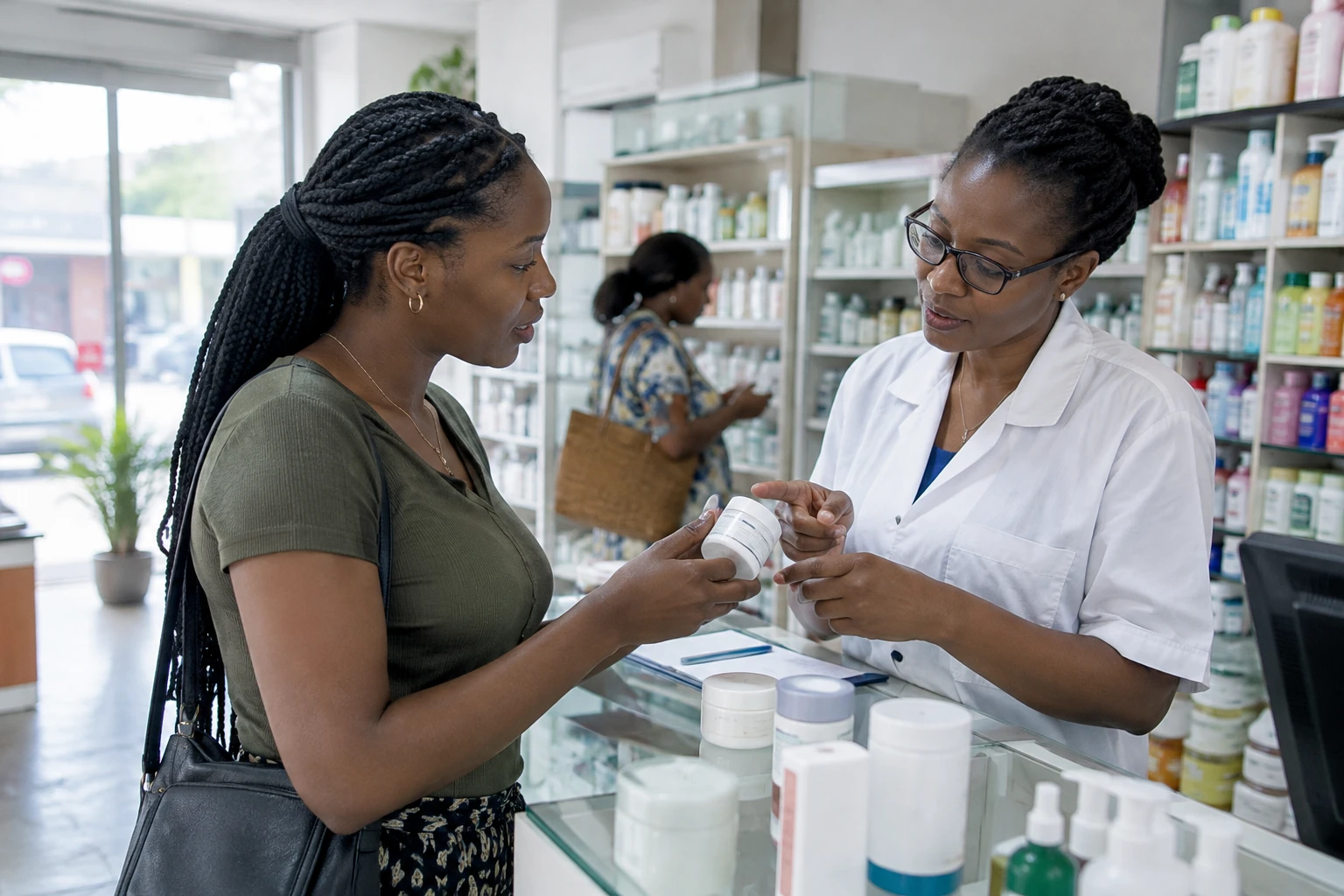
The AIRP recommends using pharmacies and officially registered shops. Traceable supply chains make it easier to verify a product and offer more avenues for redress. This precaution is not enough to solve the problem, however: the authorities must also monitor imports, manufacturers, sellers and advertisements on social media.
Informal markets and online sales make monitoring more difficult. Products can change their packaging or name, while promises of rapid transformation attract people subject to social standards that favour certain skin tones or appearances. Prevention cannot therefore be limited to warning women or asking them to make better choices. It requires accessible information, consistent inspections and medical care for those affected.
In July 2025, Côte d’Ivoire’s health ministry launched a national prevention campaign with CEMC-CI. It includes information initiatives, training for health workers and consultations. The ministry says hydroquinone, mercury and corticosteroids are among the substances of concern in products diverted for skin-lightening purposes. The official presentation of the campaign also highlights the health, psychological and economic dimensions of the issue.
A monitoring challenge that crosses borders
Côte d’Ivoire is a major market in West Africa, where goods move between neighbouring countries and sales networks do not stop at national borders. The Economic Community of West African States (ECOWAS) is therefore a relevant framework for sharing alerts and coordinating product monitoring. This does not replace the responsibility of the Ivorian authorities: the AIRP and the Trade, Customs and health services must make their respective roles and results clear.
In Abidjan, where institutions and major commercial networks are concentrated, inspections may be more visible than in secondary cities or rural areas. Yet products sold outside formal networks also circulate far from the economic capital. The political capital, Yamoussoukro, and national administrations also have a role to play in monitoring decisions and coordinating public action.
The next indicator to watch is therefore not just the number of products classified as high risk. It is the lists actually published, confirmed withdrawals, seizures, sanctions and follow-up care for those affected. The awareness campaign launched in 2025 and the inventory presented in 2026 provide a starting point. Their impact will depend on transparent reporting and inspections capable of reaching even the least visible sales networks.