Algeria
 Egypt
 Libya
 Morocco
 Sudan
 Tunisia
 Benin
 Burkina Faso
 Cabo Verde
 Ghana
 Guinea
 Guinea-Bissau
 Liberia
 Mali
 Mauritania
 Niger
 Nigeria
 Senegal
 Sierra Leone
 The Gambia
 Togo
 Cameroon
 Central African Republic
 Chad
 DR Congo
 Equatorial Guinea
 Gabon
 Republic of the Congo
 São Tomé and Príncipe
 Burundi
 Comoros
 Djibouti
 Eritrea
 Ethiopia
 Kenya
 Madagascar
 Malawi
 Mauritius
 Mozambique
 Rwanda
 Seychelles
 Somalia
 South Sudan
 Tanzania
 Uganda
 Angola
 Botswana
 Eswatini
 Lesotho
 Namibia
 South Africa
 Zambia
 Zimbabwe
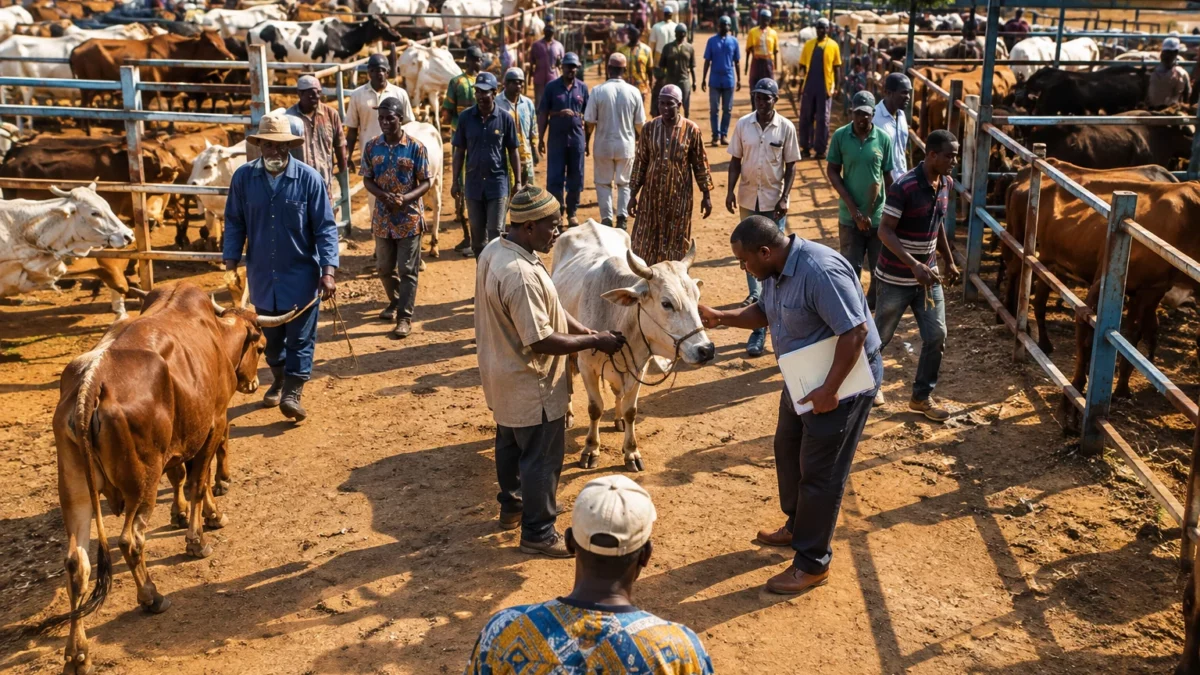
A stolen animal can leave a farm, pass through several sales channels and end up at a slaughterhouse without its origin being verifiable. For Ivorian livestock farmers, identifying each animal is therefore about more than modernisation: it is also a way to protect their herds and better control the meat entering the market.
From local markings to a shared register
In Côte d’Ivoire, livestock farmers already use different methods to recognise their animals. But these marks do not always allow them to be identified beyond their area of origin. A national database, with a unique number and a record of movements, could make checks easier across farms, markets and veterinary services.
The issue is part of a sector that matters for rural incomes and food supplies. The diagnosis in the National Development Plan 2026-2030 states that Ivorian production met 49% of demand for animal and fishery proteins in 2024. The rest depended on imports. The same document puts the annual foreign-exchange outflow linked to imports of animal and fishery products at more than 400 billion CFA francs.
The state has already set identification rules. A decree dated 1 August 2024 governs the identification of animals, their owners and livestock locations. The challenge now is to make these rules workable on the ground, using tools accessible to small and large operators alike.
A pilot phase before rollout
The Ministry of Animal and Fisheries Resources has prepared an electronic identification trial. According to information released about the project, it is to cover 20,000 farm animals. The geographical scope and precise arrangements for the pilot remain to be seen: in October, the ministry said that the areas, animals targeted and operational procedures were still at the heart of planning work.
The ministry presents the system as a way to record an animal’s identity, its owner and its movements. These data could also help services track its health history. In August 2026, an agreement was signed with Vet’tronic, a company specialising in electronic animal identification, to support the project and its possible nationwide rollout.
The cost deserves particular attention. Information released at the project’s launch refers to a contribution of 5,000 CFA francs per animal for installation. This amount could weigh differently depending on herd size and operators’ incomes. Payment arrangements, equipment maintenance and access to equipment in remote areas will therefore influence whether livestock farmers accept the system.
At the Abidjan Livestock Show, which closed on 22 November 2026, identification and traceability were among the topics discussed. The event brought together industry professionals and foreign delegations. This visibility puts the sector’s challenges in the spotlight, but the project’s success will depend above all on how it works on farms, at livestock markets and in slaughterhouses.
Theft, animal health and meat inspection
For livestock farmers, theft is an immediate concern. Issaka Sawadogo, president of the large-ruminant interprofessional organisation, describes animals being stolen from enclosures, then slaughtered and transported to cities. He also warns of the health risk when meat bypasses veterinary inspections.
An electronic identifier cannot by itself prevent theft. Its usefulness will depend on whether the number can be checked quickly, a disappearance reported and information compared during a sale or inspection. It will also be necessary to decide who can access the database and how errors can be corrected. Without trained staff and regular checks, a chip or tag risks remaining a mere distinguishing mark.
Traceability can also be useful during a health alert. If a sick animal is identified, knowing its origin and movements helps veterinary services trace the farms or markets concerned. This does not replace inspections or treatment; it gives teams more precise information to act on.
The system will affect stakeholders in different ways. Livestock farmers can hope to document ownership of their animals more effectively, while traders and transporters will have to incorporate new checks. Veterinary services would gain tracking data, but will need human and technical resources. For consumers, the issue is a greater capacity to inspect meat, although traceability alone cannot guarantee its quality.
An issue that extends beyond Côte d’Ivoire’s borders
The livestock trade links coastal countries with Sahelian production areas. Animals move between farms, markets and places of consumption, so their tracking cannot stop at an administrative border. ECOWAS, which brings together West African countries, adopted a regional livestock identification and traceability strategy in 2022. Its aims include making checks and trade more consistent between states.
An ECOWAS regional programme is also working on traceability methods suited to livestock markets. It highlights these markets as essential points for registering animals, monitoring their health and maintaining the link between their origin and destination. For Côte d’Ivoire, coordination between the future national system and those of neighbouring countries will therefore be crucial.
The task is not simply a matter of choosing a technology. It will be necessary to assess the cost borne by livestock farmers, the reliability of the data, the services’ ability to update it and compatibility with regional trade. The next concrete steps will be the actual launch of the pilot, publication of its results and a decision on whether to extend it. These are the conditions under which identification can become a useful tool rather than another formality.
Verification sources: Ivorian Ministry of Animal and Fisheries Resources, Ivorian News Agency, Ivorian News Agency investigation into livestock theft, National Development Plan 2026-2030, ECOWAS Regional Agency for Agriculture and Food, ANADER, review of SELAB 2026.