Algeria
 Egypt
 Libya
 Morocco
 Sudan
 Tunisia
 Benin
 Burkina Faso
 Cabo Verde
 Ghana
 Guinea
 Guinea-Bissau
 Liberia
 Mali
 Mauritania
 Niger
 Nigeria
 Senegal
 Sierra Leone
 The Gambia
 Togo
 Cameroon
 Central African Republic
 Chad
 DR Congo
 Equatorial Guinea
 Gabon
 Republic of the Congo
 São Tomé and Príncipe
 Burundi
 Comoros
 Djibouti
 Eritrea
 Ethiopia
 Kenya
 Madagascar
 Malawi
 Mauritius
 Mozambique
 Rwanda
 Seychelles
 Somalia
 South Sudan
 Tanzania
 Uganda
 Angola
 Botswana
 Eswatini
 Lesotho
 Namibia
 South Africa
 Zambia
 Zimbabwe
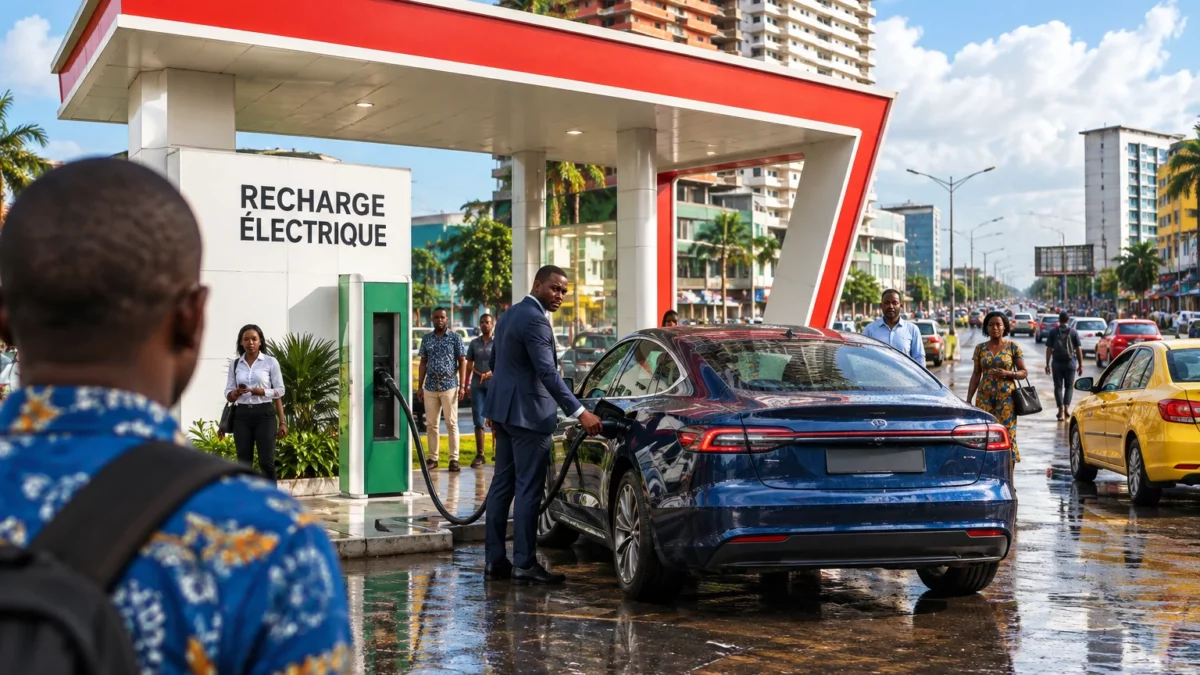
For drivers who spend all day covering Abidjan, energy costs have a direct impact on their income. Switching to electric vehicles can reduce the cost of getting around. But first, they need to be able to buy a vehicle, charge it without detours and rely on a dependable network.
A market taking shape between private initiatives and public policy
Electric mobility in Côte d’Ivoire is no longer limited to announcements. The country has introduced regulatory measures and pilot projects, while companies are testing models aimed at ride-hailing and delivery drivers. The challenge now is to connect these initiatives: vehicles, finance, charging, maintenance and electricity supply.
On 22 May 2024, the government adopted a decree setting out a framework for promoting electric transport and developing charging infrastructure, the Ministry of the Environment says. A national programme includes electric vehicles for the public administration, taxis and solar-powered stations. These goals set a direction, but their delivery will depend on the resources mobilised and the pace of deployment.
In February 2026, the Ministry of Transport announced the launch of work by a technical committee focused on integrating electric mobility and renewable energy. Discussions include pilot charging sites, standards, institutional responsibilities, and financing and maintenance needs. This step shows that the authorities are examining the practical requirements of a network, beyond the purchase of vehicles.
The issue extends beyond Côte d’Ivoire’s borders. Within ECOWAS, the Economic Community of West African States, electricity trading and regional supply chains are important to energy planning. Côte d’Ivoire plays a significant role in West African electricity exchanges. Developing electric vehicles therefore requires transport policy, electricity generation and regional cooperation to be coordinated.
In Abidjan, financing remains the immediate hurdle
On Friday 20 November 2026, a round table on accelerating electric mobility was held in Abidjan as part of the International Exhibition of Extractive Resources and Energy. The official programme confirms the participation of public officials, mobility companies and financial-sector players. Marjorie Saint-Lot, head of Fanga, moderated the discussion.
Participants highlighted a commercial opportunity: professional drivers, particularly in ride-hailing and delivery, cover enough ground for energy costs to weigh heavily on their accounts. Marjorie Saint-Lot said electric vehicles address an economic reality as well as reflecting the sector’s evolution. This prospect initially concerns operators able to organise frequent journeys and control operating costs.
But a vehicle that costs less to run may still be unaffordable to buy. Moulaye Tabouré, managing director of GoCab Côte d’Ivoire, said the company was seeing demand from drivers and knew how to identify competitively priced vehicles. In his view, the main gap was a lack of banks and investors willing to finance purchases. His statement describes the perspective of a market operator; on its own, it is not a general measure of national demand.
Financing is particularly crucial for drivers without sufficient capital. A suitable loan can spread the cost of a vehicle over several years. However, lenders must also assess resale value, battery lifespan, repair costs and the availability of spare parts. Without guarantees and predictable income, the risk may be considered too high, even if daily energy costs fall.
From charging points to grid capacity, the challenges are linked
The figures cited during the discussion provide an indication of scale, but should be treated with caution. The material provided refers to around 100 charging points and at least 1,500 electric vehicles on the road, attributing the figures to the Ministry of Transport. However, the public sources consulted do not independently confirm that these totals correspond exactly to the situation in November 2026. The figures therefore remain attributed to that statement.
The number of charging points does not tell the whole story. Their location, power, availability and cost determine whether they really meet drivers’ needs. A charging point concentrated in a business district will not necessarily help a driver whose jobs take them across several municipalities. For operators, every detour or wait reduces the time available for paid journeys.
Electricity supply is another prerequisite. Any increase in charging demand must be anticipated in grid planning, as representatives of the authorities at the meeting pointed out. Charging points powered by solar installations can supplement the grid in some locations, but they also require storage, maintenance and a viable business model. The technical committee launched in February 2026 has specifically included the study of renewable energy in its work.
The benefits will not be distributed evenly. Companies with fleets and depots can organise charging more easily than independent drivers. Activities concentrated in Abidjan may also attract the first investments, while secondary cities risk remaining less well equipped. Access to credit, spare parts and trained repair technicians will therefore matter as much as the vehicles’ advertised range.
Next step: turning announcements into practical access
SIREXE, an exhibition focused on extractive resources and energy, put the discussion at the intersection of two sectors: transport and electricity. Public initiatives already under way in Côte d’Ivoire show that the issue is becoming part of government action. The question is whether national goals will translate into functioning charging points, accessible finance and an offer suited to local needs.
For ECOWAS countries, Côte d’Ivoire’s experience is relevant because of the questions it raises: how can vehicles be financed, rules harmonised, professionals trained and charging provided beyond major urban centres? The transition will not be measured solely by the number of imported vehicles. It will also depend on local drivers and companies being able to operate them sustainably, without shifting the constraints from fuel to credit, charging or maintenance.
The next steps to watch are implementation of the regulatory framework, the selection of pilot sites and the arrival of suitable financing. The significance of electric mobility in Côte d’Ivoire will be tested at this level: whether a vehicle is actually purchased and daily journeys can reliably be made.
Côte d’Ivoire’s technical committee on electric mobility and renewable energy · The national electric mobility programme presented by the Ministry of the Environment · The official SIREXE 2026 programme · The Ivorian News Agency’s analysis of the investment required