Algeria
 Egypt
 Libya
 Morocco
 Sudan
 Tunisia
 Benin
 Burkina Faso
 Cabo Verde
 Côte d'Ivoire
 Ghana
 Guinea
 Guinea-Bissau
 Liberia
 Mali
 Mauritania
 Niger
 Nigeria
 Senegal
 Sierra Leone
 The Gambia
 Togo
 Cameroon
 Central African Republic
 DR Congo
 Equatorial Guinea
 Gabon
 Republic of the Congo
 São Tomé and Príncipe
 Burundi
 Comoros
 Djibouti
 Eritrea
 Ethiopia
 Kenya
 Madagascar
 Malawi
 Mauritius
 Mozambique
 Rwanda
 Seychelles
 Somalia
 South Sudan
 Tanzania
 Uganda
 Angola
 Botswana
 Eswatini
 Lesotho
 Namibia
 South Africa
 Zambia
 Zimbabwe
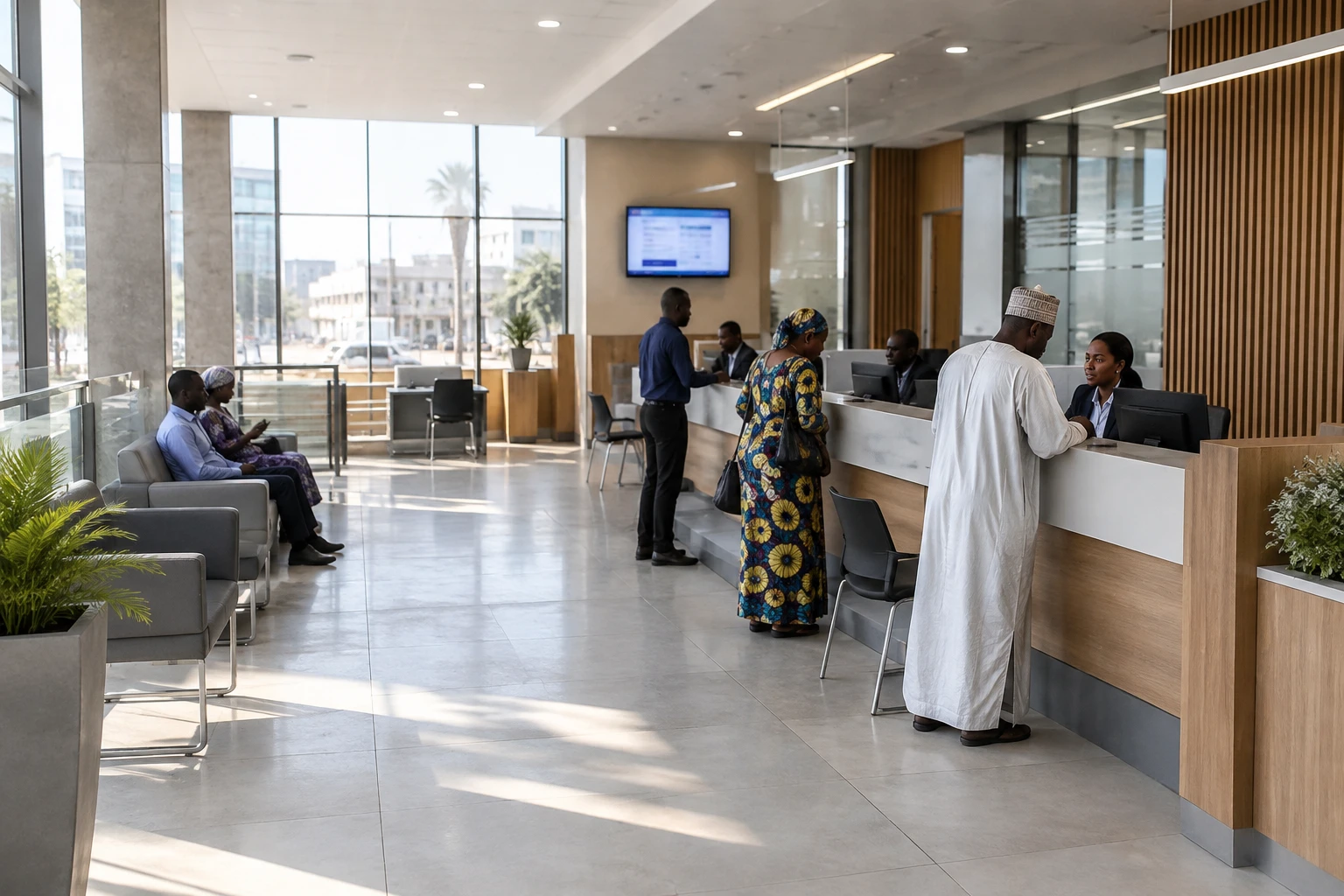
For a trader in N’Djamena or a small business owner in Chad, opening an account is not always enough to secure suitable financing. Coris Bank International Chad is now banking on an offer that complies with Islamic finance principles to broaden its customer base in a market where access to banking services remains limited.
A new service in a market with low banking penetration
The bank unveiled its Islamic window, Coris Bank International Baraka Chad, in N’Djamena on 28 October 2026. The presentation of the products is due to continue on 29 October, according to the Chadian media outlet Le N’Djam Post. An “Islamic window” is a specialised service integrated into a conventional bank, rather than an independent institution.
The new offer complements Coris’s conventional operations in Chad. The bank officially launched its operations in the country on 18 June 2025, a date confirmed by Coris Bank International Chad. Baraka is therefore entering the market around 16 months after the bank’s arrival.
Chief executive Fidèle Toko said the funds and operations of the Islamic branch would be kept separate from those of the conventional business. This separation is intended to ensure that the products on offer comply with the rules specific to this segment. It will also need to be reflected in internal controls and regulatory supervision.
A regional framework already in place
The launch is taking place within a framework shared by the member countries of the Economic and Monetary Community of Central Africa (CEMAC), which includes Chad. In 2022, regional monetary authorities adopted a regulation setting out the conditions for conducting and supervising Islamic finance. The Bank of Central African States (BEAC) describes its main provisions in its report on the economic and financial situation and outlook of CEMAC.
This framework governs products, compliance and the role of oversight bodies. Possible mechanisms include murabaha: the bank buys an asset requested by the client, then resells it to them at a margin announced in advance. Islamic finance excludes interest-bearing loans, among other things, and sets specific rules for investments and risk-sharing.
Potential demand, however, goes beyond the question of religious compliance alone. BEAC estimates that Chad has a large Muslim population, but religious affiliation alone cannot predict each person’s financial choices. Fees, the proximity of branches, the simplicity of procedures and trust will also influence uptake of these services.
Figures should be treated with caution
The figure of 2.85% for the strict banking penetration rate in 2026 has been cited in information accompanying the launch. We have not found a second independent source to verify this estimate precisely. Chadian media outlet Le N’Djam Post, meanwhile, cites a rate of below 10%, without giving the same indicator or a comparable calculation method. These figures should therefore not be presented as equivalent.
The picture of a largely informal labour market is better documented. The World Bank estimates that informality accounts for around 88% of jobs in Chad. This figure, which covers the labour market as a whole, does not on its own confirm the estimate of more than 80% mentioned at the launch. For self-employed workers and small businesses, the issue is tangible: having access to payment, savings or financing solutions that are accessible and do not involve procedures designed solely for large companies.
But a new banking offer does not automatically guarantee financial inclusion. Results will depend on Baraka’s ability to serve clients outside formal channels, particularly beyond central N’Djamena. The needs of an urban trader, an artisan and an agricultural producer are not the same. The products, their costs and the conditions for accessing them will therefore determine their real usefulness.
Competition also hinges on trust
Coris is not entering an untouched market. Chad already has Islamic finance offers from other institutions, including banking windows and murabaha-based financing. This presence means Baraka will need to stand out through service quality, clear contracts and the availability of financing that meets local needs.
The Coris group has experience in Islamic finance in several African countries. This experience could help with the rollout of products and procedures. It does not, however, relieve the Chadian subsidiary of the need to adapt its offer to the country’s realities or to demonstrate that the announced separation between conventional and Islamic operations works in practice.
At regional level, the initiative is part of a sector that CEMAC authorities are seeking to regulate more closely. A common framework can support the development of comparable services across countries, provided compliance rules are effectively applied and understood by clients. The next indicator to watch will be less the number of offers announced than their use: account openings, financing granted and access for small businesses.