Algeria
 Egypt
 Libya
 Morocco
 Sudan
 Tunisia
 Benin
 Burkina Faso
 Cabo Verde
 Côte d'Ivoire
 Ghana
 Guinea-Bissau
 Liberia
 Mali
 Mauritania
 Niger
 Nigeria
 Senegal
 Sierra Leone
 The Gambia
 Togo
 Cameroon
 Central African Republic
 Chad
 DR Congo
 Equatorial Guinea
 Gabon
 Republic of the Congo
 São Tomé and Príncipe
 Burundi
 Comoros
 Djibouti
 Eritrea
 Ethiopia
 Kenya
 Madagascar
 Malawi
 Mauritius
 Mozambique
 Rwanda
 Seychelles
 Somalia
 South Sudan
 Tanzania
 Uganda
 Angola
 Botswana
 Eswatini
 Lesotho
 Namibia
 South Africa
 Zambia
 Zimbabwe
When the rain falls, Conakry’s outskirts pay the heaviest price
In Conakry, the rainy season brings an annual reminder of a simple reality: when a city grows faster than its infrastructure, danger shifts towards its most exposed neighbourhoods. This time, the Dar Es Salam landfill, in the commune of Gbessia, became the scene of a disaster after heavy rain fell during the night of Saturday 22 to Sunday 23 August 2026.
The site is no ordinary place. For a long time, it has embodied the tensions of a capital where urbanisation, waste management and precarious housing overlap. In this kind of setting, intense rain does more than cause runoff. It can also turn a slope of rubbish into an unstable mass, with an immediate impact on families living nearby.
Guinea is experiencing this vulnerability in a familiar regional context. Along the West African Atlantic coast, heavy rainfall is becoming harder for coastal cities to absorb. In spring, seasonal forecasts from the regional climate centre AGRHYMET for the Gulf of Guinea countries had already warned of the risk of heavy rain and flooding, urging people to avoid settling in high-risk areas. Conakry was therefore on the frontline well before the disaster.
What happened at Dar Es Salam
According to figures released by the authorities and reported by several corroborating sources, at least 30 people died when part of the landfill collapsed. Six people were also reported seriously injured, and several houses were destroyed in the immediate vicinity. Search and rescue operations continued on Sunday, as teams were still trying to find any survivors beneath the rubble.
The sequence of events is now established. The overnight rain first triggered a landslide at the site. Residents then approached in an attempt to help and identify survivors. A second section of the rubbish mound then gave way, burying people who were already there. Documented by several witnesses and confirmed by the authorities, this sequence illustrates the particular danger posed by open-air landfills next to homes.
The Dar Es Salam site was supposed to close on the day of the disaster, according to information published afterwards. Residents had already received evacuation notices, and some families had left. But others remained, either because there was no immediate alternative or because people cannot be moved out of a neighbourhood in a day when replacement housing is unavailable.
An urban problem, not just an accident
The Dar Es Salam disaster speaks not only to the force of the rain. It also reveals the fragility of an urban model in which waste, surface water and low-income housing converge in the same place. Conakry, like many West African capitals, is struggling with sanitation infrastructure that cannot keep pace with the city’s rapid densification. Pressure on land pushes low-income households towards the most exposed areas, often where land is cheaper but also more dangerous.
The Dar Es Salam landfill has embodied this imbalance for years. In June 2025, the Prime Minister’s Office had already announced a review of its relocation, citing an environmental and public health emergency. Discussions about closing or transforming the site are therefore nothing new. The problem lies elsewhere: between announcement and implementation, land for resettlement, roads, waste collection facilities and a sustainable solution for the waste produced each day by Greater Conakry are all needed.
The issue also concerns local governance. An open-air landfill located in or near a residential neighbourhood poses a constant risk to residents, as well as to emergency services. When disaster strikes, residents themselves are often the first to respond, before organised rescue teams arrive. This is why the human toll is so high: victims are not only those exposed to the initial danger, but can also include people who came to help.
What the disaster means for Guinea and the region
For the Guinean authorities, the immediate priority remains humanitarian: searching for the missing, treating the injured and finding homes for families. But the events at Dar Es Salam already demand a broader perspective. They show that preventing urban disasters cannot be limited to warning messages. It requires detailed mapping of high-risk areas, drainage channels, a credible waste policy and proper monitoring of informal settlements around hazardous sites.
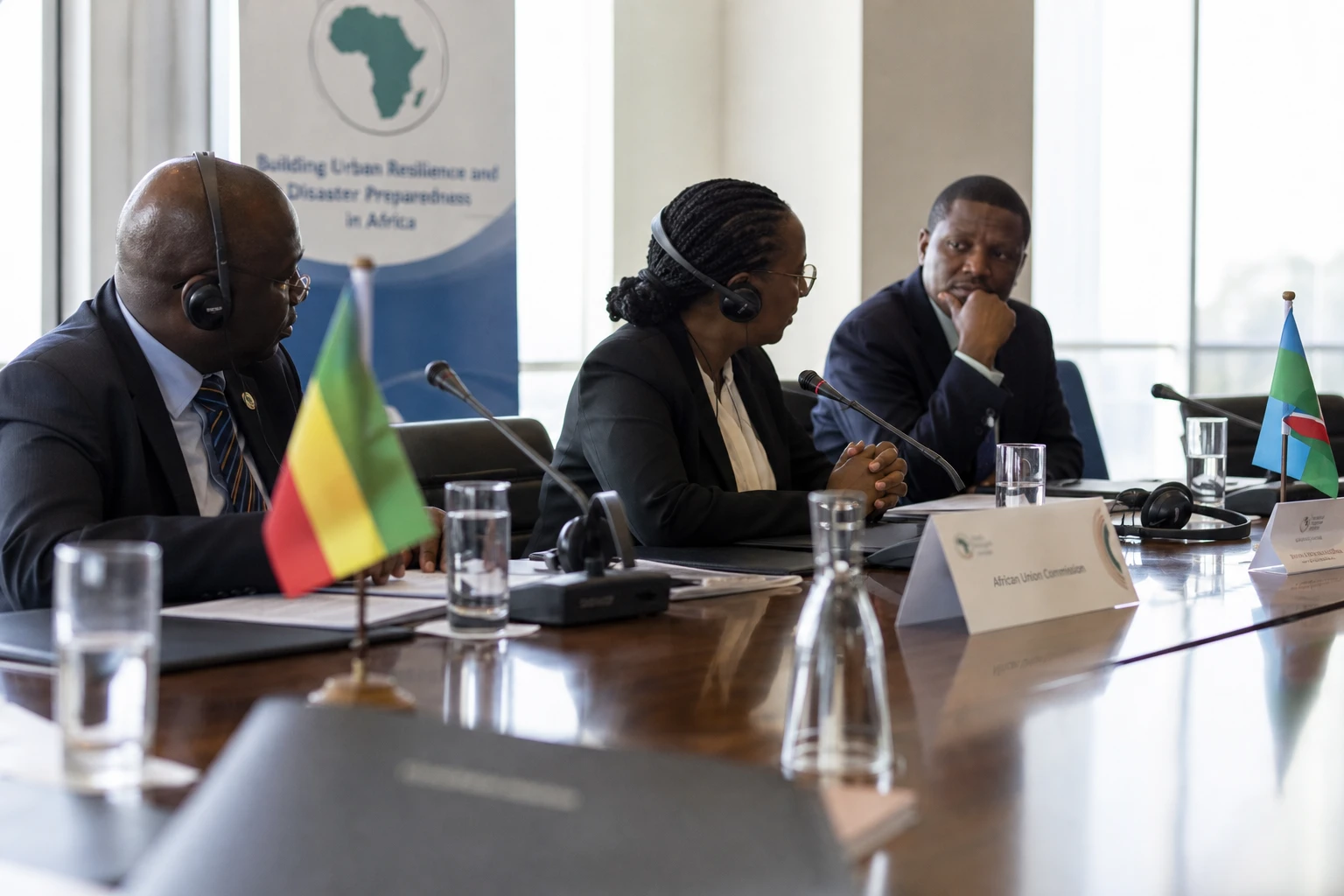
The regional dimension is also clear. ECOWAS recently reiterated in Abidjan the need to strengthen disaster management in West Africa. In practice, this means very concrete needs: warning systems, the sharing of expertise, support for civil protection, and funding for basic urban infrastructure. Conakry is a reminder that climate risk in West Africa does not affect only rural areas or floodplains. It also reaches capital cities, at the heart of inhabited neighbourhoods.
At the continental level, the Dar Es Salam disaster feeds into a wider debate about African coastal cities. Faced with rising sea levels, more intense rainfall and population growth, coastal capitals need to accelerate efforts on three fronts: urban planning, sanitation and protection for the most vulnerable people. In Guinea, the next challenge is not just to count the victims. It is to establish whether the announced closure of a high-risk site will finally lead to a sustainable urban solution for Conakry.