Algeria
 Egypt
 Libya
 Morocco
 Sudan
 Tunisia
 Benin
 Burkina Faso
 Cabo Verde
 Côte d'Ivoire
 Ghana
 Guinea
 Guinea-Bissau
 Liberia
 Mali
 Mauritania
 Niger
 Nigeria
 Senegal
 Sierra Leone
 The Gambia
 Togo
 Cameroon
 Central African Republic
 Chad
 DR Congo
 Equatorial Guinea
 Gabon
 Republic of the Congo
 São Tomé and Príncipe
 Burundi
 Djibouti
 Eritrea
 Ethiopia
 Kenya
 Madagascar
 Malawi
 Mauritius
 Mozambique
 Rwanda
 Seychelles
 Somalia
 South Sudan
 Tanzania
 Uganda
 Angola
 Botswana
 Eswatini
 Lesotho
 Namibia
 South Africa
 Zambia
 Zimbabwe

A living urban heritage
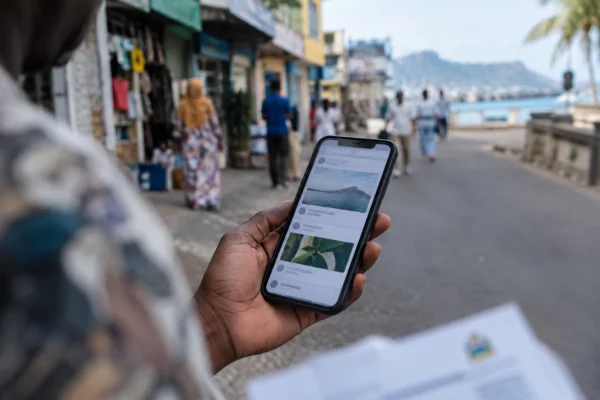
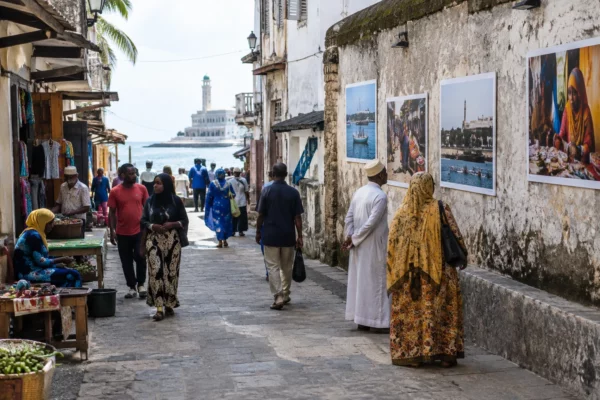
In the Comoros archipelago, heritage is not confined to relics behind a fence. In Moroni, Ikoni, Itsandra, Ntsudjini, Domoni and Mutsamudu, daily life continues to flow through the narrow streets: school journeys, local shops and practices passed down from one generation to the next. It is precisely these six medinas, all still inhabited, that secured the Comoros’ first UNESCO World Heritage listing in July 2026.
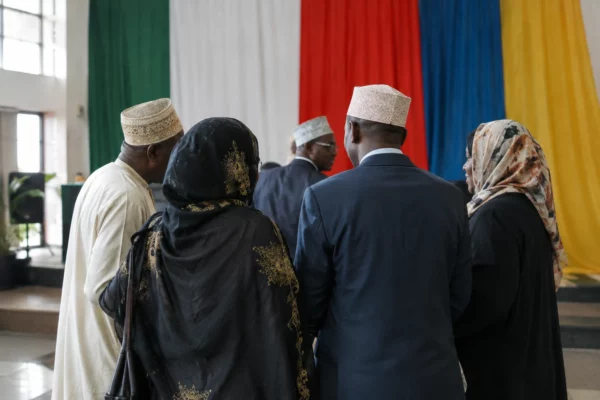
On 29 August 2026, this recognition took on a more visible form in Ikoni, with the official presentation of the inscription certificate to the Comorian authorities. The event extended an already historic moment for Moroni, the capital of the Union of the Comoros, and for a country that had until then had no property on the World Heritage List.
Cities shaped by the Indian Ocean
These medinas are not frozen backdrops. UNESCO describes them as urban centres that emerged from the 11th century and became city-states in the 14th and 15th centuries, at the heart of the Comorian sultanates. Their value lies as much in their urban layout as in their role in Indian Ocean trade, between eastern Africa, the Arab world and other shores of the Indian Ocean.
On the ground, this history can be read in the materials themselves. Lime, volcanic rock and timber come from the archipelago. The architecture was therefore built in harmony with the local landscape, without importing a single model. This is also what makes these cities distinctive, in a region where trade and religious networks long connected the Swahili coast, Zanzibar and the Arabian Peninsula.
Comorian cultural authorities pursued the nomination for several years. The dossier was submitted to UNESCO in early 2025, then examined at the 48th session of the World Heritage Committee in Busan, Republic of Korea. The inscription was also presented as a way to bring greater balance to a list long dominated by other regions of the world.
A distinction, but also an obligation
The distinction changes how these cities are viewed, but above all it changes the responsibilities they carry. World Heritage listing requires conservation measures, monitoring and sustainable management of the property. UNESCO also stresses that recognition does not turn a place into an open-air museum: it commits the state, local authorities and residents to safeguarding the site’s value.
In the Comoros, this is a sensitive issue. The medinas are still lived in, but they are changing. Houses are being converted into shops, some families are moving elsewhere, and skills linked to construction, the upkeep of old houses and neighbourhood social practices are becoming more fragile. The challenge is not simply to protect walls. It is also to maintain a living social fabric in urban centres where pressure on land, modern needs and collective memory coexist without always fitting together.
For residents, the inscription could open up tangible opportunities. It could boost cultural tourism, promote crafts, support local guides and bring greater visibility to forms of architecture that remain little known outside the archipelago. But this promise only makes sense if the benefits are shared. Otherwise, the risk is that the label will attract attention without strengthening the neighbourhoods that made it possible. This city-level perspective is essential for Moroni, as it is for Domoni and Mutsamudu.
What this first inscription says about the Comoros
The Comorian nomination is also part of a broader movement. UNESCO has made the representativeness of the World Heritage List a central concern, particularly for small island developing states, or SIDS, a category to which the Comoros belong. In July 2026, the World Heritage Committee adopted a specific strategy for these states covering 2026 to 2034.
This perspective matters to the Comoros, a member of the African Union since 1975 and of the Indian Ocean Commission, an intergovernmental organisation bringing together five island states in the region. In this part of eastern Africa and the Indian Ocean, heritage issues intersect with climate, tourism, cultural transmission and the islands’ sovereignty over their own narrative.
Across the continent, the listing of the Comorian medinas therefore means more than a symbolic honour. It shows that a small island state can have its distinctive urban heritage recognised without reducing it to the exotic or to the crises that often dominate the news. It is also a reminder that historic cities in Africa are not merely objects of study: they remain inhabited, contested, changing and intergenerational spaces. For Moroni, the real question starts now: how can this heritage be protected without cutting it off from those who still live there?