Algeria
 Egypt
 Libya
 Morocco
 Sudan
 Tunisia
 Benin
 Burkina Faso
 Cabo Verde
 Côte d'Ivoire
 Ghana
 Guinea
 Guinea-Bissau
 Liberia
 Mali
 Mauritania
 Niger
 Nigeria
 Senegal
 Sierra Leone
 The Gambia
 Togo
 Cameroon
 Central African Republic
 Chad
 DR Congo
 Equatorial Guinea
 Gabon
 Republic of the Congo
 São Tomé and Príncipe
 Burundi
 Djibouti
 Eritrea
 Ethiopia
 Kenya
 Madagascar
 Malawi
 Mauritius
 Mozambique
 Rwanda
 Seychelles
 Somalia
 South Sudan
 Tanzania
 Uganda
 Angola
 Botswana
 Eswatini
 Lesotho
 Namibia
 South Africa
 Zambia
 Zimbabwe
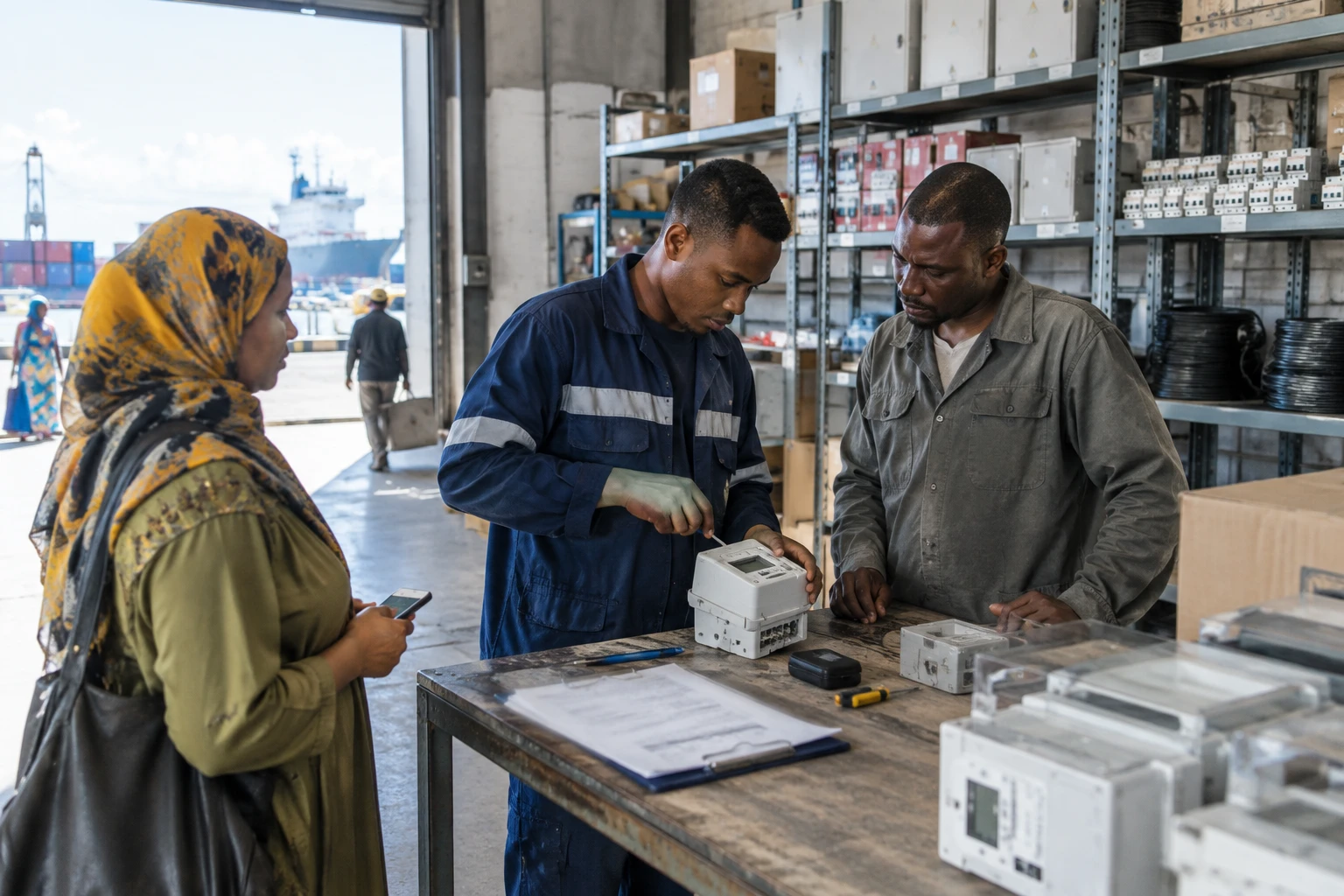
A more accurate meter can improve a utility’s accounts without reducing a household’s bill. In Comoros, this distinction is fuelling debate over the modernisation of the National Electricity Company (SONELEC): the company says it is collecting more revenue, while consumers report a sharp rise in their expenses.
A network in need of recovery, households seeking answers
In Moroni and on the other islands of the Union of the Comoros, electricity is an essential service for households, businesses and public services. But the state-owned company has faced cash-flow problems. These have made it harder to finance the fuel needed for generation. The availability of electricity and SONELEC’s financial health therefore remain linked.
The meter project is part of a broader sector reform. Since 2024, the government has launched a programme to replace old devices with prepaid meters. A World Bank document says that more than 103,000 meters have been acquired, representing about 80% of SONELEC’s customers, and that their rollout is under way. The African Development Bank also describes prepaid meters as a tool for managing consumption and improving revenue collection.
These devices record electricity consumption and allow credit to be added to the meter before use. They can help the supplier track payments more effectively. However, their installation alone is not enough to show that every bill is accurate or that electricity has become more affordable.
Dispute over interpretation of financial results
After twenty months at the helm of the company, chief executive Moumini Soilahoudine points to improved cash flow, more secure revenues and increased electricity availability. He stresses, however, that the 100 million Comorian francs cited in the results do not represent a net profit: SONELEC still has significant costs to cover.
Management defends the new metering system as a way to bill customers more closely in line with actual consumption. It argues that the equipment does not make electricity more expensive. The distinction matters: a device can improve measurement and revenue collection without changing the unit price of electricity. But if customers are now paying for consumption that was previously poorly measured or inadequately billed, their immediate expenses may still rise.
The Comorian Consumers’ Federation (FCC) disputes the company’s explanations. Its administrative officer, Tahamida Mzé, says some households are using up their credit two to three times faster, despite no notable change in their habits or new appliances. She cites the case of a household whose 10,000 Comorian franc top-up now lasts only about ten days, and estimates that some monthly costs have doubled or tripled. These figures and comparisons are claims by the FCC: the available information does not allow them to be independently verified for all subscribers.
The key question: who checks the meters?
The disagreement is therefore as much about the testing process as about the price of electricity. The FCC questions the tests attributed to the metrology service and is calling for an independent audit, as well as a suspension of the new meters. Management says SONELEC carried out the tests and then sent the results to the metrology service, which it says lacks the equipment to conduct its own checks.
This response leaves a question of trust only partly answered: is testing carried out by the supplier enough to reassure customers when they are challenging the readings themselves? An independent audit, published with its methodology, samples and results, would make it possible to compare old and new devices and examine the reported discrepancies. It could also distinguish an increase caused by more accurate measurement from a faulty meter, a configuration problem or a change in consumption.
The stakes are tangible for household budgets. Households able to top up their meters frequently can absorb changes in spending more easily than those with irregular incomes. Small businesses, meanwhile, need a reasonably predictable supply to factor electricity into their costs. In areas where service remains less reliable, the issue is not only how much is paid, but also how much electricity is actually available in return.
Reform also depends on governance
Meters alone cannot resolve the sector’s structural weaknesses. The World Bank also cites network modernisation, loss reduction and improved commercial management. The African Development Bank emphasises SONELEC’s governance, the monitoring of performance targets and the establishment of sector regulation. These efforts will determine whether additional revenue leads to maintenance and better service, rather than simply transferring costs to users.
Regionally, Comoros is part of East Africa. The issue reflects challenges shared by many electricity systems across the continent: securing revenue, financing infrastructure and making services more reliable while protecting consumers. Modernisation and purchasing power need not be set against each other. The reform’s credibility will depend on the ability of the Comorian authorities and SONELEC to make checks transparent, explain bills and document progress on the network.
For now, two claims coexist without any independent public verification presented in the available information: management says the meters measure consumption more accurately, while the FCC reports a substantial rise in expenses for some households. Publishing an audit and comparable data by island and customer type would be crucial to establishing the scale of the problem. SONELEC’s claimed financial recovery will only be convincing over the long term if it is backed by evidence that Comorians can understand.