Algeria
 Egypt
 Libya
 Morocco
 Sudan
 Tunisia
 Benin
 Burkina Faso
 Cabo Verde
 Côte d'Ivoire
 Ghana
 Guinea
 Guinea-Bissau
 Liberia
 Mali
 Mauritania
 Niger
 Nigeria
 Senegal
 Sierra Leone
 The Gambia
 Togo
 Cameroon
 Central African Republic
 Chad
 DR Congo
 Equatorial Guinea
 Gabon
 Republic of the Congo
 São Tomé and Príncipe
 Burundi
 Djibouti
 Eritrea
 Ethiopia
 Kenya
 Madagascar
 Malawi
 Mauritius
 Mozambique
 Rwanda
 Seychelles
 Somalia
 South Sudan
 Tanzania
 Uganda
 Angola
 Botswana
 Eswatini
 Lesotho
 Namibia
 South Africa
 Zambia
 Zimbabwe

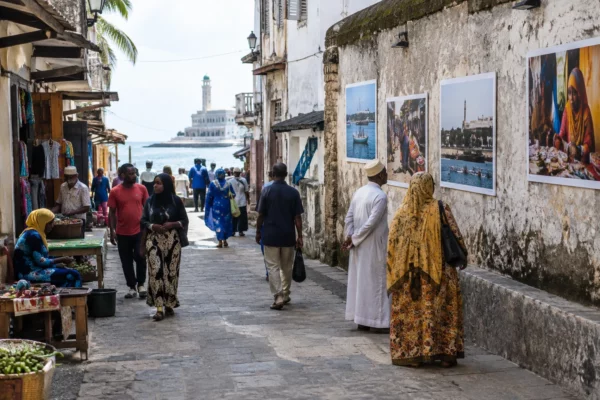
At Volo-Volo, Moroni’s main market, a stall can support a family in the Comoros and help relatives in Madagascar. A reform of domestic trade could now reserve some of these businesses for Comorians by origin. For Malagasy traders, the uncertainty concerns both their right to work and their everyday income.
A reform affecting local trade
Adopted by the Assembly of the Union on 15 June 2026, the law on domestic trade was promulgated in July. Sources consulted differ on the exact date: the Gabonese Press Agency gives 21 July, while La Gazette des Comores reports 27 July. In the absence of an accessible full official text that would settle the matter, the date must remain attributed.
According to published reports, Articles 26 and 27 reserve certain small-scale trading activities exclusively for “Comorians by origin”. The term is understood to refer to people who acquired citizenship by descent. Naturalised citizens would therefore also be excluded, not only foreign nationals.
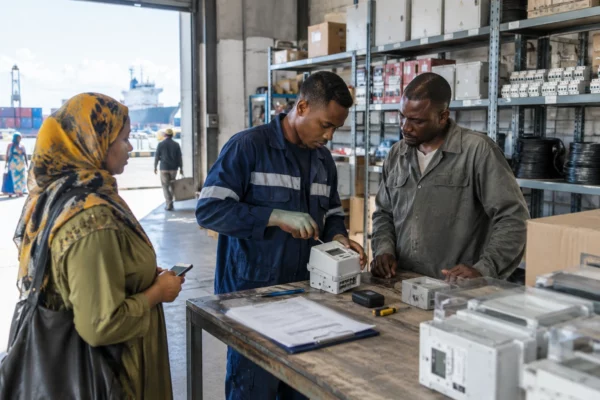
The activities cited include neighbourhood grocery shops, street vending, hairdressing, tailoring, beauty salons and some small restaurants. The law is intended to regulate domestic trade and is presented by its supporters as a way to protect local employment and economic sovereignty. However, the precise implementing rules will determine which occupations and situations are actually covered.
At the time of reports published in early October, the implementing regulations were not yet available. The measure had thus been adopted and promulgated, but its practical effects had not yet been clearly established. This distinction matters: it does not mean that the stalls concerned have already had to close.
Immediate consequences remain uncertain
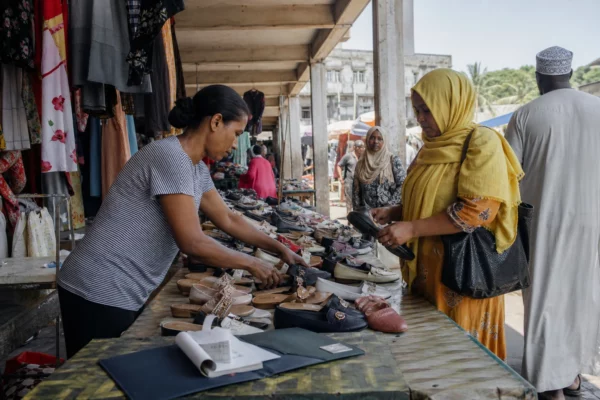
At Volo-Volo, Malagasy traders say they fear for their livelihoods. A shoe seller interviewed in several reports says she sends part of her income each month to her family in Ambilobe, in northern Madagascar. The sums, reported to be between €50 and €100 a month, illustrate the direct link between small-scale trade in the Comoros and household incomes across the Mozambique Channel.
The Malagasy community in the archipelago is estimated at about 20,000 people by media outlets that have covered the issue. This is a reported estimate, not an officially verified census figure. Those most exposed would be people whose income comes from small stalls or local services, particularly women working in sales, hairdressing or food preparation.
The debate is not limited to foreign traders. If naturalised people are indeed excluded from the category of “Comorians by origin”, the rule could also affect long-established families, parents of Comorian children and mixed households. Its practical application will depend in particular on the documents required, checks and any transitional measures.
Comorian law already regulated foreign nationals’ work. The 1988 law on their conditions of residence provides, among other things, for residence permits and authorisations to work. The new reform therefore raises an additional question: beyond immigration status and commercial formalities, some activities would now be reserved according to the origin of a person’s citizenship.
Economic sovereignty and equality before the law
Supporters present the reservation as a tool to protect Comorian traders and formalise the sector. Hamidou Mhoma, vice-president of the employers’ organisation Nouvelle Opaco, defends the country’s right to direct foreign investment towards sectors lacking capital or expertise. This is the economic argument put forward by the authorities and those in favour of the law.
Critics, meanwhile, focus on the distinction between citizens based on the origin of their citizenship and on the livelihoods of the traders affected. Lawyers and civil society representatives question whether this distinction is compatible with the principle of equality. Others warn of possible consequences for Malagasy women and families that depend on their incomes. These objections are part of a legal and social debate; available sources do not allow a court ruling on the law to be cited.
The reform also comes amid an economy in which markets and small-scale businesses play a practical role in employment and everyday supplies. Restricting access to some occupations could create opportunities for Comorian traders, but it could also reduce the number of stalls or change prices and the range of goods in some neighbourhoods. These are possible effects, not consequences that have already been measured.
A regional issue in the Indian Ocean
The issue goes beyond the relationship between traders and the administration. The Comoros and Madagascar share human mobility, family ties and exchanges across the Indian Ocean. The Malagasy diaspora in the archipelago contributes to these exchanges through its work and remittances. How the law is applied could therefore affect local social relations, as well as the climate between the two countries.
The timing is sensitive: direct air links between Moroni and Antananarivo have resumed after several years of interruption, against a backdrop of earlier bilateral tensions. The Malagasy community also held a gathering in Moroni on 23 August 2026, according to media outlets following the issue. These developments give the debate a diplomatic dimension, without establishing that they caused the reform.
Across the continent, restrictions on access to small businesses raise questions about the balance between protecting local activities and treating people equally. Each country sets its own rules, but the consequences are felt in regional mobility and exchanges. In the Comoros, the next developments to watch are the publication of implementing regulations, the administrative definition of the activities covered and the safeguards for people already in business. Only then will it be possible to assess the gap between the principle adopted and daily life in Moroni’s markets.