Algeria
 Egypt
 Libya
 Morocco
 Sudan
 Tunisia
 Benin
 Burkina Faso
 Cabo Verde
 Côte d'Ivoire
 Ghana
 Guinea
 Guinea-Bissau
 Liberia
 Mali
 Mauritania
 Niger
 Nigeria
 Senegal
 Sierra Leone
 The Gambia
 Togo
 Cameroon
 Central African Republic
 DR Congo
 Equatorial Guinea
 Gabon
 Republic of the Congo
 São Tomé and Príncipe
 Burundi
 Comoros
 Djibouti
 Eritrea
 Ethiopia
 Kenya
 Madagascar
 Malawi
 Mauritius
 Mozambique
 Rwanda
 Seychelles
 Somalia
 South Sudan
 Tanzania
 Uganda
 Angola
 Botswana
 Eswatini
 Lesotho
 Namibia
 South Africa
 Zambia
 Zimbabwe
A gesture of reconciliation, but not yet a turning point
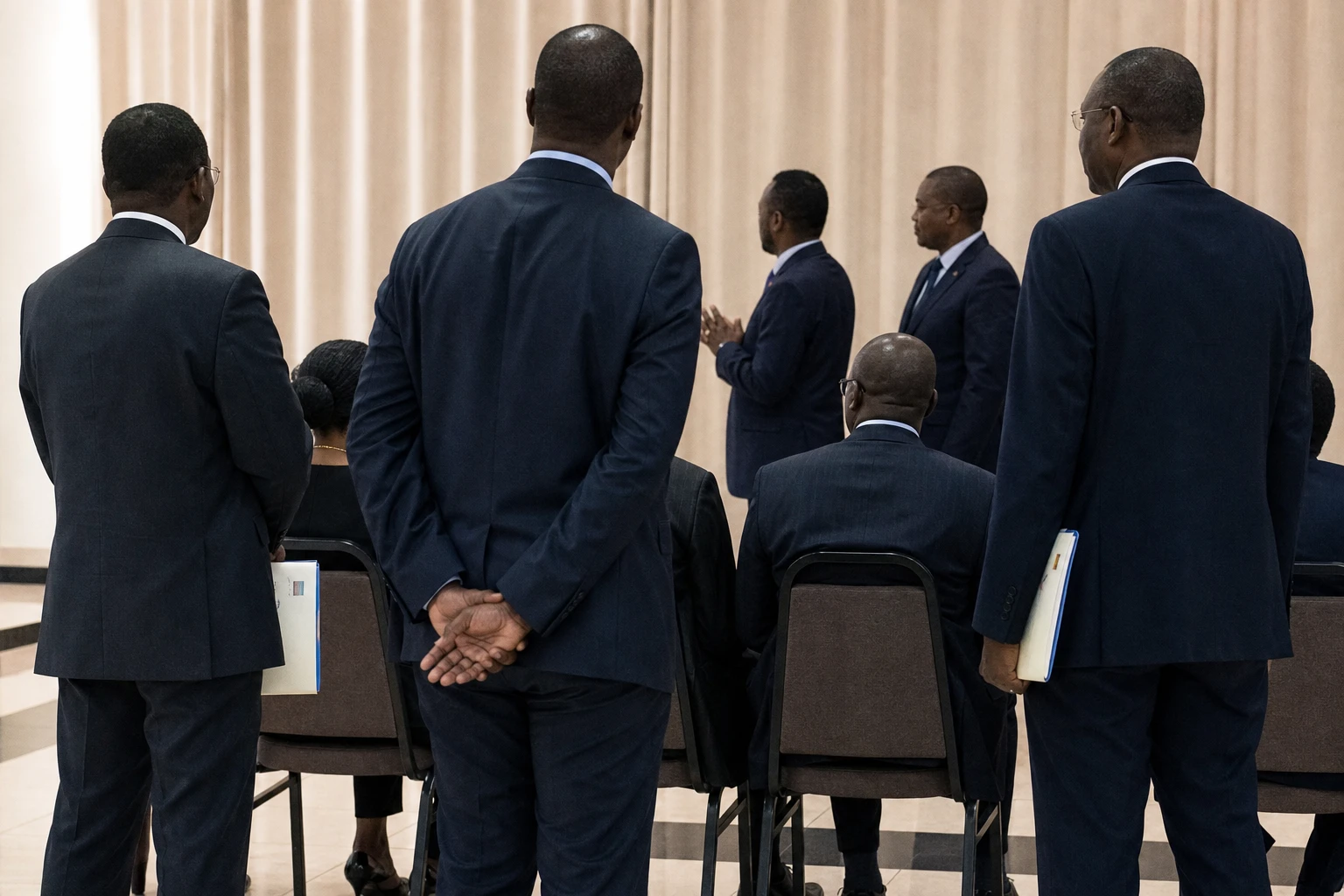
In N’Djamena, a pardon can quickly be read in two ways. First, as an outstretched hand. Then, as a political test. In Chad, where public life remains marked by mistrust between the government and the opposition, the release of nine people convicted or prosecuted in political cases does not, by itself, erase recent divisions. It simply makes them more visible.
The signal comes as the country tries to draw a line under several episodes at once: the transition launched after the death of Idriss Déby Itno in 2021, the 2024 presidential election, and a series of tensions over civil liberties, arrests of opposition figures and judicial decisions that have narrowed the political space. In a member state of ECCAS, institutional stability is a regional concern, not just a national one.
What we know about the presidential pardon
On Friday 15 August 2026, President Mahamat Idriss Déby Itno pardoned nine opposition figures, according to information made public around a televised interview broadcast shortly afterwards. Among the best-known figures in the case is Succès Masra, former transitional prime minister and leader of Les Transformateurs, who had previously been sentenced to 20 years in prison in the so-called Mandakao case. Chad’s Supreme Court upheld the sentence in May 2026, closing off the ordinary avenues of appeal.
The nine people concerned do not all come under the same judicial process. Since May 2026, eight officials from the opposition coalition GCAP had already been sentenced to eight years in prison for insurrection and related offences. The judicial proceedings had heightened the impression that the political space was being shut down, particularly as the Supreme Court had declared GCAP illegal a month earlier.
Chad’s communications minister, Gassim Chérif Mahamat, has publicly defended the idea that reconciliation is under way. But the heart of the matter remains political. It concerns the place of the opposition, how communal violence in the south of the country is interpreted, and the authorities’ ability to turn an act of clemency into a lasting opening.
A political climate still under strain
This is not the first time Chad has emerged from a crisis through a pardon. In December 2022, the authorities had already released hundreds of people arrested after the deadly demonstrations of 20 October. But the context is different this time. The country is emerging from an extended transition, and institutional balances have tightened. In September 2025, parliament adopted constitutional revisions that extend the presidential term and pave the way for renewable terms with no clear limit. The opposition says the change has strengthened the concentration of power in N’Djamena.
At the same time, the security situation remains difficult. Chad is under pressure from the Sudanese conflict, border tensions and persistent areas of vulnerability in the south. The authorities often present domestic firmness as a condition for stability. Opponents of the regime see it, by contrast, as a way of equating political dissent with a threat to public order. Both interpretations coexist, but they do not have the same effects on society.
In N’Djamena, opposition activists, lawyers and human rights organisations have stressed a simple point in recent months: without guarantees on freedom of assembly and expression, and on the freedom of political parties to operate, a pardon remains a one-off act. It is no substitute for political debate, judicial independence or legal certainty for opponents of the government. African and international organisations have also pointed out that Chad’s political landscape has narrowed considerably since 2024 and 2025.
What this decision changes, and what it does not
In the short term, the pardon reduces pressure on prisons and could reopen channels for discussion. For the families concerned, it brings an end to a period of waiting and uncertainty. For the government, it presents the image of a president capable of political initiative. For the opposition, it raises a bigger question: is this an isolated gesture or the start of a genuine easing of restrictions?
The answer will depend on several concrete signals. First, the situation of other political detainees. Then, the freedom of opposition parties that remain active. Finally, the way the government handles future demonstrations, electoral disputes and sensitive judicial cases that are still pending. In N’Djamena, a change in tone only matters if it leads to lasting action.
The impact across the country must also be considered. In the capital, political decisions are first assessed through institutions. In several provinces, they are measured instead by freedom of movement, relations between communities and trust in the state. In Chad, a vast and highly centralised country, a presidential gesture does not have the same effect in N’Djamena, the agricultural south or the border areas in the east and north. This is where the real significance of an announced reconciliation will be felt.
Regional significance for ECCAS and Central Africa
Chad occupies a strategic position in Central Africa. It borders Libya, Sudan, the Central African Republic, Cameroon, Niger and Nigeria. Its political stability therefore affects regional security, refugee flows, cross-border trade and military cooperation. This is also why ECCAS and African partners are closely monitoring any change in the political climate in N’Djamena.
Friday’s pardon can be read as an attempt to defuse a situation that has become costly for the government’s image. But one question remains: is Chad entering a phase of managed easing, or merely a tactical pause before a new clampdown? The coming days will show whether clemency is intended to open a broader political dialogue, or to close, without any real compromise, a case that has become too difficult to leave unresolved.