Algeria
 Egypt
 Libya
 Morocco
 Sudan
 Tunisia
 Benin
 Burkina Faso
 Cabo Verde
 Côte d'Ivoire
 Ghana
 Guinea
 Guinea-Bissau
 Liberia
 Mali
 Mauritania
 Niger
 Nigeria
 Senegal
 Sierra Leone
 The Gambia
 Togo
 Cameroon
 Central African Republic
 DR Congo
 Equatorial Guinea
 Gabon
 Republic of the Congo
 São Tomé and Príncipe
 Burundi
 Comoros
 Djibouti
 Eritrea
 Ethiopia
 Kenya
 Madagascar
 Malawi
 Mauritius
 Mozambique
 Rwanda
 Seychelles
 Somalia
 South Sudan
 Tanzania
 Uganda
 Angola
 Botswana
 Eswatini
 Lesotho
 Namibia
 South Africa
 Zambia
 Zimbabwe
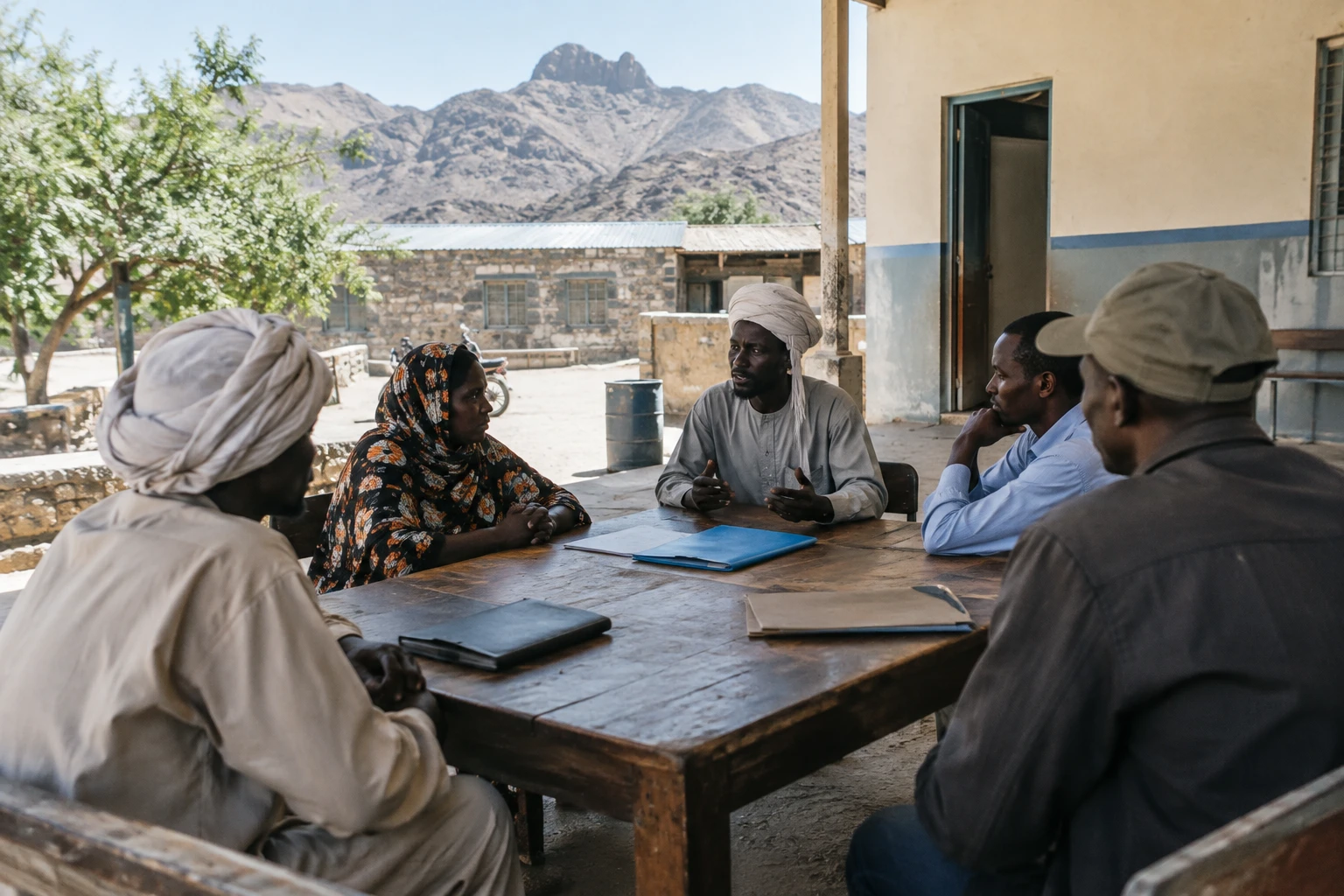
In Miski, in Tibesti, peace also depends on who controls the gold-mining sites and who benefits from their revenues. Renewed gunfire on 14 October 2026 has brought fragile commitments between the Chadian state and local representatives back into focus.
A peace accord without a fully operational mechanism
The government and the Miski Self-Defence Committee signed an agreement in Bardaï on 20 April 2025. It was intended to end several years of tension over gold and organise relations between the authorities and local stakeholders. Yet more than a year later, several provisions are reportedly still pending.
According to institutional sources cited by Tchadinfos in its investigation into the Miski accord, the commission responsible for monitoring it has not been formally established. The local committee, for its part, denounces the failure to honour commitments, particularly those concerning appointments and the integration of its members. These are grievances put forward by one party to the conflict; on their own, they do not constitute an independent finding of state responsibility.
Tibesti province lies in Chad’s far north, in a mountainous area where remoteness complicates travel, administration and access to services. Gold mining attracts workers and operators from different regions. It offers prospects for income, but also fuels rivalries over permits, site security and the distribution of resources.
Two officers killed, according to the army
On 14 October, exchanges of gunfire pitted members of the Mining Brigade against members of the Self-Defence Committee. In a statement reported by several media outlets, the Chadian military headquarters said two officers had been killed and nine members of its ranks injured. The army blamed the attack on the committee, which rejects this account of events.
The military death toll was reported by the African news agency APA and by Tchadinfos. These reports confirm that the authorities announced the casualties, but not all the circumstances or the disputed responsibilities. The Self-Defence Committee, for its part, says civilians were allegedly killed in a drone strike; this claim could not be independently verified and must remain attributed.
After the fighting, the authorities reinforced their presence in the area. Local officials and figures from Tibesti called for hostilities to stop and for dialogue to resume. The Portail de la Renaissance du Tchad reports that a call by local leaders, young people and traditional chiefs demanded full implementation of the Bardaï accord.
Mine security does not resolve the question of sharing
The Mining Brigade is responsible for securing mining activities. But the presence of armed forces around the sites does not, by itself, answer the questions fuelling tensions: who can mine the gold, under what rules, and what role should local communities have in decisions? When consultation mechanisms are not functioning, a security operation can be perceived locally as an imposed decision rather than as common protection.
The Self-Defence Committee says it is defending its region and its resources, while the state presents site security and the maintenance of order as matters of sovereignty. These positions are not enough to establish the facts about the clashes. They do, however, show the political disagreement surrounding the management of gold. The renewed fighting thus highlights the gap between signing an accord and putting it into practice.
The effects are not the same for everyone. The authorities are seeking to maintain control over a remote province and regulate mining. For residents, insecurity can disrupt travel and local economic activity. Gold miners, traders and transporters, meanwhile, depend on access to the sites and roads. A prolonged closure or militarisation could therefore affect incomes beyond those of the armed groups alone.
A local issue monitored from N’Djamena
At national level, the crisis is testing the government’s ability to enforce an agreement reached with local representatives. Mediation and the monitoring commission are essential mechanisms: they can clarify commitments, address disputes and prevent each incident from reigniting confrontation. Their operation matters as much as announcements of reinforcements.
Chad is a member of the Central African Economic and Monetary Community (CEMAC), which brings together six Central African countries in economic and monetary cooperation. The Miski crisis is not, in itself, a CEMAC matter. It nevertheless serves as a reminder that stability in border areas and the joint management of resources matter in a region where movement and security issues extend beyond national borders.
For now, calls for calm will not replace the monitoring of the accord. The next steps to watch are the effective establishment of the commission, clarification of responsibility for the 14 October clashes, and the continuation of proceedings against those arrested, without prejudging their guilt. For Miski’s residents and the authorities in N’Djamena alike, the challenge is to restore a framework for dialogue capable of addressing tensions over gold without making force the main arbiter.