Algeria
 Egypt
 Libya
 Morocco
 Sudan
 Tunisia
 Benin
 Burkina Faso
 Cabo Verde
 Côte d'Ivoire
 Ghana
 Guinea
 Guinea-Bissau
 Liberia
 Mali
 Mauritania
 Niger
 Nigeria
 Senegal
 Sierra Leone
 The Gambia
 Togo
 Cameroon
 Central African Republic
 DR Congo
 Equatorial Guinea
 Gabon
 Republic of the Congo
 São Tomé and Príncipe
 Burundi
 Comoros
 Djibouti
 Eritrea
 Ethiopia
 Kenya
 Madagascar
 Malawi
 Mauritius
 Mozambique
 Rwanda
 Seychelles
 Somalia
 South Sudan
 Tanzania
 Uganda
 Angola
 Botswana
 Eswatini
 Lesotho
 Namibia
 South Africa
 Zambia
 Zimbabwe
When sovereignty becomes a legal argument
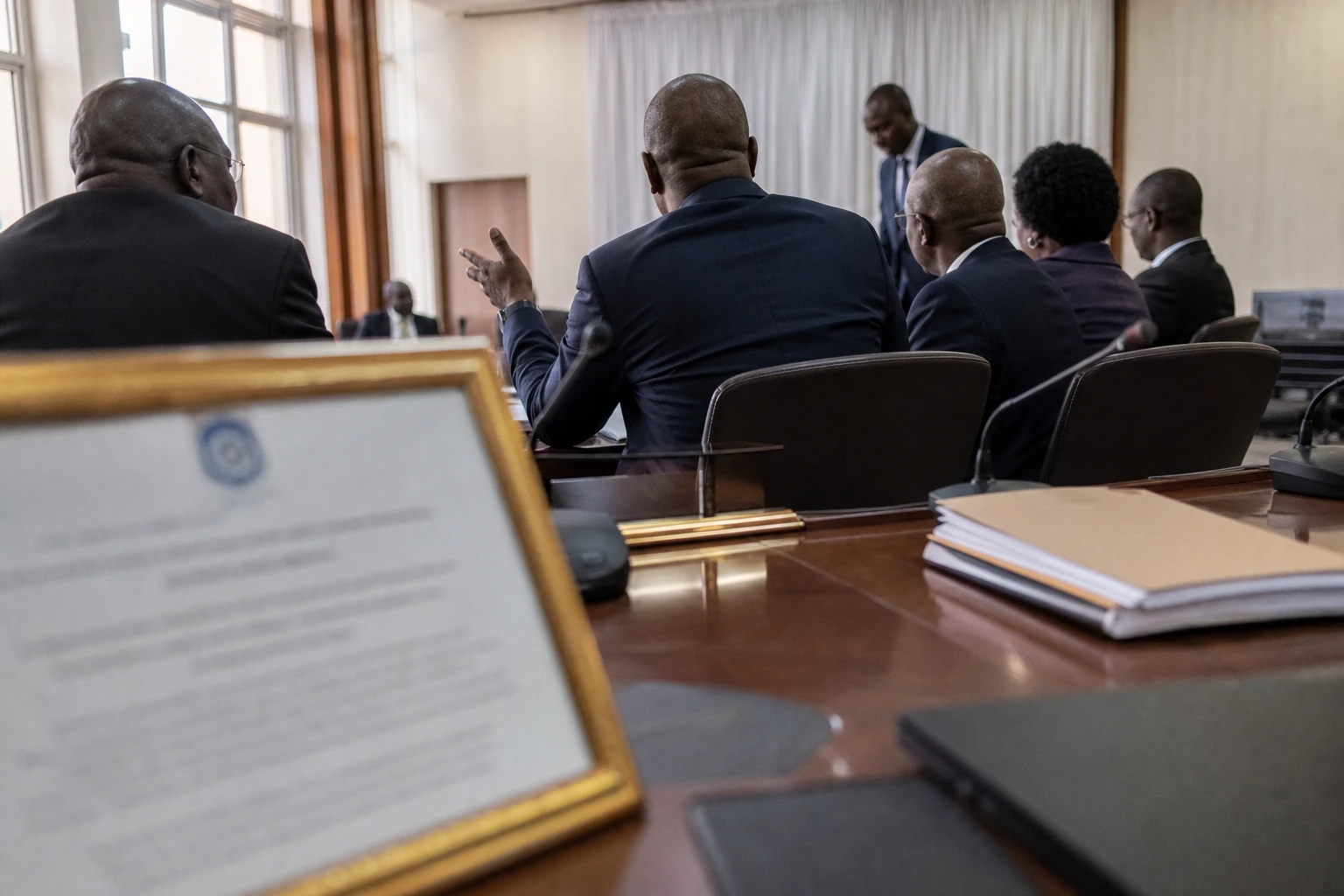
In N’Djamena, the debate is not only about an international court. It also touches on a broader question: who should try the most serious crimes when a state believes that justice from The Hague no longer meets its expectations? On 27 July 2026, Chad announced that it had notified the UN of its intention to withdraw from the Rome Statute, the founding treaty of the International Criminal Court (ICC).
The decision is part of a wider African trend. Mali, Burkina Faso and Niger, members of the Alliance of Sahel States, had already begun withdrawing from the ICC in 2025, then formalised their notifications in 2026. In the CEMAC area, where Chad is one of six member states alongside Cameroon, Congo, Gabon, Equatorial Guinea and the Central African Republic, Chad’s move has immediate regional significance.
What the law says, and what withdrawal changes
The Rome Statute provides that withdrawal takes effect one year after notification is sent to the United Nations secretary-general. It also states that a state is not released from obligations incurred while it was party to the treaty. In other words, withdrawal does not erase ongoing proceedings or commitments already made.
In Chad’s case, the decision does not come out of a diplomatic vacuum. Chad’s foreign ministry announced a “sovereign” decision following notification to the UN. Yet the country had maintained exchanges with the ICC, and the ministry’s official website still lists cooperation with the Court among its news items, including a visit to N’Djamena by a deputy prosecutor. The contrast says a great deal: institutional membership alone no longer guarantees lasting political trust.
A political withdrawal, not just a legal one
Chad sits at the intersection of several tensions. To the north and east, it is feeling the effects of the Sudanese crisis; to the south, security pressures linked to the Lake Chad Basin remain high, and in May 2026 the African Union again reaffirmed its support for N’Djamena in the fight against terrorism in the area. In this context, any discussion of international justice is quickly entangled with domestic security, competing narratives and the pursuit of strategic autonomy.
Chad’s government is making the case for sovereignty. This position partly echoes the discourse advanced by AES countries, which denounce what they see as selective justice, too distant from local realities. But the stakes go beyond political messaging. When a state challenges the ICC, it also sends a signal to its people: should the response to serious crimes come from an external institution, a strengthened national justice system, or a regional mechanism yet to be built?
What this means for Chadians and the region
For victims, the question is concrete. Withdrawal may foster the idea of justice that is closer, faster and more firmly rooted. But it could also create a vacuum if national courts lack resources, independence or witness protection. The ICC is based on complementarity: it intervenes when national systems are unable or unwilling to prosecute. This mechanism has often given weight to African cases handled by the Court.
For Chad’s executive, leaving the ICC may bring short-term political gains. It allows the government to emphasise control over its diplomatic and judicial choices. For the administration, the move is more difficult. It must compensate by building credible institutions; otherwise, the sovereignty argument can turn against the state. In a country at the crossroads of Central Africa and the Sahel, institutional coherence matters as much as symbolism.
The region is also following the case closely. CEMAC, whose Court of Justice is based in N’Djamena, champions an area of law, movement and integration. A decision as consequential as withdrawal from the ICC therefore raises questions about the place of justice in the regional framework. It poses a simple question: do Central African states merely want to challenge institutions from elsewhere, or to build regional instruments capable of measuring up to them?
A continental trend to watch
Chad’s move should not be viewed in isolation. It is part of a broader reshaping of relations between African states and international criminal justice. Several governments have criticised the ICC for years, citing a perceived imbalance in its priorities and methods. Others argue, by contrast, that withdrawal mainly weakens the protection of civilians and the fight against impunity. Both views coexist, but they do not have the same effects on populations.
The key now will be to follow two timelines. First, the legal one, since Chad’s withdrawal will not take effect until one year after notification. Then the political one, because the real effects will depend on N’Djamena’s ability to strengthen its domestic justice system and preserve regional accountability mechanisms. In Central Africa as in the Sahel, sovereignty is also measured by the quality of the institutions that underpin it.