Algeria
 Egypt
 Libya
 Morocco
 Sudan
 Tunisia
 Benin
 Burkina Faso
 Cabo Verde
 Côte d'Ivoire
 Ghana
 Guinea
 Guinea-Bissau
 Liberia
 Mali
 Mauritania
 Niger
 Nigeria
 Senegal
 Sierra Leone
 The Gambia
 Togo
 Cameroon
 Central African Republic
 DR Congo
 Equatorial Guinea
 Gabon
 Republic of the Congo
 São Tomé and Príncipe
 Burundi
 Comoros
 Djibouti
 Eritrea
 Ethiopia
 Kenya
 Madagascar
 Malawi
 Mauritius
 Mozambique
 Rwanda
 Seychelles
 Somalia
 South Sudan
 Tanzania
 Uganda
 Angola
 Botswana
 Eswatini
 Lesotho
 Namibia
 South Africa
 Zambia
 Zimbabwe
A more visible, but also more closely monitored, digital sector
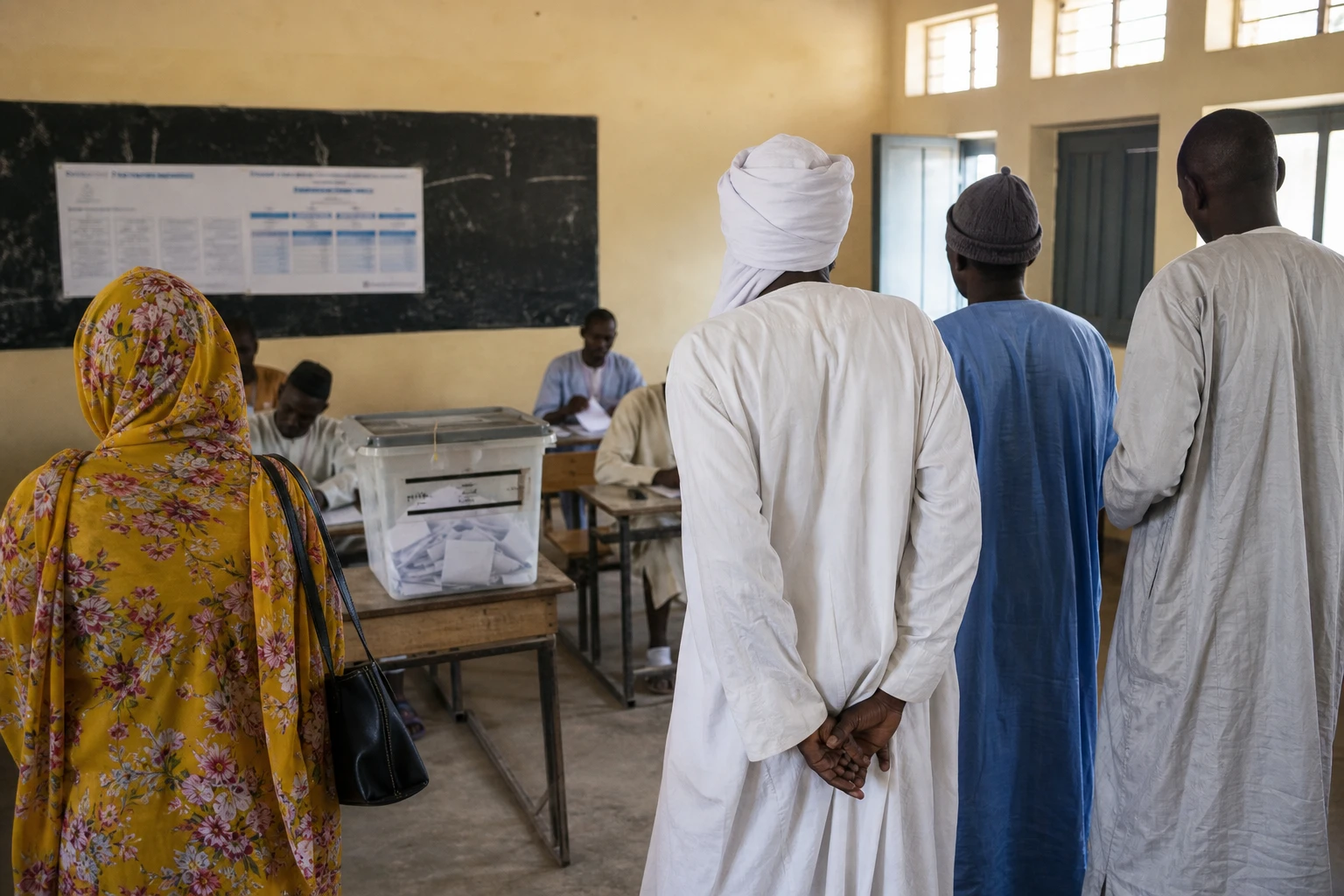
In Chad, setting up an online media outlet is no longer just a question of editorial direction or technical resources. It is also a matter of compliance, filing an application and administrative oversight. The decision by the High Authority for Media and Audiovisual to suspend the review of applications to launch online newspapers comes as digital news has established itself as a genuine player in the media landscape, including beyond N’Djamena.
Chad’s regulator is acting within an established framework. Its website says it supervises audiovisual media, print media and online media, and publishes an official register of authorised media outlets. It also offers digital services for declarations, licences and legal deposits. In other words, the institution does more than impose sanctions: it already oversees the sector’s administrative affairs.
But the freeze on applications sends a broader signal. In a country where information is increasingly disseminated via mobile devices and digital platforms, the decision directly affects project founders, young newsrooms and local media seeking to formalise their operations. It comes as the authorities emphasise professionalisation, while journalists and publishers call for rules that are clear, stable and applicable to all.
What HAMA regulates, and why the issue is sensitive
Based in N’Djamena and operating throughout Chad, HAMA says its role is to guarantee freedom of expression while ensuring that ethical standards are respected. Its institutional history states that, for print and online media, measures provided for by law can extend to the suspension of an outlet, within a legal framework described as adversarial and regulated.
This matters because Chad has already seen tensions over content published online. In 2024, HAMA restricted the distribution of audiovisual content by online media, a measure that drew criticism from professional and rights organisations. The CPJ said at the time that the directive appeared to exceed the existing legal framework, while RSF urged the regulator to oversee the media space without closing it off.
The precedent matters. It shows that the line between regulation and restriction remains a delicate one. In Chad, the issue is not just legal; it is also economic. Online media rely on precarious revenues, small teams and unequal access to the advertising market. When the accreditation process stalls, it is not just forms that are left waiting. Jobs, investment and local projects are also held back.
This fragility is part of a broader environment. RSF notes that, despite the law protecting the right to information, the Chadian press continues to face funding difficulties and concerns about pressure on journalists. The organisation also recalls that the press support fund announced by the state has been disbursed only rarely since 2016.
Why this decision goes beyond Chad
Chad is not an isolated case in the region. African regulators are seeking to keep pace with the growth of digital media, the rise of social networks and the proliferation of video content. HAMA itself takes part in continental discussions on digital media and regulation, including within RIARC, the Network of African Communication Regulatory Authorities. Its website even presents digital technology as an area of transformation, not merely a source of risk.
This tension is common to several African countries: how can online media be regulated without creating a chilling effect through administrative red tape? The debate goes beyond technicalities. It concerns the public’s access to diverse sources of information, competition between traditional media and digital-only outlets, and the place of local voices in the public sphere. In Chad, where the capital, N’Djamena, still concentrates most newsrooms, the issue is also a territorial one. An online outlet can relay news from a province, prefecture or remote area more quickly.
This decision should also be seen in the context of the country’s recent political trajectory. Since the transition that began after the death of President Idriss Déby Itno, followed by a constitutional referendum in December 2023 and partial elections in 2026, the Chadian authorities have expressed a desire to bring order to the public sphere. In this context, media regulation has become an instrument of stated stability. But it is also seen as a barometer of the real scope for public debate.
For businesses, the impact is immediate. Existing organisations continue to operate, but new entrants are waiting. For readers, the effect is less direct: potentially less diversity, less editorial competition and, at times, less local coverage of current affairs. For the authorities, the challenge is to maintain credible regulation without turning accreditation into a political filter. That is where trust is at stake.
At the continental level, the signal is clear. Chad is joining a conversation that has become central across Africa: information sovereignty, the professionalisation of digital media and the control of information flows in the platform era. What happens next will depend on how long the freeze lasts, the criteria for reopening the review of applications and how HAMA balances administrative oversight with the freedom to create media in the weeks ahead.