Algeria
 Egypt
 Libya
 Morocco
 Sudan
 Tunisia
 Benin
 Burkina Faso
 Cabo Verde
 Côte d'Ivoire
 Ghana
 Guinea
 Guinea-Bissau
 Liberia
 Mali
 Mauritania
 Niger
 Nigeria
 Senegal
 Sierra Leone
 The Gambia
 Togo
 Cameroon
 Central African Republic
 DR Congo
 Equatorial Guinea
 Gabon
 Republic of the Congo
 São Tomé and Príncipe
 Burundi
 Comoros
 Djibouti
 Eritrea
 Ethiopia
 Kenya
 Madagascar
 Malawi
 Mauritius
 Mozambique
 Rwanda
 Seychelles
 Somalia
 South Sudan
 Tanzania
 Uganda
 Angola
 Botswana
 Eswatini
 Lesotho
 Namibia
 South Africa
 Zambia
 Zimbabwe
A security issue that goes beyond Franco-Chadian relations
In N’Djamena, the question is not simply whether France is returning. It is broader: how can a Chadian state seeking to assert its security sovereignty equip, train and deploy itself against fast-moving threats, from the Lake Chad Basin to the Sudanese borderlands?
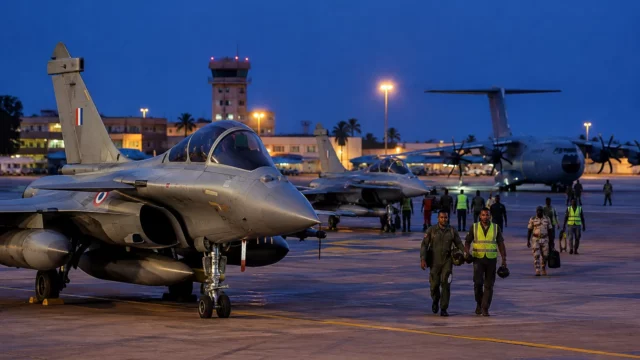
Chad has faced this equation before. For decades, the French military presence served as a safety net, a logistics platform and a regional foothold. But the period that began in November 2024 changed the terms of the debate. The Chadian authorities then ended the defence agreement with Paris, before the complete withdrawal of French forces, completed on 31 January 2025 with the return of the facilities in N’Djamena, Faya-Largeau and Abéché.
Since then, the issue has not gone away. It has simply shifted in scale. On 29 January 2026, Emmanuel Macron and Mahamat Idriss Déby Itno expressed at the Élysée their desire to revive a “revitalised” partnership, based on mutual respect and shared interests. The official text does not mention a return to the former bases, but sets out areas for further discussion, including security.
This is not a return to the past
The heart of the matter lies in what Paris and N’Djamena appear keen to avoid: reinstating the permanent presence that existed before 2025. Information available in June 2026 points towards a lighter, more discreet format, involving one-off missions, training, intelligence and capacity-building support. Anadolu reported in late June that advanced discussions were aimed at more limited cooperation, with no announced re-establishment of permanent bases, while Africa Intelligence reported as early as February that the Chadian president’s inner circle was cautiously steering a rapprochement.
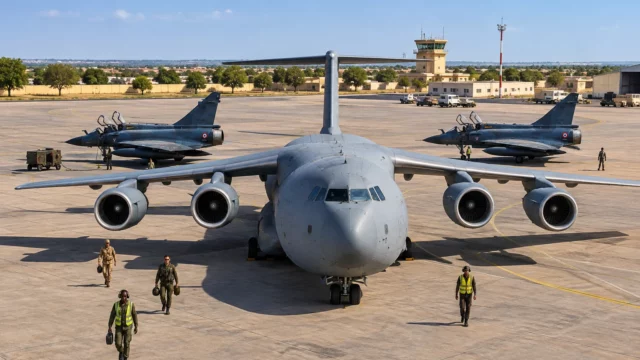
This caution is no mere diplomatic detail. It says something about the current moment in Chad. The government wants to retain control of the sovereignty narrative while addressing operational shortfalls. After the departure of French forces, the Chadian army had to take on more tasks on its own: territorial surveillance, air mobility, medical evacuation, communications and intelligence gathering. These functions are discreet, but decisive in a theatre as vast as Chad.
For its part, Paris is seeking to move away from the model of a permanent presence that long shaped its military policy in Central Africa and the Sahel. The French foreign ministry confirmed the complete withdrawal of French forces from Chad by 31 January 2025, while maintaining the prospect of defence cooperation in other forms. In other words, the era of the bases is over, but military exchanges are not.
Lake Chad, the real frontline
The revival of this cooperation cannot be understood without the Lake Chad Basin. This is where part of Chad’s security is at stake, as well as that of Cameroon, Nigeria and Niger. The Multinational Joint Task Force, bringing these countries together to fight Boko Haram and the Islamic State in West Africa, remains the central regional instrument. In August 2024, the African Union again welcomed the progress made during Operation Lake Sanity II, while stressing that military action needed to be consolidated.
The UN Secretary-General’s latest report on the Lake Chad Basin makes a similar point. It notes intensified operations against Boko Haram, but also an ongoing fragile humanitarian and security situation. The report highlights that the commitment of the countries contributing to the Multinational Joint Task Force and international support remain essential to regional stability.
In this context, targeted French cooperation could meet very specific needs. The Chadian authorities are not necessarily seeking a foreign shield. They are looking for capabilities. These could include training, communications, air support or intelligence. These are areas where the long term matters as much as troop numbers. This is also where the balance of power is changing: less symbolism, more technical expertise.
What this means for Chad and the region
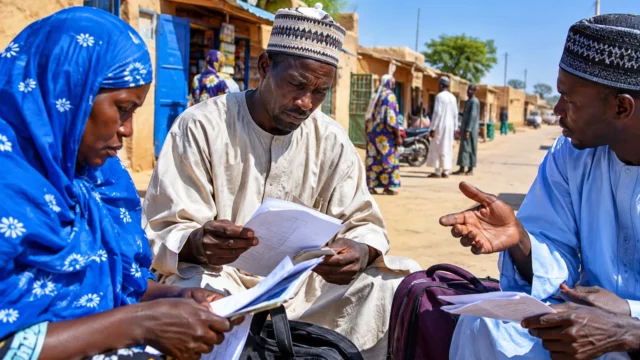
For Chad’s leaders, the challenge is twofold. They need to show that the country is no longer under tutelage, while avoiding a sudden erosion of its capabilities. For the population, expectations are more tangible: security in rural areas, movement along roads, protection of markets and the return of public services to exposed areas. In a country where security balances also depend on the army’s mobility, foreign assistance is only valuable if it strengthens the local chain of command.
The regional dimension is just as important. Chad cannot address the dynamics of the Lake Chad Basin alone. It is part of a security cooperation framework with Cameroon, Niger and Nigeria, under the auspices of the Lake Chad Basin Commission and with support from the African Union. This framework exists precisely because armed groups respect neither borders nor diplomatic timetables.
In this new phase, France no longer appears to be at the centre of the arrangement, but rather one partner among several. This is a major difference. It reflects the shifting balance of power in Central Africa and the Sahel, where African states want greater choice of partners, more options and less dependence. In this respect, Chad is a case study: it is not ending external military cooperation, but is trying to regain political and symbolic control over it.
One decisive question remains: what form will this renewed cooperation take in practice? Will it involve training teams, equipment sales, intelligence-sharing or temporary deployments? Discussions reported in spring 2026 indicate that nothing has yet been settled. But one thing is clear: military cooperation between Paris and N’Djamena will not return in the same form as before 31 January 2025. If it is confirmed, it will return under the constraints of an African context in which stated sovereignty and operational effectiveness must now go hand in hand.