
 Algeria
 Egypt
 Libya
 Sudan
 Tunisia
 Benin
 Burkina Faso
 Cabo Verde
 Côte d'Ivoire
 Ghana
 Guinea
 Guinea-Bissau
 Liberia
 Mali
 Mauritania
 Niger
 Nigeria
 Senegal
 Sierra Leone
 The Gambia
 Togo
 Cameroon
 Central African Republic
 Chad
 DR Congo
 Equatorial Guinea
 Gabon
 Republic of the Congo
 São Tomé and Príncipe
 Burundi
 Comoros
 Djibouti
 Eritrea
 Ethiopia
 Kenya
 Madagascar
 Malawi
 Mauritius
 Mozambique
 Rwanda
 Seychelles
 Somalia
 South Sudan
 Tanzania
 Uganda
 Angola
 Botswana
 Eswatini
 Lesotho
 Namibia
 South Africa
 Zambia
 Zimbabwe
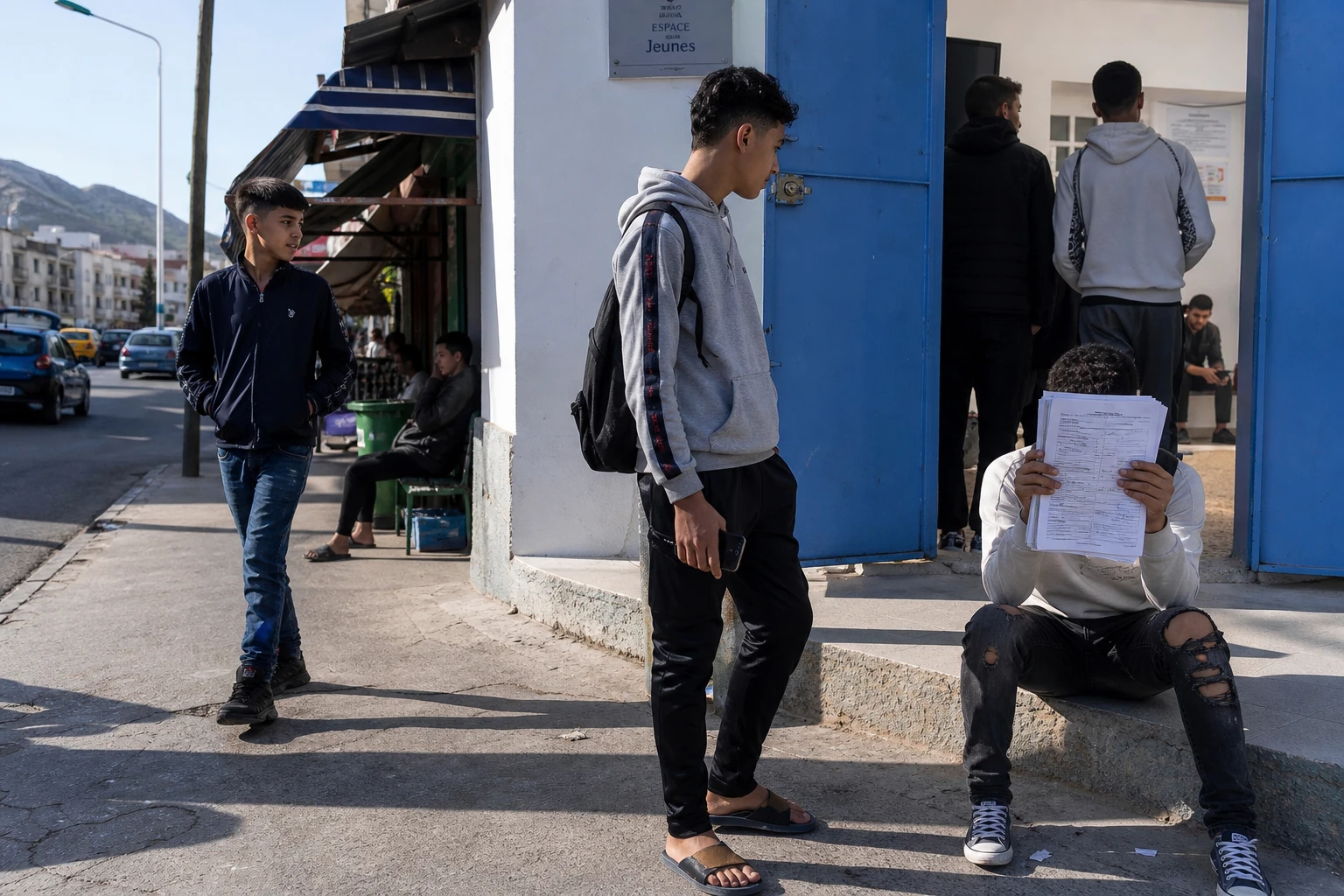
Ceuta, a transit point turned survival zone
In Ceuta, night brings no calm. It merely makes more visible what the day already conceals: Moroccan teenagers left to fend for themselves, caught between the hope of leaving for Europe and the fear of being sent back to Morocco. In this Spanish enclave north of the Kingdom of Morocco, the border is not just a line. It is a space where humanitarian emergencies, legal disputes and political promises that are often difficult to keep intersect.
The issue extends beyond Ceuta. It affects Rabat, Madrid and Brussels. It also underscores that managing migrant minors is not simply a matter of border controls. In Spain, unaccompanied foreign minors fall under a distinct protection regime. In Europe, the issue forms part of a broader debate on returns, asylum and the safeguards afforded to children. In Morocco, the matter is also viewed through a deeper social reality: youth unemployment, regional inequalities and the enduring appeal of leaving. The High Commission for Planning estimates Morocco’s unemployment rate at 13.3% and notes that unemployment among 15- to 24-year-olds remains high.
A protection crisis, not just a border crisis
The figures remain one of the most sensitive aspects of the issue. In mid-August, the Spanish government said around 2,500 minors were still living on the streets of Ceuta, while local associations put the figure as high as 4,000. Save the Children, for its part, cited around 1,500 minors in the care system. The gap between official estimates and conditions on the ground says much about the difficulty of identifying, locating and protecting these young people after the mass arrival in late July.
On 31 July 2026, Ceuta saw an exceptional influx of migrants from Morocco. Estimates vary by source, but the figures are in the tens of thousands. Reuters described it as an unprecedented movement in recent times, while the Ceuta authorities and the Spanish government had to deploy police and military reinforcements. Madrid announced an emergency allocation of €25 million to help the autonomous city, after already supporting other schemes to transfer minors to mainland Spain.
In this context, the minors’ testimonies carry particular weight. Reda, 17, says he set out in search of a better future. Manal, 16, says she left Tangier on a journey marked by fear and violence. Mohammed, from El Araich, describes a lack of toilets, hygiene and medical care. These accounts are individual and should therefore be treated with caution, but they point to the same reality: reception arrangements are ill-suited to situations in which arrivals exceed capacity.
The problem is not just accommodation. It is also a health and legal issue. NGOs have reported infected injuries, cases of scabies, difficulties accessing drinking water and a basic level of medical care. The risk of assault increases when minors sleep in warehouses, on beaches or in poorly monitored industrial areas. In this respect, child protection must take centre stage, well ahead of immigration control.
Return to Morocco: strict legal rules and promised cooperation
The debate over returning Moroccan minors to their country of origin is governed by precise rules. In January 2024, Spain’s Supreme Court confirmed that the collective returns of minors from Ceuta to Morocco carried out in August 2021 had been illegal, due to the absence of individual procedures, hearings and the involvement of the public prosecutor’s office. This case law continues to weigh heavily on any new operation.
The European framework points in the same direction. The European Parliament had already noted in 2021 that protecting Ceuta was a matter for the entire Union, since the autonomous city forms part of the EU’s external border. The European Commission has since continued its approach to returns, while maintaining enhanced safeguards for minors and families. In other words, cooperation with Morocco is not enough. Each case must still undergo checks on identity, family circumstances and the child’s best interests.
Rabat says it is willing to cooperate. Morocco’s official MAP news agency reported on 6 August that Morocco was ready to work with Spain and other European partners on the return of unaccompanied minors. At the same time, Moroccan voices and associations stress that a return cannot be treated as automatic. Families must be traced, vulnerable circumstances assessed and the procedure kept from becoming a merely political response to a short-term crisis.
This episode also sheds light on social pressures in Morocco. The HCP has noted that youth unemployment remains structural and that many young people are NEET — not in employment, education or training. In the north of the country, where departures for Ceuta are often concentrated, the issue is less one of abstract migration than of a closed horizon for part of the younger generation. This also explains why departures continue, despite the known risks and despite swift returns after each surge.
What Ceuta says about North Africa today
Ceuta acts as a regional bellwether. The enclave concentrates tensions around sovereignty, mobility, child protection and Euro-Moroccan cooperation. It also shows that purely security-based solutions quickly reach their limits when social pressures, migration routes and stories of departure continue to fuel movement.
Morocco faces a dual challenge. It must protect minors, including those who return or are found on the other side of the border, while also addressing the causes of departure that take shape much further upstream: employment, family support, local inequalities and access to training. For Spain, the challenge is to prevent Ceuta from becoming a permanent pressure point without genuine solidarity between regions. For the European Union, the issue is a reminder that the southern border is not merely peripheral. It is one of the places where the credibility of the common migration policy is put to the test.
The next stage will play out in administrative meetings, court rulings and individual checks, not in slogans. As long as these minors remain caught between the streets, makeshift shelters and unfinished procedures, Ceuta will continue to illustrate a simple fact: a border can close within hours, but the causes of departure last far longer.



