
 Algeria
 Egypt
 Libya
 Sudan
 Tunisia
 Benin
 Burkina Faso
 Cabo Verde
 Côte d'Ivoire
 Ghana
 Guinea
 Guinea-Bissau
 Liberia
 Mali
 Mauritania
 Niger
 Nigeria
 Senegal
 Sierra Leone
 The Gambia
 Togo
 Cameroon
 Central African Republic
 Chad
 DR Congo
 Equatorial Guinea
 Gabon
 Republic of the Congo
 São Tomé and Príncipe
 Burundi
 Comoros
 Djibouti
 Eritrea
 Ethiopia
 Kenya
 Madagascar
 Malawi
 Mauritius
 Mozambique
 Rwanda
 Seychelles
 Somalia
 South Sudan
 Tanzania
 Uganda
 Angola
 Botswana
 Eswatini
 Lesotho
 Namibia
 South Africa
 Zambia
 Zimbabwe
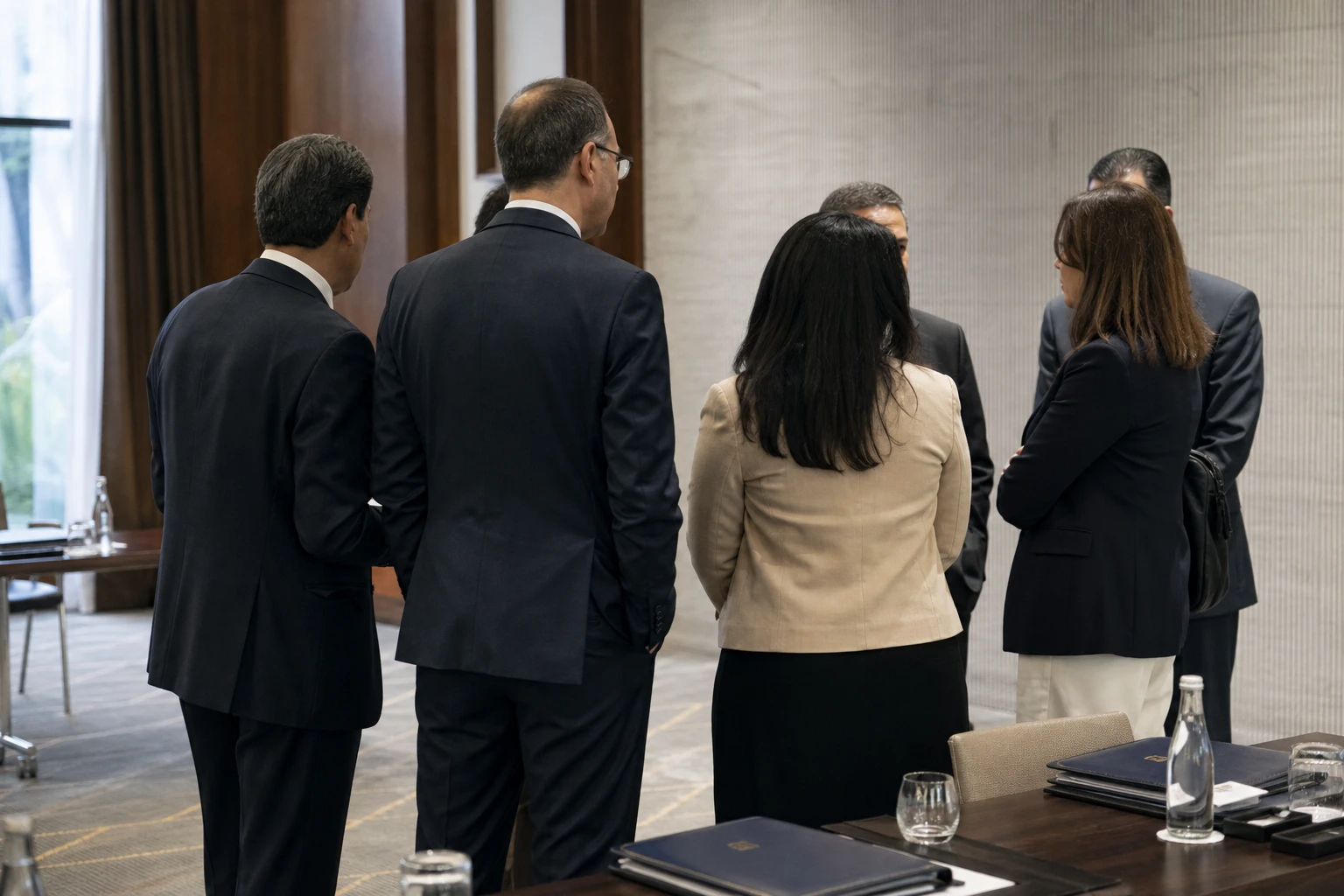
A border under pressure, and a debate that goes beyond migration
In Ceuta, tension is visible not only in checks and reception centres. It also reveals a deeper question: what should be done with a border area when it brings together human mobility, a diplomatic dispute and a still-vivid colonial history? In Morocco, where Rabat remains at the heart of exchanges with Madrid, the crisis is a reminder that a border is never merely a police line. It can also become a place of cooperation, or a point of rupture.
In this case, the issue goes beyond managing arrivals. It concerns relations between Morocco and Spain, as well as ties between North Africa and the European Union. Ceuta, a Spanish enclave on the southern shore of the Mediterranean, lies at the crossroads of several priorities: security, asylum, employment, controlling flows and economic cooperation. It is precisely in this context that Amazigh activist Rachid Raha proposes a different reading of Abdelkrim El Khattabi’s legacy.
Ceuta after the surge in migration: Madrid seeks European support
At the end of July 2026, Ceuta saw a massive arrival of people who had set off from Morocco. Figures published since then have varied according to the timing and sources, but Reuters reported more than 72,000 arrivals in the small enclave, before the Spanish press reported that thousands of people were still there several weeks later. On 20 August, the AP reported that as many as 10,000 migrants might remain, while Reuters said on 16 August that between 5,000 and 8,000 people were still in Ceuta.
On 28 August, Madrid asked the European Commission for support from Frontex, Europol and the European Union Agency for Asylum, in order to speed up the assessment of cases and possible returns to Morocco or countries of origin. La Moncloa confirmed the request in an official statement, after several exchanges with Brussels. The Commission, for its part, had already sent teams to the area in mid-August to assess needs.
The administrative vocabulary says much about the moment. “Triage” here means the rapid identification of people present, in order to distinguish asylum claims, humanitarian situations and return procedures. Behind this technical term are families, minors, improvised accommodation and intense pressure on local services. In Ceuta, the municipal authorities are trying to prevent services from being overwhelmed. In Madrid, the aim is to regain control without breaking off cooperation with Rabat.
Abdelkrim, the Rif and a different reading of conflict and exchange
Rachid Raha draws on a central figure in Moroccan history: Abdelkrim El Khattabi, leader of the Rif resistance against the Spanish and French colonial powers. After the Battle of Annual in July 1921, the Spanish army suffered one of its heaviest colonial defeats in Morocco. The exact death toll remains disputed, depending on the research, but Spanish historical and parliamentary sources put the number of Spanish forces killed in the disaster and ensuing retreat at 13,192.
What Raha emphasises is not only the Rif’s military victory. It is also the fact that Abdelkrim did not take Melilla, even though his forces were on the outskirts of the city, and that he drew a distinction between political struggle and revenge against civilians. This interpretation draws on interviews given in 1922 to Spanish journalist Luis de Oteyza, often cited in historical scholarship, as well as other statements from the period in which Abdelkrim said he wanted to preserve exchanges with unarmed Spaniards. Historians nevertheless point out that the reasons for not attacking remain disputed.
This historical reminder cannot obscure the extreme violence of the Rif War. Academic research has documented the use of chemical weapons in the conflict, first by Spain and then, in 1925, by France. This reality still weighs on Moroccan memory and on how part of society views relations with the former protectorate. In Rabat, as in the Rif, the question is not only about the past. It touches on sovereignty, dignity and Morocco’s place in its Mediterranean environment.
What an economic use of the border would change
The project advocated by Rachid Raha does not challenge Spanish sovereignty over Ceuta and Melilla. Rather, it seeks to shift the focus of the debate. Instead of reducing the cities to a role as a barrier, he proposes making them platforms for Euro-African cooperation in port industries, digital technology, healthcare, renewable energy, sustainable tourism and agro-industry. The idea is simple: to turn an area of tension into a place of production and regulated movement.
For Morocco, the stakes are concrete. In theory, such an approach could benefit the northern regions, the formal economy and youth employment. It would also speak to traders, logistics operators and cross-border workers who already experience daily links between northern Morocco, the Mediterranean and Europe. However, it would require political trust that is still lacking over the enclaves. Without a clear bilateral mechanism, any cooperation would remain fragile and vulnerable to diplomatic ups and downs.
The implications are continental. Ceuta and Melilla raise the same question as many African borders: how can countries move from a logic of closure to one of co-development without denying the imperatives of security and sovereignty? The answer will not come from a slogan. It will depend on the next steps taken by Madrid and Rabat, the European Union’s ability to move beyond a control-first reflex, and the role given to North African actors in shaping solutions.



