
 Algeria
 Egypt
 Libya
 Sudan
 Tunisia
 Benin
 Burkina Faso
 Cabo Verde
 Côte d'Ivoire
 Ghana
 Guinea
 Guinea-Bissau
 Liberia
 Mali
 Mauritania
 Niger
 Nigeria
 Senegal
 Sierra Leone
 The Gambia
 Togo
 Cameroon
 Central African Republic
 Chad
 DR Congo
 Equatorial Guinea
 Gabon
 Republic of the Congo
 São Tomé and Príncipe
 Burundi
 Comoros
 Djibouti
 Eritrea
 Ethiopia
 Kenya
 Madagascar
 Malawi
 Mauritius
 Mozambique
 Rwanda
 Seychelles
 Somalia
 South Sudan
 Tanzania
 Uganda
 Angola
 Botswana
 Eswatini
 Lesotho
 Namibia
 South Africa
 Zambia
 Zimbabwe
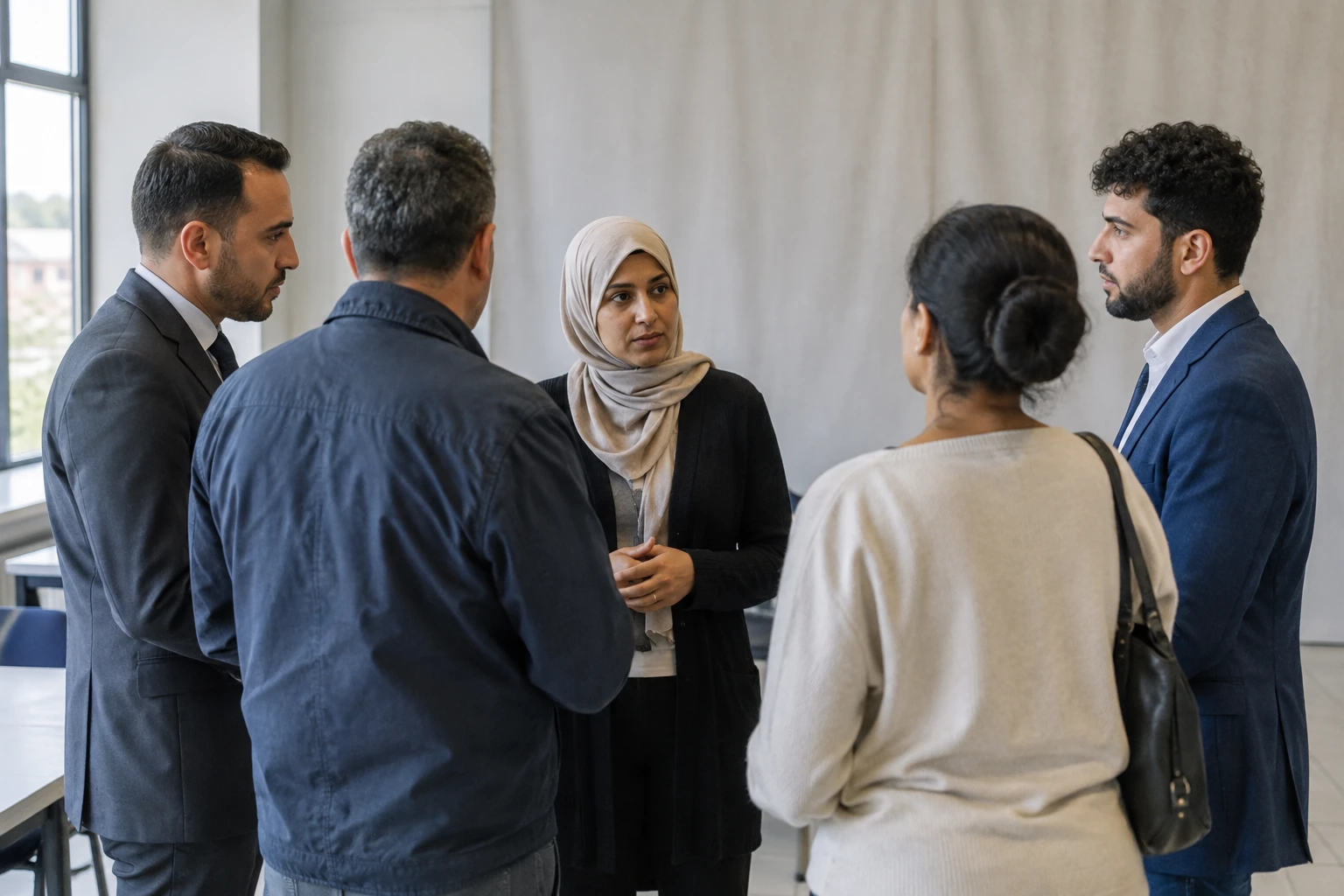
In Ceuta, a border does not only separate Spain from Morocco. It also cuts through a city where Spanish residents are sometimes mistaken for foreigners because of their name, appearance or religion. After the crisis of summer 2026, this confusion fuelled assaults and hate speech targeting both migrants and Moroccans who have long lived in the enclave.
A Spanish city with deep ties to Morocco
Ceuta is a Spanish autonomous city on the North African coast, a few kilometres from Fnideq, in Morocco. Its position makes it a sensitive point in relations between Rabat and Madrid, as well as one of the European Union’s land borders on the African continent. Migration therefore intersects there with issues of security, mobility and bilateral cooperation.
Ceuta’s society cannot be reduced to this border. A significant proportion of its Muslim residents are Spanish and have family and cultural ties to Morocco. Data from the Union of Islamic Communities of Spain records more than 31,000 Spanish Muslims and around 4,400 foreign residents in Ceuta, almost all Moroccan, according to RTVE on Ceuta’s Muslim residents. This reality makes the automatic conflation of North African appearance with migrant status particularly damaging.
The events of May 2021 remain fresh in people’s memories. Nearly 10,000 people entered Ceuta over two days amid acute diplomatic tensions between Spain and Morocco. The episode of July 2026 once again put border management and cooperation between the two countries at the forefront, without erasing the local consequences for residents.
Disputed figures, a very real crisis
On 30 and 31 July, tens of thousands of people crossed the border from Morocco, on foot or by sea. Initial estimates varied: Spain’s Interior Ministry cited around 50,000 entries, while Ceuta’s president gave a higher figure. The Spanish government later spoke of nearly 70,000 arrivals. These figures represent successive institutional estimates, not a single, uniform independent count.
Most of those who arrived returned to Morocco in the following days, but several thousand were still in the enclave at the end of the summer, according to figures reported by the authorities at different dates. Amnesty International called on Spain to clarify the number of entries and returns, access to asylum and the situation of minors. The organisation also reported allegations of summary returns and excessive use of force, which require individual verification.
The crisis also brought the border into people’s everyday lives. Spanish Muslim residents said they had been stopped or identified as recent arrivals. A woman from Ceuta quoted in the field report behind this article describes fearing that her children might be assaulted and then mistaken for migrants. This testimony reflects an individual experience; on its own, it cannot measure the overall extent of the violence.
Spanish media have reported several assaults and acts of intimidation targeting people perceived as Moroccan or Muslim. An El Salto investigation into reported racist incidents in Ceuta documents attacks on residents and minors in particular. The context and responsibility must be established on a case-by-case basis: a reported allegation is not equivalent to a court ruling.
Political rhetoric and its local effects
The far-right Vox party called the influx an “invasion” and demanded a tougher response at the border. This wording is a political framing, not a neutral characterisation of the facts. It can blur together people who crossed the border and Spanish Ceutans of Moroccan descent. Local elected officials, by contrast, have stressed the unity of residents, whatever their origin or religion.
On 13 October, Felipe VI and Queen Letizia visited Ceuta. The king praised coexistence between languages and religions, as the visit took place in the aftermath of the crisis. Official statements highlight a civic ideal; residents’ accounts are a reminder that this ideal is not enough to guarantee equal treatment or safety in public spaces. The visit also brought renewed attention to the enclave’s strategic importance to the Spanish state.
For Muslim and racialised residents, the immediate concern is being able to move around without suspicion based on their appearance. For migrants, it is access to protection, accommodation and safeguards against violence. For the authorities, the challenge is to manage the border without allowing tensions to spread into neighbourhoods and relations between residents. These needs are not identical, even if they are entangled in public debate.
A test for relations between Rabat, Madrid and Europe
The Ceuta crisis also involves Morocco, Spain and the European Union. Border controls, returns and the reception of migrants depend in part on cooperation between Rabat and Madrid. But responsibility for the events of July and the conditions surrounding returns remain contentious. Presenting them as fully established would conflate political accusations, investigative findings and verified facts.
For Morocco, a direct neighbour whose nationals were among those who arrived, the consequences extend beyond diplomacy: they concern separated families, returns and how Moroccans are perceived on both sides of the border. At European level, Ceuta is a reminder that migration control is not confined to a dividing line. It also affects the rights of residents and people on the move.
What happens next will depend in part on official clarification of arrivals and returns, the handling of complaints about violence and guarantees of access to asylum. It will also depend on whether political leaders can distinguish people in an irregular migration situation from Ceuta’s citizens, rather than conflating them in a single narrative of threat.



