Algeria
 Egypt
 Libya
 Sudan
 Tunisia
 Benin
 Burkina Faso
 Cabo Verde
 Côte d'Ivoire
 Ghana
 Guinea
 Guinea-Bissau
 Liberia
 Mali
 Mauritania
 Niger
 Nigeria
 Senegal
 Sierra Leone
 The Gambia
 Togo
 Cameroon
 Central African Republic
 Chad
 DR Congo
 Equatorial Guinea
 Gabon
 Republic of the Congo
 São Tomé and Príncipe
 Burundi
 Comoros
 Djibouti
 Eritrea
 Ethiopia
 Kenya
 Madagascar
 Malawi
 Mauritius
 Mozambique
 Rwanda
 Seychelles
 Somalia
 South Sudan
 Tanzania
 Uganda
 Angola
 Botswana
 Eswatini
 Lesotho
 Namibia
 South Africa
 Zambia
 Zimbabwe
A sporting case becomes an institutional test
In Dakar, the debate is no longer just about a trophy. It touches on the credibility of procedures, how African football handles its crises, and Senegal’s place in this balance of power. The Court of Arbitration for Sport, based in Lausanne, has scheduled a hearing for 8 October 2026 on the appeal by the Senegalese Football Federation in the case of the 2025 Morocco Africa Cup of Nations final.
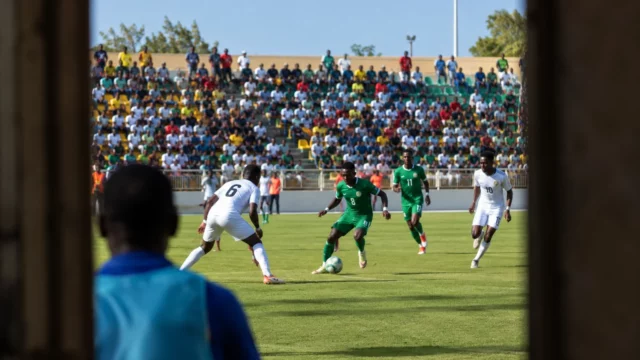
The case dates back to the final on 18 January 2026, which Senegal won on the pitch against Morocco, 1-0 after extra time, in a match marked by an interruption after a penalty was awarded to the Moroccans in stoppage time. The Confederation of African Football subsequently changed the result by awarding Senegal a forfeit and giving Morocco an administrative 3-0 victory.
This sequence immediately went beyond a simple disciplinary dispute. It pitted the CAF’s legal interpretation against the challenge brought by the Senegalese Football Federation. The appeal was registered by the CAS on 25 March 2026, after which the sports tribunal said it would conduct adversarial proceedings before issuing its decision.
What the case says, and why it matters beyond the score
The established facts are clear. The CAF initially rejected Morocco’s protest before sanctioning Senegal for a forfeit on 17 March 2026, following the temporary withdrawal of its players and officials from the field of play. The decision was taken under the Africa Cup of Nations regulations, and the Senegalese federation asked the CAS to annul it.
The CAS, for its part, said in March that the procedure required it to examine the appeal, appoint an arbitral panel and set a timetable. At that stage, the tribunal explained that it could not yet announce a hearing date. Setting the date for 8 October therefore marks a clear step: the dispute is now entering its oral phase, with hearings and counterarguments.
For Senegal, the stakes go beyond prestige. The country is defending a victory won on the pitch and the principle that a final cannot be reclassified without a rigorous examination of the context, the applicable regulations and the proportionality of the sanction. For the CAF, the stakes are the reverse: enforcing a common disciplinary framework in a continental competition closely followed by millions of supporters, sponsors and member federations.
This clash also says something about the governance of African football. In CAF competitions, the boundary between discipline, interpretation of the rules and political pressure is often under scrutiny. Senegal, a major footballing nation in West Africa, is therefore challenging a decision that touches on procedure, sporting fairness and the symbolic value of the continental title.
Regional perspective: ECOWAS is also watching how the dispute is settled
The case is of interest beyond the sporting world. In West Africa, the credibility of shared institutions matters as much as results. ECOWAS, the regional economic community of which Senegal is a member, is already going through a period of political realignment. In this context, a high-profile dispute on the sporting stage also sends a signal about the ability of African institutions to manage their conflicts without undermining their own credibility.
In Dakar, the impact is tangible. A decision in Senegal’s favour would reinforce the narrative of a country that won on the pitch and refuses to see that success turned into an administrative defeat. A ruling upholding the CAF decision, on the other hand, would entrench the idea that disciplinary rules take precedence, even when they overturn the outcome of a final. Either way, the Senegalese public will be following more than a dressing-room dispute: it will be following a test of sporting justice.
The timetable now provides a clear horizon. On 8 October 2026, in Lausanne, the CAS is due to hear arguments from Senegal, the CAF and Morocco. The decision will not merely bring an end to a final-related controversy. It will also show how an international sporting institution adjudicates a major African dispute, in a year when continental football continues to attract attention well beyond the stadiums.