Algeria
 Egypt
 Libya
 Morocco
 Sudan
 Tunisia
 Benin
 Burkina Faso
 Cabo Verde
 Côte d'Ivoire
 Ghana
 Guinea
 Guinea-Bissau
 Liberia
 Mali
 Mauritania
 Niger
 Nigeria
 Senegal
 Sierra Leone
 The Gambia
 Togo
 Cameroon
 Chad
 DR Congo
 Equatorial Guinea
 Gabon
 Republic of the Congo
 São Tomé and Príncipe
 Burundi
 Comoros
 Djibouti
 Eritrea
 Ethiopia
 Kenya
 Madagascar
 Malawi
 Mauritius
 Mozambique
 Rwanda
 Seychelles
 Somalia
 South Sudan
 Tanzania
 Uganda
 Angola
 Botswana
 Eswatini
 Lesotho
 Namibia
 South Africa
 Zambia
 Zimbabwe
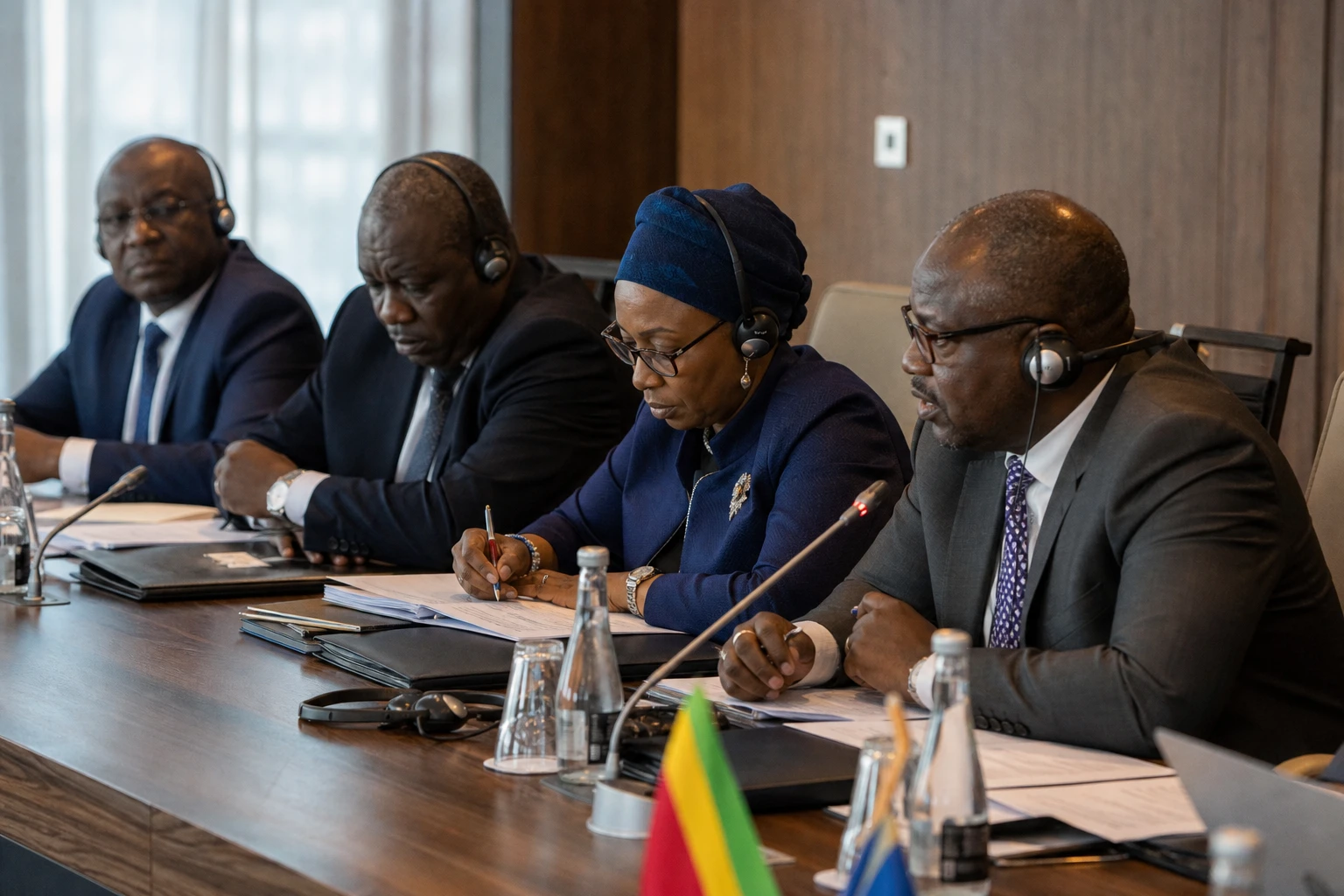
Bangui faces a border too long to seal
In the Central African Republic, the question of weapons cannot be reduced to a text voted on in New York. It affects villages, transhumance corridors, trade routes and borders where the state is sometimes barely present. As long as armed groups retain sources of supply, security in Bangui does not guarantee security in the provinces.
The country belongs to CEMAC, the Economic and Monetary Community of Central Africa, and shares sensitive borders with Sudan, South Sudan, Chad, Cameroon, the Republic of the Congo and the Democratic Republic of the Congo. This geography carries considerable weight. It opens up smuggling routes, but also makes police cooperation, intelligence-sharing and joint control of border posts essential.
Sanctions renewed, but the ground remains porous
On 29 July 2025, the United Nations Security Council renewed until 31 July 2026 the measures targeting armed groups and people associated with them in the Central African Republic. The regime maintains a ban on supplying these actors with weapons, ammunition, military vehicles, technical assistance or financial support. It also extends the asset freeze and travel bans for certain designated individuals.
The renewal comes a year after the lifting of the arms embargo imposed on the Central African government. Since 30 July 2024, the state has been able to purchase weapons subject to notification, while non-state groups remain subject to the ban. The distinction is important. It shows that the challenge is no longer just to block official purchases, but to cut the clandestine supply chains feeding armed factions.
The sanctions remain in place because of a simple finding: weapons are still entering through several channels. They move across porous borders, are captured during fighting, pass through regional black markets or come from old stockpiles reintroduced into the wartime supply chains. The porous borders with Sudan, South Sudan and Chad are among the main vulnerabilities identified by the UN.
A war that began in 2013, with effects still felt today
The current crisis has its roots in the Séléka coalition’s offensive in early 2013. After Bangui was captured in March that year and François Bozizé was ousted, the country descended into a cycle of violence. In response, anti-balaka militias emerged and carried out deadly reprisals, deepening the security and communal divide. The Security Council imposed an arms embargo in December 2013.
The situation has changed considerably since then, but stability remains incomplete. The UN says forced displacement remains high in Central Africa. In June 2026, the UN refugee agency reported that nearly 20 million people were displaced or stateless across West and Central Africa, with more than 389,000 returns recorded in the first four months of 2026, including in the Central African Republic.
The Central African Republic therefore remains caught between real security gains and structural fragility. MINUSCA, national forces and several bilateral partners have helped recapture territory. But border areas remain vulnerable, and attacks on peacekeepers are a reminder that the main obstacle remains the state’s effective authority across its territory.
What weapons, borders and resources change
The debate is not solely military. It is also economic and administrative. In several prefectures, some armed groups survive on informal taxes, control of mining sites or exploitation of trade routes. As long as these resources remain available, the capacity to rearm persists. Security therefore cannot rely on patrols alone. It also requires functioning courts, an administrative presence, local conflict-resolution mechanisms and legal sources of income for young people and former combatants.
Cooperation with Chad illustrates this approach. After years of tension, Bangui and N’Djamena revived their joint cooperation commission and signed several agreements in 2024. A joint border force was then established in 2025. For the Central African Republic, this kind of arrangement matters more than a simple diplomatic gesture: it can reduce the routes used for weapons, fighters and various forms of trafficking.
But the significance of this issue extends beyond the Central African Republic. In Central Africa, the combined effect of crises in Sudan, Chad and the Central African Republic, as well as in parts of the Congo Basin, creates a chain-reaction security environment. Each new outbreak of violence can fuel the next. At the continental level, the Central African case is a reminder of one thing: sanctions are not enough unless neighbouring states, regional institutions and national authorities align their means of control, justice and governance.