Algeria
 Egypt
 Libya
 Morocco
 Sudan
 Tunisia
 Benin
 Burkina Faso
 Cabo Verde
 Côte d'Ivoire
 Ghana
 Guinea
 Guinea-Bissau
 Liberia
 Mali
 Mauritania
 Niger
 Nigeria
 Senegal
 Sierra Leone
 The Gambia
 Togo
 Cameroon
 Chad
 DR Congo
 Equatorial Guinea
 Gabon
 Republic of the Congo
 São Tomé and Príncipe
 Burundi
 Comoros
 Djibouti
 Eritrea
 Ethiopia
 Kenya
 Madagascar
 Malawi
 Mauritius
 Mozambique
 Rwanda
 Seychelles
 Somalia
 South Sudan
 Tanzania
 Uganda
 Angola
 Botswana
 Eswatini
 Lesotho
 Namibia
 South Africa
 Zambia
 Zimbabwe
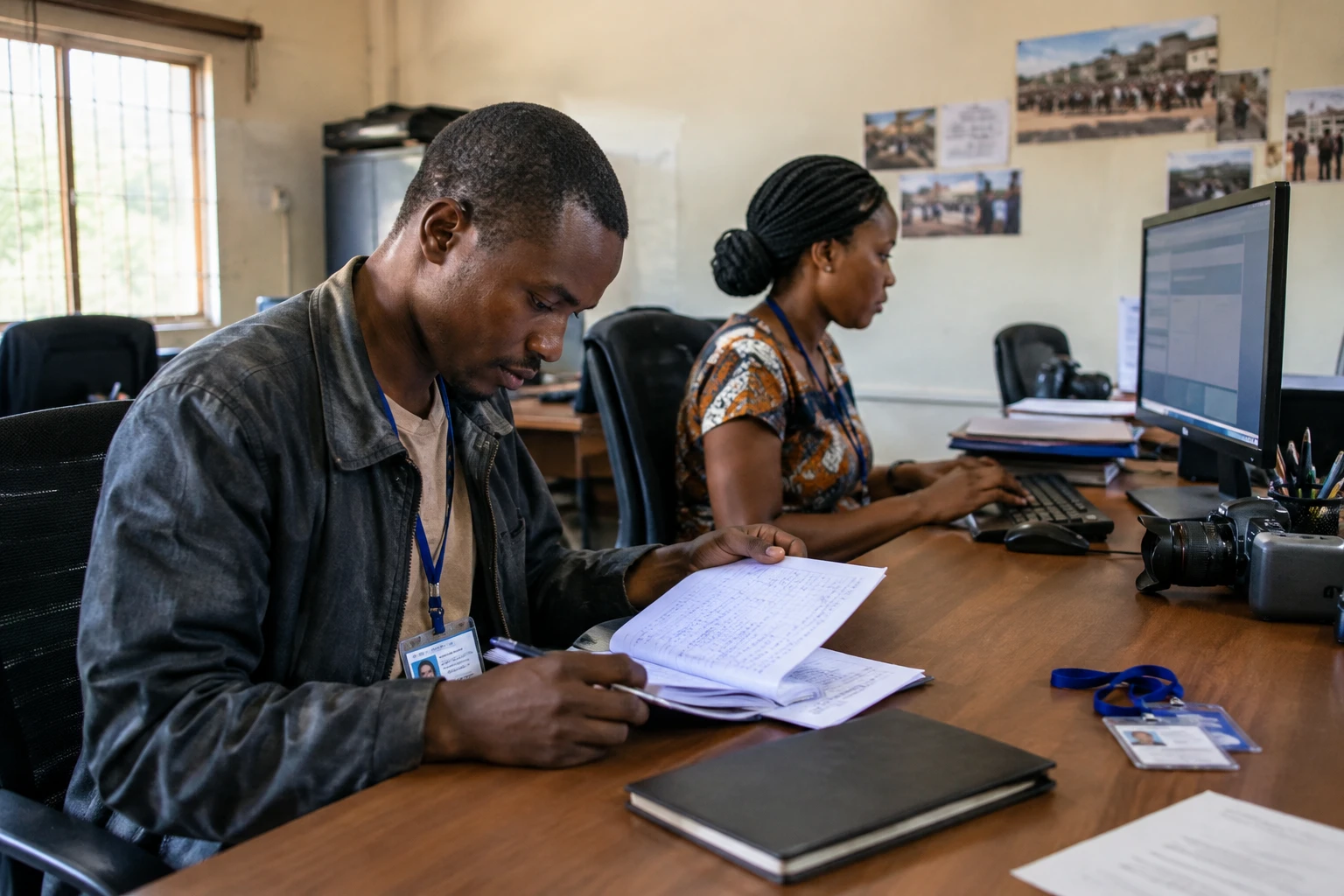
An asylum hearing in Montreuil raises a question that goes beyond one man’s story: how can people who document networks of influence be protected when their revelations touch on the balance of power in their country? For Ephrem Yalike-Ngonzo, a Central African journalist, the French court’s decision is expected on 17 November 2026.
An appeal after his asylum claim was rejected
On 27 October, Ephrem Yalike-Ngonzo and his partner were heard by the National Court of Asylum (CNDA) in Montreuil. They are challenging the rejection of their asylum claim by the French authorities in July 2026. According to information given at the hearing, the decision is due on 17 November.
The CNDA hears appeals against refusals of protection. It must assess the risks applicants would face if they returned, on the basis of the evidence they present and the situation in their country. The hearing allows those concerned to explain their background and the reasons for their fears.
Yalike-Ngonzo arrived in France in 2024. His lawyers argue that his revelations about disinformation operations in the Central African Republic (CAR) expose him to reprisals. His partner was also heard. The proceedings therefore concern the safety of a family, not just the journalist’s professional status.
Revelations about an influence network
The case is part of an investigation into methods of manipulating information in the CAR. The Platform for the Protection of Whistleblowers in Africa (PPLAAF), which is supporting Yalike-Ngonzo and his family, says he testified about the activities of Africa Politology, an organisation described in his research as linked to Russian networks. In November 2024, an investigation conducted with Forbidden Stories exposed methods aimed at promoting Russia’s presence and discrediting its critics.
According to PPLAAF’s published account, the journalist initially accepted offers of paid work before realising that the requested content amounted to propaganda. The organisation reports that he says he helped produce articles favourable to the Central African forces and Wagner, and was then asked to take part more directly in influence operations. These details are attributed to the journalist and the investigation that interviewed him; on their own, they do not constitute a judicial ruling.
PPLAAF says threats led Ephrem Yalike-Ngonzo and his family to leave the CAR. At the hearing, Henri Thulliez, the organisation’s strategy director and a witness, defended the consistency of his testimony. Lawyer Fabien Pommelet said his clients had been able to recount their lives and circumstances to the Court. These are the views of the applicant’s supporters; the CNDA must now issue its own decision.
The CAR, a setting for rivalries and public debate
Wagner’s presence in the CAR dates back to 2018, amid a security crisis and the Central African authorities’ search for support. Bangui has strengthened its ties with Moscow, while the country continues to maintain links with other partners. The Institute for Security Studies (ISS) describes a difficult balancing act between Russian security support, regional co-operation and external financial assistance.
The CAR is part of the Economic and Monetary Community of Central Africa (CEMAC), which brings six countries together under shared economic institutions and a common currency. It is also a member of the African Union and the Economic Community of Central African States (ECCAS). These bodies do not adjudicate Yalike-Ngonzo’s individual appeal. They do, however, serve as a reminder that stability in the CAR, population movements and relations with neighbouring countries have a regional dimension.
The effects of political tensions in the country are not the same for everyone. State officials shape security and diplomatic partnerships; journalists, opposition figures and civic organisations work in a climate where speaking out can become sensitive. Outside Bangui, people in areas affected by armed groups also face immediate challenges related to security and access to services. The information battle is therefore unfolding in a national context in which concerns extend beyond rivalries between powers.
A report by the Africa Center for Strategic Studies says online campaigns have targeted critics of the government and opposition parties. The ISS, for its part, notes that the presence of foreign partners reflects Central African political and security choices, but also carries risks of dependency and tension. Any account of this situation must therefore avoid reducing the CAR either to a battleground for outside powers or its authorities’ decisions to mere effects of foreign influence.
A decision that will be watched beyond the individual case
For Ephrem Yalike-Ngonzo and his partner, the immediate question is whether they will be granted protection in France. For journalists and whistleblowers, the case also raises the question of whether the risks associated with their work will be recognised when threats are intertwined with influence campaigns and it is difficult to establish every detail publicly.
The regional implications are broader, although these proceedings cannot sum up the situation across CEMAC or the continent. In several African countries, authorities, the media and citizens are debating sovereignty, security partnerships and control of the digital space. The Central African case is a reminder that these debates also play out in newsrooms and in citizens’ ability to access verifiable information.
On 17 November 2026, the CNDA’s decision will determine whether the evidence presented justifies granting protection. It will not settle the wider debate about influence networks in the CAR. But it will be a decisive step for the family concerned, while the safety of journalists and the conditions for public debate remain issues to watch in Bangui and across the region.