Algeria
 Egypt
 Libya
 Morocco
 Sudan
 Tunisia
 Benin
 Burkina Faso
 Cabo Verde
 Côte d'Ivoire
 Ghana
 Guinea
 Guinea-Bissau
 Liberia
 Mali
 Mauritania
 Niger
 Nigeria
 Senegal
 Sierra Leone
 The Gambia
 Togo
 Cameroon
 Chad
 DR Congo
 Equatorial Guinea
 Gabon
 Republic of the Congo
 São Tomé and Príncipe
 Burundi
 Comoros
 Djibouti
 Eritrea
 Ethiopia
 Kenya
 Madagascar
 Malawi
 Mauritius
 Mozambique
 Rwanda
 Seychelles
 Somalia
 South Sudan
 Tanzania
 Uganda
 Angola
 Botswana
 Eswatini
 Lesotho
 Namibia
 South Africa
 Zambia
 Zimbabwe
For a landlocked country, a new international link can do more than shorten the route taken by data. It can also prevent an outage on one corridor from cutting off some digital exchanges. For Central Africans, however, the benefits will be tangible only if the fibre reaches local networks and translates into accessible services.
A third corridor under consideration
The Central African Republic (CAR) already has land links with Cameroon and the Republic of the Congo. Inaugurated in February 2023, the Central African Backbone (CAB) network installed 935 kilometres of terrestrial and submarine fibre. These sections connect Bangui to the networks of its two neighbours, among other places. The African Development Bank (AfDB) and the European Union supported the project.
This infrastructure is part of a broader regional ambition. The Central African Economic and Monetary Community (CEMAC), which brings together six Central African countries, supports the interconnection of networks to strengthen exchanges and access to broadband. But a regional network alone does not guarantee an effective backup link: routes must be operational and sufficiently independent of one another.
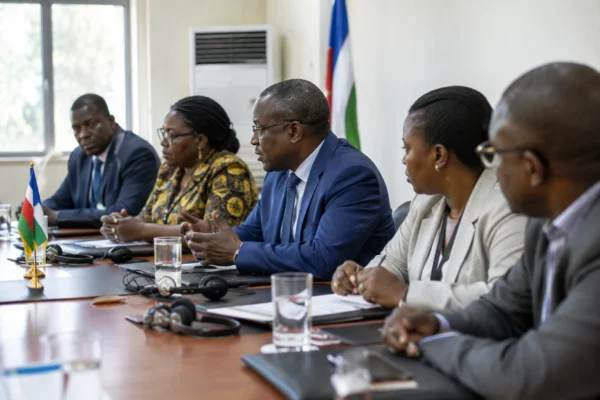
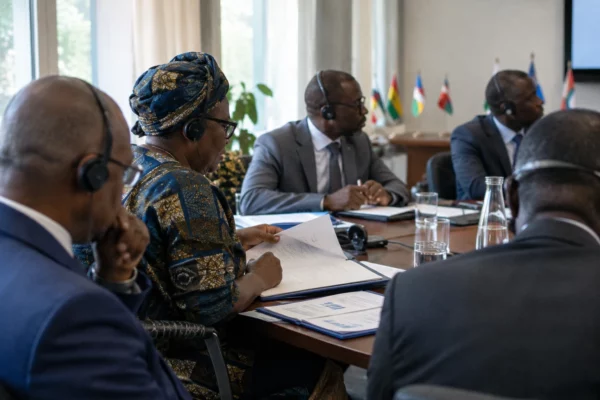
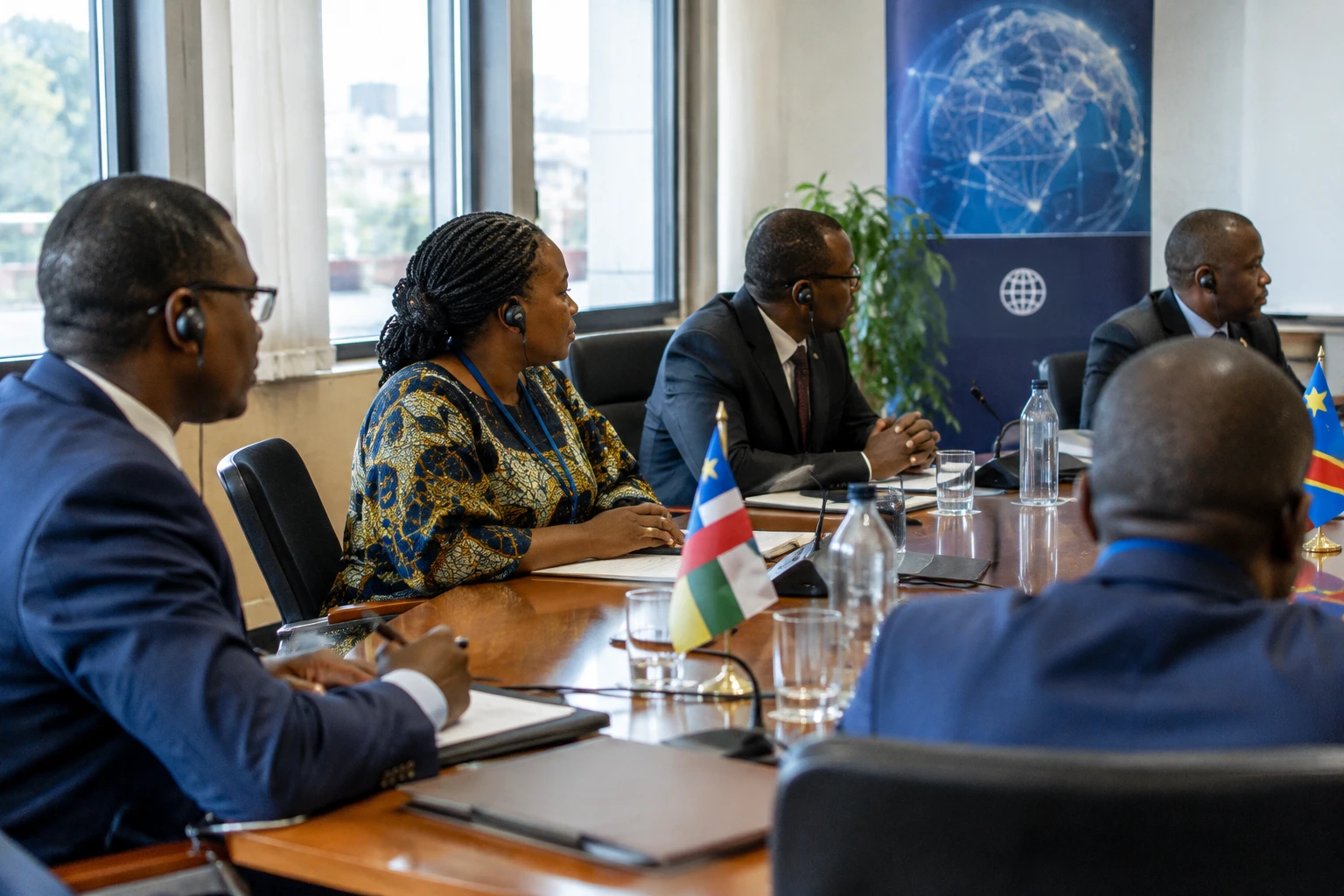
On 8 October 2026, on the sidelines of a digital meeting in Moscow, Central African minister Roger Andjalandji and his counterpart from the Democratic Republic of the Congo (DRC), Augustin Kibassa Maliba, discussed reviving a fibre interconnection. The Congolese minister confirmed that the forum had taken place and that Central African representatives had attended. So far, no construction timeline, precise route or project funding has been made public.
Accessing submarine cables via the DRC
The DRC has connections to international submarine cables. The Central African statement presents a land link as a way of routing CAR traffic to the submarine cable that comes ashore at Moanda, on the Congolese Atlantic coast. This prospect still needs to be clarified in technical and commercial terms: connecting to a foreign network does not mean that capacity will automatically be available at an advantageous price.
The new route could complement the corridors running through Cameroon and the Republic of the Congo. In the event of an outage, an additional route would provide a fallback, provided that the points of failure are not shared and operators have reserve capacity. Redundancy is verified in the network’s actual architecture, not by the number of countries it crosses alone.
The vulnerability of infrastructure is not theoretical. The information provided refers to damage to sections of the Central African network in March 2026, which reportedly disrupted telecoms services. As no independent confirmation of the incident has been identified, this account should be treated as reported information, not as a corroborated fact.
From international capacity to everyday life
An additional link could increase available capacity and reduce reliance on a single corridor. But its impact on subscribers depends on the entire chain: transport to Bangui and provincial towns, mobile networks, electricity quality, wholesale prices and competition between providers. Rural areas, often farther from the main routes, will not necessarily benefit from increased international capacity without investment in domestic networks.
World Bank research on submarine cables estimates that a doubling of capacity can be accompanied by lower broadband prices in sub-Saharan Africa. The scale varies by market and technology. This regional finding is not a specific forecast for the CAR: whether these savings are passed on to consumers depends, among other things, on competition and the terms of access to infrastructure.
Internet access figures should also be treated with caution. The Central African Ministry reportedly estimated in May 2026 that the penetration rate had risen from 15.5% at the start of 2025 to 30%. The World Bank series, based on data from the International Telecommunication Union, meanwhile puts the share of individuals using the internet at 14% in 2024. As the periods and methods may differ, these figures are not directly comparable and do not, on their own, confirm a recent increase.
Decisions still to come
To make the project a reality, Bangui and Kinshasa will need to specify the route, who is responsible for construction and operation, how costs will be shared, the terms of access to capacity and arrangements for cross-border maintenance. Physical protection of the cables and coordination between regulators will also matter. These choices will determine whether the link serves several operators or remains dependent on a limited number of players.
The project’s significance extends beyond the two capitals. For CEMAC countries, connecting national networks can strengthen regional digital exchanges, but this requires clear interconnection rules and lasting agreements. For Central African users — government agencies, businesses, students and households — the test will be simpler: a more stable connection, available beyond Bangui and at a sustainable cost.
The project with the DRC therefore remains a possible means of diversification, not yet a new operational internet route. The next step will be the publication of verifiable commitments on funding, the timeline and operation. Without these, the promised benefit remains potential.