
 Algeria
 Egypt
 Libya
 Morocco
 Sudan
 Tunisia
 Benin
 Burkina Faso
 Cabo Verde
 Côte d'Ivoire
 Ghana
 Guinea
 Guinea-Bissau
 Liberia
 Mali
 Mauritania
 Niger
 Nigeria
 Senegal
 Sierra Leone
 The Gambia
 Togo
 Cameroon
 Central African Republic
 Chad
 DR Congo
 Equatorial Guinea
 Gabon
 Republic of the Congo
 São Tomé and Príncipe
 Burundi
 Comoros
 Djibouti
 Eritrea
 Ethiopia
 Kenya
 Madagascar
 Malawi
 Mauritius
 Mozambique
 Rwanda
 Seychelles
 Somalia
 South Sudan
 Tanzania
 Uganda
 Angola
 Botswana
 Eswatini
 Lesotho
 Namibia
 Zambia
 Zimbabwe
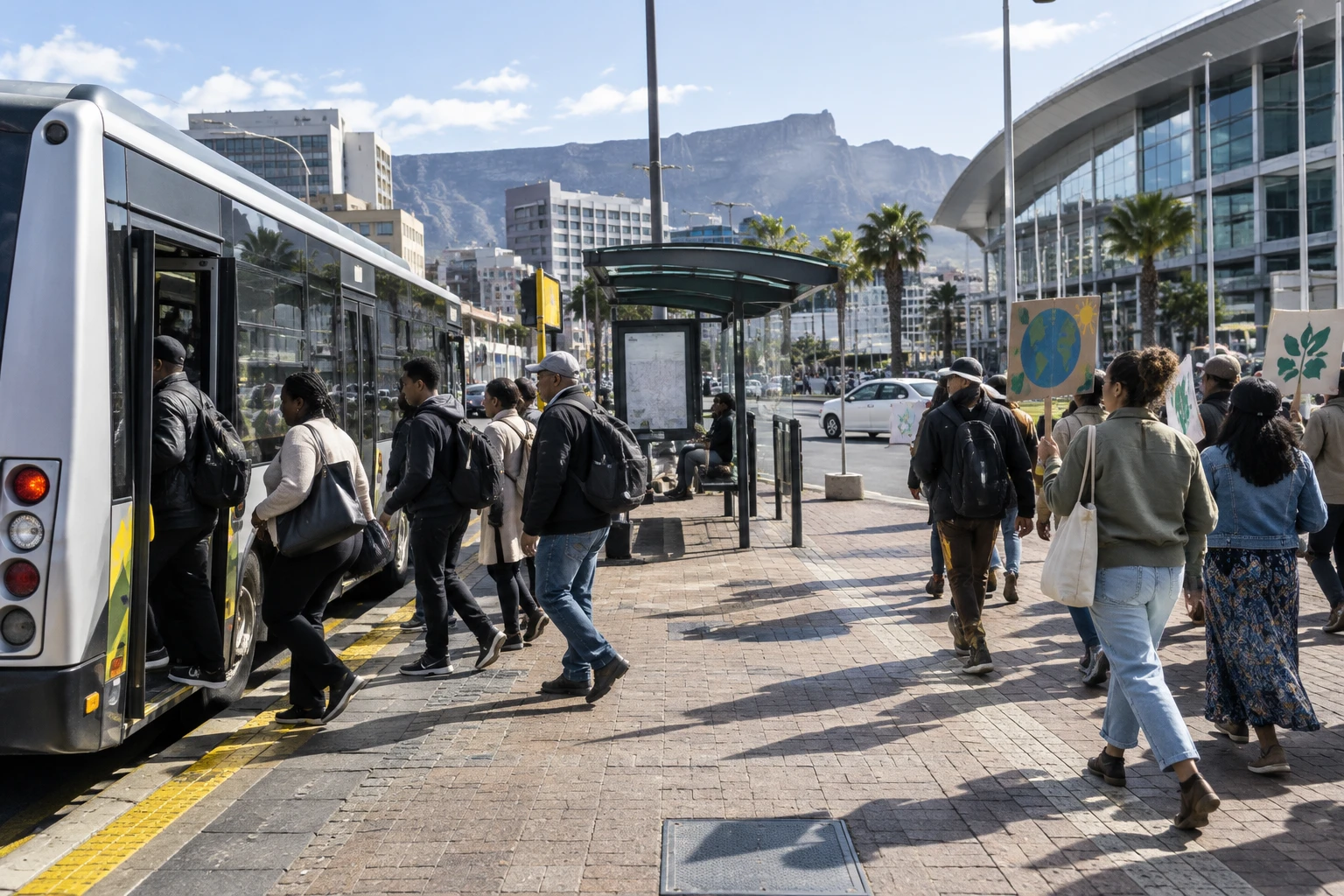
Who should foot the bill for climate damage: the people who suffer it, the states that have to fund their response, or the companies whose businesses depend on fossil fuels? In Cape Town, that question has moved out of conference rooms and on to the streets outside a major energy event.
On 30 September 2025, activists demonstrated on the sidelines of Africa Energy Week (AEW), held in Cape Town from 29 September to 3 October. They called for oil companies to contribute more to the cost of climate change. The gathering set two difficult priorities against each other: attracting investment in energy and protecting people from climate damage.
An energy debate rooted in southern Africa
South Africa is hosting AEW at a time when security of supply, the cost of electricity and the energy transition directly shape public policy choices. The country remains heavily reliant on fossil fuels, while the development of renewables and emissions reductions raise questions about jobs, access to energy and industrial transformation.
The tension extends beyond South Africa’s borders. The Southern African Development Community (SADC), a regional co-operation organisation, brings together countries with different resources and energy systems. Decisions on infrastructure, electricity trading and fossil fuel investment can therefore have effects far beyond the host country.
AEW brings together political leaders, companies and investors to discuss the continent’s energy resources. Supporters of oil and gas projects point to public revenue, economic activity and access to energy. Environmental organisations, meanwhile, question the emphasis placed on new projects and call for climate costs to be included in the debate.
Activists call for companies to contribute
Outside the Cape Town conference centre, activists from Greenpeace Africa and Extinction Rebellion protested as delegates entered the event. South African media outlet GroundUp also reported on the gathering and described an action by Greenpeace activists around an installation symbolising a payment. The demonstration called on companies in the sector to fund climate damage.
Greenpeace Africa framed the demand as a financial responsibility for major oil and gas groups. The organisation wants the funds to go towards loss and damage — harm caused by climate events to which people cannot simply adapt — as well as adaptation measures. It also advocates taxes and penalties targeting companies in the sector.
These proposals are an activist demand, not a tax that has already been adopted or a funding mechanism that is in place. Implementing them would raise practical questions: which groups would be covered, how would their contribution be calculated, who would manage the revenue, and how could it be guaranteed that the funds reach exposed communities? The debate is therefore as much about responsibility as it is about fund governance.
Greenpeace Africa has also said that African countries lack the financial means to cope with extreme weather events. This is the organisation’s position. It reflects a broader question raised by several African governments in climate discussions: how can adaptation and loss and damage be funded without placing an additional burden on already stretched public budgets?
Between energy revenue and climate costs
For governments, hydrocarbon extraction can generate revenue and jobs, and help meet energy demand. But these gains are not automatically shared among residents. Revenue depends on contracts, taxation and the share of value created locally. Climate risks and pollution, meanwhile, can directly affect communities near extraction sites or infrastructure.
Urban and rural populations also face different challenges. Cities rely in particular on electricity, transport and sanitation networks that are tested by extreme events. In rural areas, incomes linked to agriculture and access to services can make adaptation more difficult. Climate funding can meet these needs only if its allocation takes local circumstances into account.
The discussion also involves refineries and regional markets. The source material refers to the high cost of shipping African crude to Asia and the possibility that some African refineries could benefit from local supply. In the absence of independent data corroborating these estimates for the period in question, this effect should remain an attributed analysis, rather than an established benefit for the sector as a whole.
Taxing companies more heavily does not, by itself, resolve the question of a just transition. Poorly designed taxation could feed through to prices or deter investment needed to secure supply. Conversely, without a dedicated contribution, states and households bear some of the costs associated with disasters. The details — the tax base, oversight and allocation of revenue — matter as much as the principle advocated by the demonstrators.
A regional signal, not yet public policy
The Cape Town demonstration is part of a continent-wide debate: how can climate finance be mobilised without sidelining development needs and access to energy? For African countries, the discussion is not limited to a choice between oil and renewables. It also concerns control of resources, local processing, jobs and the ability of communities to influence decisions.
The contrast between AEW’s negotiating space and the street protest makes visible a disagreement over how costs and benefits should be shared. Investors want predictable rules and viable projects. Governments must balance revenue, supply and climate commitments. Civil society organisations are calling for exposed communities not to be left at the end of the funding chain.
At this stage, the mobilisation has announced neither an agreement by companies nor a decision by the South African authorities on a new tax. Its impact will depend on what happens next: will the proposals be discussed in national policies, SADC regional frameworks or international climate negotiations? The answer will show whether the call heard in Cape Town remains a protest gesture or becomes a subject of financial negotiation.



