Algeria
 Egypt
 Libya
 Morocco
 Sudan
 Tunisia
 Benin
 Burkina Faso
 Cabo Verde
 Côte d'Ivoire
 Ghana
 Guinea
 Guinea-Bissau
 Liberia
 Mali
 Mauritania
 Niger
 Nigeria
 Senegal
 Sierra Leone
 The Gambia
 Togo
 Cameroon
 Central African Republic
 Chad
 DR Congo
 Equatorial Guinea
 Gabon
 Republic of the Congo
 São Tomé and Príncipe
 Burundi
 Comoros
 Djibouti
 Eritrea
 Ethiopia
 Kenya
 Madagascar
 Malawi
 Mauritius
 Rwanda
 Seychelles
 Somalia
 South Sudan
 Tanzania
 Uganda
 Angola
 Botswana
 Eswatini
 Lesotho
 Namibia
 South Africa
 Zambia
 Zimbabwe
When water runs short, the entire electricity chain falters
In Mozambique, a major infrastructure project does more than produce kilowatt-hours. It also underpins export contracts, public revenue and part of southern Africa’s energy balance. When reservoir levels fall, the effects spread quickly, from Maputo to neighbouring countries and across regional electricity markets. The recovery at Cahora Bassa therefore illustrates more than a simple return of the rains: it says something about the vulnerability of hydropower systems to climate change.
Mozambique belongs to the Southern African Development Community, or SADC, and its electricity also flows through the Southern African Power Pool, the regional market that brings together energy production and trade among member states. Cahora Bassa holds a special place in this system. The dam, built on the Zambezi in Tete province, remains one of the pillars of Mozambique’s electricity system and a major supplier to regional interconnections.
A strategic dam, a strained basin
In 2025, drought hit the Zambezi basin hard. The Mozambican government described the episode as the most severe in 43 years in this hydrological zone. Hidroeléctrica de Cahora Bassa, the operator, said its reservoir had reached a historic low at the end of the dry season, before gradually recovering in 2026. The figures show the scale of the shock: the company produced 10 921 GWh in 2025, amid hydrological conditions its own official communications described as highly challenging.
Reservoir levels subsequently improved. In its results statement, HCB said the reservoir had risen to 56% of capacity as 2026 approached, from 26,01% at the end of the 2024/2025 rainy season and 27,23% on 31 December 2025. The company even estimates that 2026 production could exceed its initial plan of 11 716,76 GWh by more than 7,29%. This recovery remains linked to rainfall upstream on the Zambezi, in the areas feeding the dam.
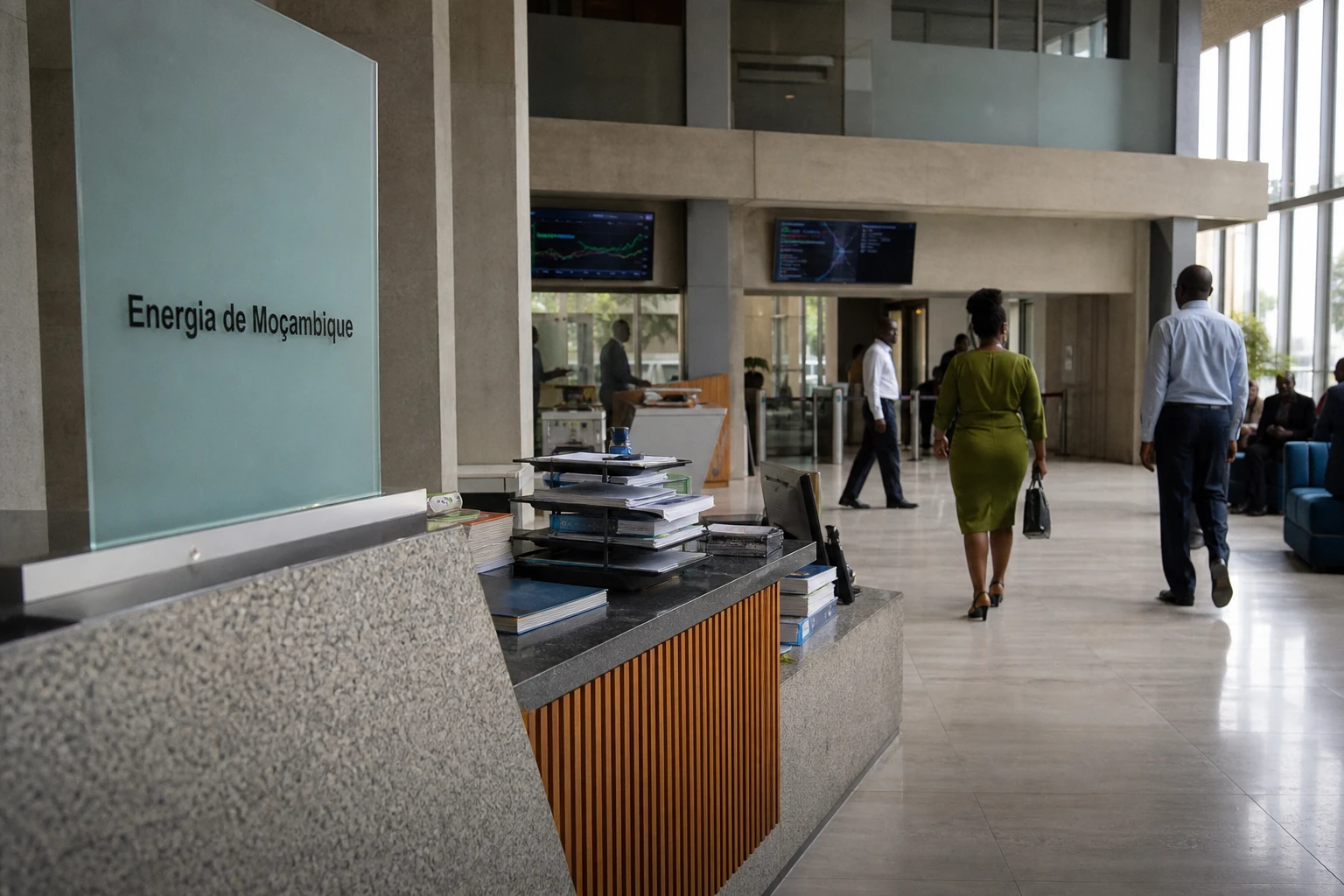
The improvement has a direct impact on the grid. HCB says it maintained deliveries to Mozambique’s state-owned utility EDM, Eskom in South Africa, ZESA in Zimbabwe and the SAPP market. In other words, the hydrological recovery affects more than a state-owned company. It also touches the electricity security of several southern African economies, where energy exchanges often make up for shortfalls in domestic production.
The figures that show the system’s resilience
Despite the drought, HCB says it generated $344 million in revenue and $112 million in net profit in 2025. The company adds that it paid about $300 million to the Mozambican state in taxes, royalties and dividends. These figures show that the dam remains not only an energy infrastructure asset but also a major budgetary asset for Maputo. In a country where financial headroom remains limited, HCB’s strength has an impact beyond the electricity sector.
The government, for its part, has factored climate issues into its recent economic decisions. In communications in 2025 and 2026, it reiterated that the country remains exposed to hydrometeorological shocks, including droughts, floods and cyclones. This reality affects agriculture, infrastructure and electricity production, three interlinked sectors in Mozambique’s economy. When water runs short in dams, it also runs short in fields. When it arrives in excess, it weakens roads, bridges and networks.
This matters all the more because Mozambique has made diversifying its energy mix a strategic priority. HCB has already cited maintenance and modernisation work, including the rehabilitation of the South Power Station and the Songo substation. The company has also mentioned expansion projects, including a North Power Station and a solar power plant. The message is clear: hydropower remains central, but it can no longer be considered on its own.
Beyond Cahora Bassa, the question of energy sovereignty
The case of Cahora Bassa is a reminder of a frequently overlooked truth: in southern Africa, energy also flows as an instrument of sovereignty. Mozambique exports electricity, but at the same time depends on a hydrological regime made more unstable by climate change. This tension between export power and climate vulnerability lies at the heart of the debate on the continent’s energy transition. It concerns Mozambique, but also Zambia, Zimbabwe, South Africa and all the countries whose grids remain connected to the Zambezi and regional markets.
The regional significance is even clearer with Mphanda Nkuwa, the hydropower project under development downstream from Cahora Bassa. Public announcements indicate an expected capacity of 1 500 MW by 2031. If this timetable is confirmed, Mozambique will strengthen its role as an energy exporter in SADC. But this ambition depends on transmission lines, solid financing and hydrological conditions that are more predictable than they are today.
The gradual recovery of the Cahora Bassa reservoir should therefore not be seen as a mere reprieve. Rather, it shows that the continent’s major infrastructure projects remain exposed to more intense and irregular climate cycles. Mozambique’s next challenge will be to balance production, exports, domestic needs and climate adaptation. For the region, the challenge is the same: to secure cross-border electricity without relying on a single rainfall pattern. This is where, in very practical terms, part of Africa’s energy resilience will be decided.