Algeria
 Egypt
 Libya
 Morocco
 Sudan
 Tunisia
 Benin
 Burkina Faso
 Cabo Verde
 Côte d'Ivoire
 Ghana
 Guinea
 Guinea-Bissau
 Liberia
 Mali
 Mauritania
 Niger
 Nigeria
 Senegal
 Sierra Leone
 The Gambia
 Togo
 Cameroon
 Central African Republic
 Chad
 Equatorial Guinea
 Gabon
 Republic of the Congo
 São Tomé and Príncipe
 Burundi
 Comoros
 Djibouti
 Eritrea
 Ethiopia
 Kenya
 Madagascar
 Malawi
 Mauritius
 Mozambique
 Rwanda
 Seychelles
 Somalia
 South Sudan
 Tanzania
 Uganda
 Angola
 Botswana
 Eswatini
 Lesotho
 Namibia
 South Africa
 Zambia
 Zimbabwe
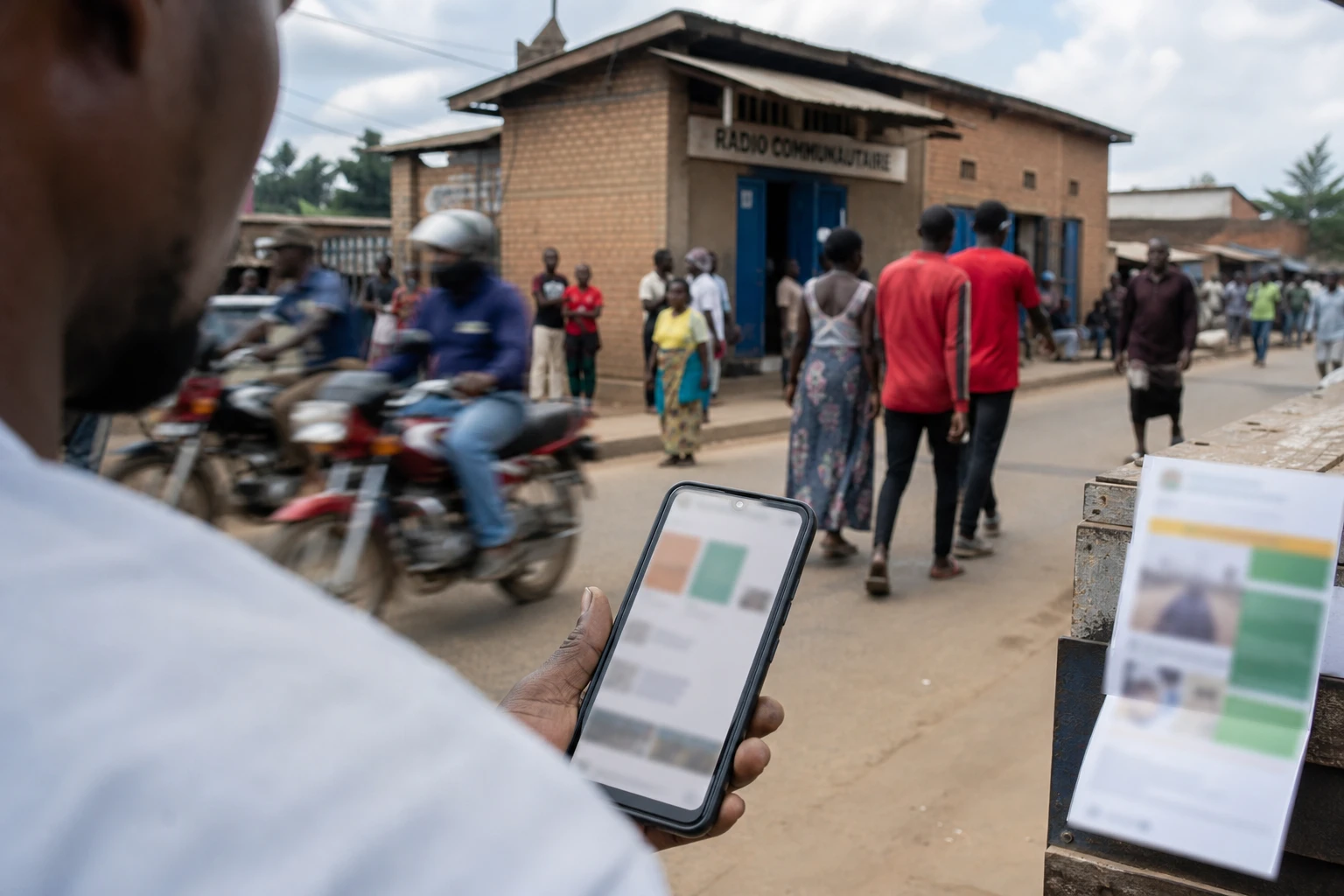
In Butembo, North Kivu, a radio programme devoted to Ebola was followed by a fatal assault on a local UDPS official. A link between the two events has been suggested, but has not been established. Caution is essential in a city where the health crisis has long overlapped with political, security and community tensions.
A death after a programme in Butembo
Marie-Célestin Karondwa Mwanaweka Bytaty, head of the UDPS Federal Permanent Electoral Commission in Butembo and a party spokesperson, was violently assaulted on Sunday 27 September after returning from a programme broadcast on Radio Mwangaza.
According to the local UDPS federation, he had taken part in a political debate during which he spoke, among other things, about Ebola virus disease. He is said to have urged residents to take the epidemic seriously and comply with prevention measures.
The precise circumstances of the attack remain unclear. Local sources place the incident in the Vulindi district, north of Butembo. The victim is said to have died from his injuries. His home and some of his belongings were subsequently set on fire, according to a statement from the party federation reported by the Congolese Press Agency.
So far, no judicial authority has publicly identified the alleged perpetrators. Nor is there any available evidence to confirm how many attackers there were or whether the assault was premeditated.
The motive remains unclear
The UDPS federation suggests a possible link between the assault and Karondwa’s views on Ebola. It says the political official had affirmed that the disease was present in Butembo and stressed the risks facing the population of Greater North Kivu.
This account must, however, be distinguished from confirmed facts. The publicly available information does not establish whether the attack was prompted by his comments on the epidemic, his political positions, a local dispute or a combination of factors.
Congolese media have also reported the possibility of tensions with neighbours. This theory has not been established either. It nevertheless serves as a reminder that an assault in a tense urban environment cannot automatically be attributed to the health controversy.
The UDPS is calling for an investigation and for those responsible to be identified. The party has also urged its members to remain calm. The call comes as local authorities must preserve evidence, hear witnesses and prevent unverified accusations from triggering further violence.
A city already marked by mistrust around Ebola
Butembo plays a central role in the fight against Ebola in eastern Democratic Republic of the Congo. The city and its surrounding area were heavily affected by the epidemic that spread through North Kivu and Ituri.
Available data for the Butembo health zone recorded 256 confirmed cases and 165 deaths as of 26 September. These figures give a sense of the pressure on families, healthcare workers and those involved in the response.
The health response depends on more than treatment centres. It also relies on trust between residents, authorities, community workers and medical teams. When that trust breaks down, awareness campaigns become more difficult. Rumours spread. Health workers can be targeted. Families sometimes hesitate to report sick people or agree to their transfer.
In North Kivu, this mistrust has developed against a backdrop of armed violence, displacement and weak institutional presence in several territories. The Ebola response therefore unfolded in an area where residents also expressed distrust of decisions from Kinshasa and of international actors.
Healthcare facilities and workers in Butembo had already been targeted during the previous epidemic. In April 2019, an epidemiologist from the World Health Organization was killed in an attack on a health facility in the city. The incident illustrated the risks faced by medical teams and local communities.
A political as well as a public health issue
Karondwa’s death directly affects the UDPS, the party of President Félix-Antoine Tshisekedi Tshilombo. But the case goes beyond party structures. It raises questions about the safety of local figures who speak out on sensitive issues.
In Butembo, a radio programme can quickly reach thousands of listeners, in French as well as Swahili. It becomes a space for information, debate and sometimes confrontation. A political official who advocates a health measure may be seen as a mouthpiece for the government. Conversely, a message disputing the existence of the epidemic can encourage dangerous behaviour.
For residents, the consequences are tangible. A fresh outbreak of violence can disrupt commercial activity, restrict movement and complicate access to healthcare. Low-income households, which depend heavily on the informal economy, are particularly exposed to such disruption. Districts far from administrative centres may also feel the effects of a slow investigation or insufficient police presence for longer.
Congolese authorities must therefore address the case on two fronts. They must establish criminal responsibility for the assault. They must also prevent the killing from deepening fear around the Ebola response.
A case followed beyond North Kivu
The tragedy in Butembo resonates across the Great Lakes region. North Kivu shares borders and extensive links with Uganda and Rwanda. A poorly understood health crisis or a new outbreak of violence can quickly affect movement, markets and cross-border cooperation.
The issue also goes beyond the safety of a party official alone. It concerns the ability of Congolese institutions to protect journalists, community broadcasters, healthcare workers and local officials operating during crises.
The immediate priority remains establishing the facts. The results of the investigation, any arrests and the findings of the courts will need to be followed. Until that information is available, the motive for the assault must remain an open question, not a certainty.