Algeria
 Egypt
 Libya
 Morocco
 Sudan
 Tunisia
 Benin
 Cabo Verde
 Côte d'Ivoire
 Ghana
 Guinea
 Guinea-Bissau
 Liberia
 Mali
 Mauritania
 Niger
 Nigeria
 Senegal
 Sierra Leone
 The Gambia
 Togo
 Cameroon
 Central African Republic
 Chad
 DR Congo
 Equatorial Guinea
 Gabon
 Republic of the Congo
 São Tomé and Príncipe
 Burundi
 Comoros
 Djibouti
 Eritrea
 Ethiopia
 Kenya
 Madagascar
 Malawi
 Mauritius
 Mozambique
 Rwanda
 Seychelles
 Somalia
 South Sudan
 Tanzania
 Uganda
 Angola
 Botswana
 Eswatini
 Lesotho
 Namibia
 South Africa
 Zambia
 Zimbabwe
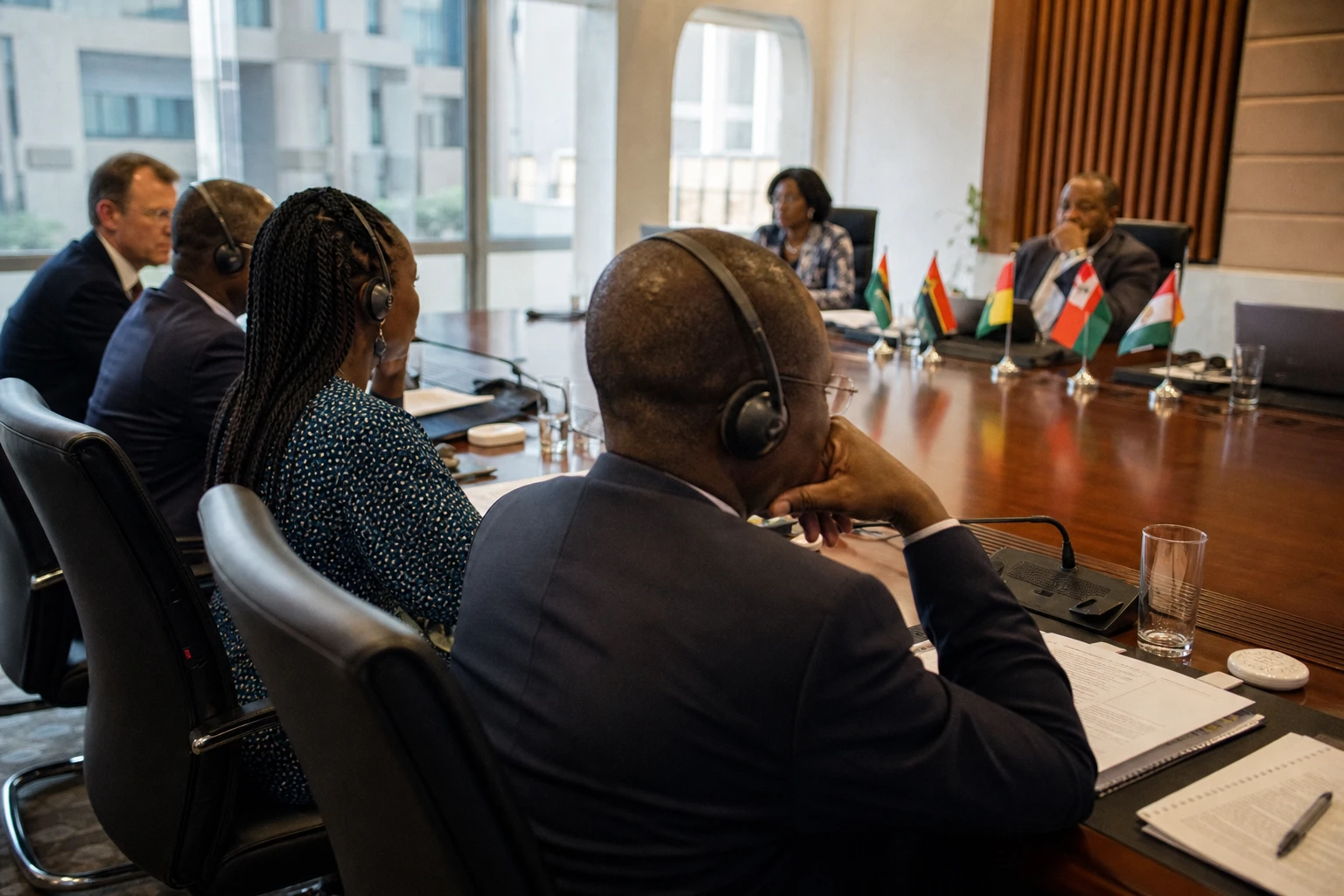
In Ouagadougou, the question is no longer just how to expand internet access. It is now about having Burkinabè people able to design, secure and manage the digital tools needed by the state, businesses and public services. It is in this context that a new strand of cooperation with Russia is taking shape, focused on training in information technology.
Training specialists in artificial intelligence and cybersecurity
Burkina Faso’s Minister for Digital Transition, Posts and Electronic Communications, Aminata Zerbo-Sabané, held talks in Ouagadougou with Natalia Krasovskaia, executive director of the Russian Centre for Public Diplomacy. Discussions focused on expanding programmes already under way and creating new specialist courses.
A class specialising in artificial intelligence is already operating in the Burkinabè capital. The partners are considering extending it and adding other courses, particularly in energy-related technologies. Artificial intelligence here refers to methods that enable computer systems to analyse data, produce content or automate certain tasks.
The project also envisages identifying a public university in Burkina Faso that could host courses for information technology professionals. The stated aim is to bring higher education institutions in Burkina Faso and Russia closer together, to develop academic exchanges, practical training and applied research.
This cooperation builds on discussions held in Bobo-Dioulasso in spring 2026. At the time, talks focused on training young Burkinabè people in artificial intelligence and cybersecurity. A pilot programme was already described as active at a regional secondary school in Ouagadougou, with support from a university in Novosibirsk, Russia.
A national strategy that goes beyond the Russian partnership
Turning to an external partner is only one element of Burkina Faso’s digital policy, however. The authorities are also seeking to strengthen national capabilities, university infrastructure and links between training and businesses’ needs.
The FasoCode-X project is part of this drive. The centre, based in Bobo-Dioulasso, advertises courses in artificial intelligence, data science, cybersecurity, cloud computing and DevOps. The latter term refers to methods that bring together the teams responsible for developing software and those responsible for keeping it running.
FasoCode-X presents its offering as a response to demand for advanced skills in Burkina Faso. Its ambition is to create a pool of specialists able to work for the administration, businesses and innovation organisations. The practical implementation of the courses, their capacity and their academic recognition will nevertheless be decisive.
The national digital transformation roadmap to 2030 also places training at the heart of its priorities. It aims to build a critical mass of talent and envisages training a first cohort of specialists, particularly in artificial intelligence and cybersecurity.
The government also adopted a decree in July 2026 to make the Faso Technology Academy operational. The institution is intended to help expand training in technological fields and prepare professionals to meet the needs of Burkina Faso’s economy.
The main challenge will be real access to training
For students and young people in work, the issue is not limited to announcements of new partnerships. It also concerns the number of places available, the cost of study, classroom equipment, the quality of internet connections and the possibility of taking courses from the regions.
The concentration of programmes in Ouagadougou could widen the gap with Bobo-Dioulasso and other cities. Young people in rural areas, women and displaced people may also remain shut out of the most selective courses if support measures are not put in place.
Training must also lead to jobs. Cybersecurity skills can help protect government bodies, banks, telecoms operators and businesses. Artificial intelligence can support agriculture, health, education, public finance and service management. But these applications require reliable data, suitable equipment and clear rules on information protection.
The Burkina Faso Digital Acceleration Project, approved by the World Bank in January 2024 with $150 million in funding, already includes a digital skills component. It also aims to expand connectivity, improve online public services and give young people access to opportunities in the digital economy.
This range of support could speed up progress. It also requires close coordination between ministries, universities, private centres and international partners. Without coordination, initiatives risk multiplying without training enough professionals ready to work immediately.
An issue that extends beyond Burkina Faso’s borders
The issue has a regional dimension. Burkina Faso is part of West Africa, although its authorities left the Economic Community of West African States, ECOWAS, with Mali and Niger to create the Alliance of Sahel States, which became a confederation in 2024. The three countries are now seeking to strengthen cooperation in several sectors, including digital technology.
In Ouagadougou, information systems officials from Burkina Faso, Mali and Niger have already put data, cybersecurity and artificial intelligence at the centre of their discussions. This convergence could foster joint training, shared standards and better protection of digital infrastructure across the Sahel.
Russia is thus becoming one of the partners Burkina Faso is turning to in its search for skills. The significance of the closer ties will be measured less by announcements than by the actual creation of classes, the qualifications of trainers, student mobility and graduates’ entry into employment. For the authorities and institutions, the next step will be to turn intentions into programmes that are verifiable and accessible.